
A round shaft that matches a bearing bore can still fail on a CNC axis if its span, hardness, straightness or surface finish is wrong. By the end, you will be able to choose between supported and unsupported shafts, specify the dimensions and inspection data required, and compare a shaft supplier’s quotation against your machine’s actual loads and environment.
Key takeaways
- Use profile rails for cutting forces and pitch, yaw and roll rigidity.
- Size shaft diameter from unsupported span, load and deflection limits.
- Specify shaft diameter, tolerance and bearing fit as one matched system.
- Give Pune suppliers the axis load, travel, speed, environment and drawing datum.
Match the shaft arrangement to the machine-tool axis
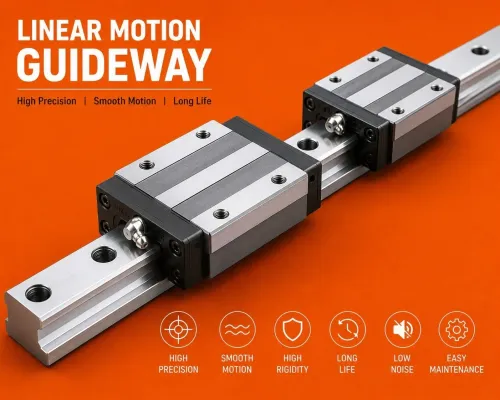
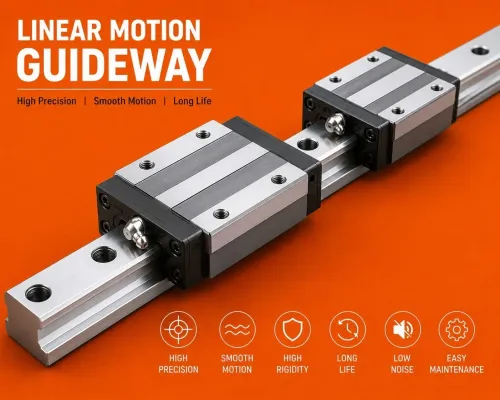
Use profile linear guide rails for a CNC cutting axis when rigidity against pitch, yaw, roll, and cutting forces matters. Choose supported round shafts with closed linear bearings for a simpler retrofit, moderate loads, or a protected axis; a linear shaft for CNC equipment is not interchangeable with a profile rail.
Keep open round bearings away from chips and coolant, because contamination damages their running surfaces quickly.
| Arrangement | Best machine-tool use | Main limitation |
|---|---|---|
| Profile guide rails | CNC feed axes and heavy fixtures | Higher cost and stricter mounting alignment |
| Supported round shafts with closed bearings | Tool changers, probing systems, and enclosed slides | Lower moment capacity than profile rails |
| Open round shafts with supported housings | Light automation slides and clean probing mechanisms | Exposed bearings collect chips, dust, and cutting oil |
| Twin round shafts with two bearing blocks | Fixtures and moderate-load transfer slides | Needs parallel alignment across the full length |
For a tool changer or probe, prioritise smooth travel and protection from impact; for a cutting axis, prioritise stiffness and controlled bearing preload. A fixture slide needs enough resistance to overturning moments, while an automation slide can favour low friction and easy replacement.
Before matching parts, confirm:
- Supported or unsupported span, bearing spacing, and allowable deflection
- Shaft diameter, finished length, straightness, runout, and mounting method
- Bearing type, internal clearance or preload, and the specified shaft tolerance class, such as ISO 286 h6
- Wipers, seals, chip shielding, coolant exposure, and lubricant access
A nominal diameter alone does not prove compatibility.
Choose diameter from span and force, not nominal size
Select finished diameter by calculating bearing reactions and allowable deflection over the supported or unsupported span, then verify speed, acceleration and natural frequency. A shaft that meets a bearing’s dynamic load rating can still bend under cutting force, causing uneven loading, chatter or binding.
Measure carriage mass, workholding mass, tool load, cutting force, overhung moment, travel length and acceleration. Use these values to calculate peak bearing loads and shaft deflection at the actual support spacing. Compare the result with the machine’s allowable positioning error; increasing diameter alone will not correct poor support spacing.
| Option | What to check | Selection consequence |
|---|---|---|
| Unsupported round shaft | Span, deflection, vibration and bearing spacing | Use only where calculated stiffness meets the accuracy target |
| Supported round shaft | Support rail rigidity and mounting flatness | Handles longer spans without relying on shaft diameter alone |
| Profile rail | Moment load, cutting force and preload | Prefer it for rigid CNC axes with high lateral or overturning loads |
| Short guide shaft | Peak load, acceleration and bearing capacity | Suitable for compact probes, tool changers and light slides |
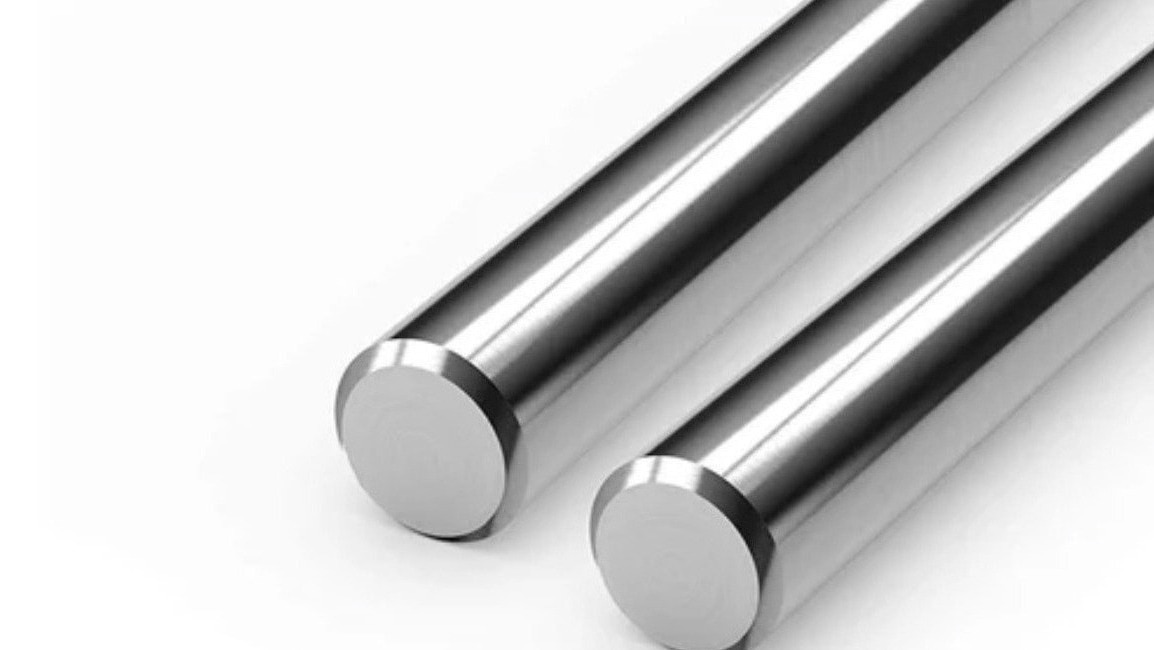
Common linear shaft sizes for machine tools include 12, 16, 20, 25, 30, 40, 50 and 60 mm, but choose the finished diameter rather than an approximate catalog size. State the diameter tolerance, usable length, straightness, surface finish and end machining in the purchase request.
Do not replace the specified fit with h8 or an unspecified commercial shaft because the nominal diameter matches; bearing clearance, preload and temperature determine compatibility.
Specify the bearing fit and shaft dimensions together
Specify the bearing’s internal diameter and fit alongside the shaft’s outside diameter, tolerance, usable length and surface condition. A nominal “20 mm” label is not enough: a tight fit can prevent bearing movement, while excess clearance creates play, noise and uneven load sharing.
1. Match the shaft diameter and tolerance to the recirculating ball bearing manufacturer’s bore class and running clearance. Use an induction-hardened, ground raceway, then confirm straightness, runout, surface roughness and case depth. A dent, grinding burn or soft patch can produce cyclic resistance and brinelling.
2. For open bearings, specify the supported shaft arrangement, support-rail spacing, bearing length and exposed travel together. Confirm the bearing’s open width, mounting orientation and seal or wiper clearance; chips and coolant reaching the raceway can rapidly destroy accuracy.
3. For flange bearings, check more than the shaft bore. Confirm the bearing outside diameter, flange thickness, bolt-circle diameter, mounting-hole size, shoulder location and shaft-end access. The shaft length must cover the full travel plus bearing overrun without entering an unground or threaded section.
4. For linear bushes, confirm the bush inside diameter, recommended shaft tolerance, operating clearance, lubrication method and allowable temperature. Do not substitute a bush for a recirculating bearing without checking load, speed and friction.
5. Put cut length, length tolerance, chamfer, threaded or keyed ends, straightness and runout on the purchase order. Ask a linear motion shaft supplier in Pune for inspection results, material and hardness certificates, finish data, and impact-resistant packaging; local stock of a diameter proves none of these.
Compare hardened, stainless, chrome-plated and profile-guided options
For exposed CNC axes, hardened bearing steel with a ground raceway is usually the safest choice. Choose stainless when coolant corrosion dominates, chrome-plating only after verifying the substrate, and profile-guided rails when cutting forces and stiffness exceed what a round shaft can deliver.
| Option | Bearing contact | Coolant, chips and vibration | Best fit |
|---|---|---|---|
| Hardened steel | High hardness and wear resistance for recirculating or open bearings | Requires wipers, seals and chip evacuation; exposed contamination still damages the raceway | CNC slides, fixtures and probing axes |
| Stainless steel | Corrosion resistance varies by grade; untreated grades may wear faster | Handles coolant better, but does not automatically withstand heavy contact loads | Washdown areas and moderate-load systems |
| Chrome-plated steel | The plating surface resists corrosion, but performance depends on base hardness, thickness and uniformity | Verify finish after plating and suitability for sealed or unsealed bearings | Clean, protected slides where corrosion is a concern |
| Profile-guided rail | Matched carriage and raceway share load over a broad contact area | Better stiffness against cutting forces and vibration; covers still need chip protection | Rigid CNC axes and high-load automation |
Protect every option from abrasive chips, cutting oil and contaminated lubricant. Open linear bearings are especially vulnerable when the shaft sits in the cutting zone.
Ask a precision linear shaft manufacturer for diameter tolerance, straightness, runout, roughness, material grade, hardness, effective hardened depth and corrosion-test data where relevant. Require an inspection report, cut-length tolerance and impact-resistant packaging; “precision shaft” alone proves nothing.
Turn the machine requirement into a Pune sourcing specification
Ask for a quotation against the finished shaft specification, not “25-mm shaft.” State outside diameter and tolerance class, usable length, cut-length tolerance, bearing type, fit, speed, load, acceleration, supported span, and allowable deflection.
The supplier should attach:
- A dimensional inspection report showing diameter at several points, length, straightness, and runout.
- A material certificate naming the steel grade and heat or batch number.
- Hardness and case-depth results where the shaft has a hardened raceway.
- Surface-finish value, stated as Ra, with the measurement location identified.
- End-machining details for threads, flats, circlips, centre holes, or reduced journals, referenced to a stated datum.
- Packaging details that prevent bending, impact, and corrosion during transport.
Confirm the bearing maker’s fit requirement before accepting h6. Clearance, preload, shaft diameter, and operating temperature can change the correct ISO 286 tolerance; an unspecified commercial shaft is not an acceptable substitute.
Your request should also state whether the raceway sits near chips, abrasive dust, coolant, or cutting oil. Open bearings need stronger contamination control, and wipers do not fix poor chip evacuation.
A linear shaft manufacturer for machine tools in Pune, or a linear motion shaft supplier in Pune, proves CNC suitability through these records—not through local stock of a nominal diameter. Balaji Engineering Works should be assessed against the same evidence when comparing a precision linear shaft manufacturer.
Related product
 | Linear Motion Shaft Balaji Engineering Works is a leading manufacturer of Linear Motion Shafts in Pune, offering high-quality stainless steel (SS) shafts designed for... View product → |
Frequently asked questions
Should a CNC cutting axis use a linear shaft or profile guide rail?
Use profile linear guide rails when the axis must resist cutting forces and control pitch, yaw and roll. Use supported round shafts with closed linear bearings for simpler retrofits, moderate loads or protected axes.
How do you choose linear shaft sizes for machine tools?
Choose diameter from unsupported span, applied force, bearing spacing and allowable deflection rather than nominal machine size. Check shaft strength and stiffness at the same time.
What dimensions must you specify for a shaft and linear bearing?
Specify the shaft diameter, length, straightness, roundness, surface finish, hardness, material and tolerance together with the bearing bore, clearance or preload, housing and mounting arrangement.
Which shaft finish suits a machine-tool application?
Compare hardened steel, stainless steel, chrome-plated steel and profile-guided systems against corrosion exposure, wear, contamination, load direction, rigidity and maintenance access.