
A ball screw that matches only the shaft diameter can still fail because its lead, nut geometry, preload, accuracy class or shaft-end design is wrong. By defining the application, checking documented measurements and confirming the complete replacement interface, you can compare local stock with made-to-order and imported options before committing to machine downtime.
Key takeaways
- Define lead, diameter, travel, preload and accuracy before requesting quotes.
- Choose ground screws for higher accuracy and rolled screws for lower-cost applications.
- Match mounting dimensions, nut style and end machining before approving a replacement.
- Request traceability documents and inspect runout, backlash and lubrication before commissioning.
Define the screw before you contact suppliers
“Precision” is not a usable specification. Send a high precision ball screw manufacturer in Indore enough information to identify the assembly, calculate its duty, and quote the same part rather than a convenient substitute.
1. State the nominal screw diameter, lead, usable travel, overall length, nut style, preload, ISO 3408 accuracy class, and required quantity. Attach the shaft-end drawing with bearing seats, threads, keyways, shoulder locations, and datum dimensions.
2. Describe the application: mounting orientation, load direction and magnitude, maximum speed, acceleration, duty cycle, operating temperature, contamination exposure, and expected service life. Include the motor or drive details and whether the screw needs a single or double nut.
3. Request a written availability and price confirmation for those exact dimensions. Ask whether the lead time means stock in Indore, India inventory, or factory production, and require the factory address and manufacturer’s part number.
A quotation is incomplete without evidence. Request a serial-numbered certificate tied to the screw and nut, showing measured lead accuracy over the specified travel, runout, preload or drag torque, and dimensional inspection; add material and heat-treatment traceability when your quality system requires it.
Ask for capped ends, sealed packaging, rust protection, and cleaning and initial-lubrication instructions. An online listing does not prove high precision ball screw availability in Indore.
Compare accuracy classes, ground screws and rolled screws
Choose the accuracy class from the positioning error your machine permits over its working travel, not from the supplier’s use of “precision.” ISO 3408-3 classes 1, 3, 5, 7 and 10 provide a named basis for comparison, but the class does not predict final machine accuracy.
| Option | Accuracy and behaviour | Cost and lead time | Choose it when |
|---|---|---|---|
| Ground screw | Better control of lead deviation and local lead variation; supports tight positioning and repeatability | Higher cost; made-to-order inspection can extend delivery | CNC interpolation, grinding, inspection or semiconductor equipment needs measured accuracy |
| Rolled screw | Economical, fast to source and suitable for consistent motion; lead accuracy is lower | Usually shorter lead time and lower price | Material handling, automation axes or applications using encoder feedback and compensation |
| Higher ISO class | Tighter permitted lead error over the specified travel | Higher price and stricter inspection | The error budget leaves little room for screw error |
| Lower ISO class | Larger permitted lead error | Lower price and wider availability | The controller can compensate and the process tolerates residual error |
Ask for a measurement report showing total lead deviation over the quoted travel, local lead variation, axial runout and radial runout. Do not treat the accuracy class as a guarantee of machine accuracy: guideway parallelism, bearing stiffness, coupling eccentricity, thermal growth, servo tuning and encoder resolution can dominate.
Specify preload separately. A supplier’s “zero backlash” claim is incomplete without the preload method or class and torque specification; preload reduces backlash but increases friction, heat and drive torque. If you replace the screw with a different accuracy class, review its measured lead-error map and rebuild controller compensation rather than copying the old values.
Size the assembly and verify a replacement will fit
Calculate the worst-case axial load before approving a screw. Include cutting force, payload, gravity, preload and acceleration; then give the supplier each speed and load segment in the duty cycle. Ask for dynamic life using the equivalent load and static safety check, not merely the nominal load rating.
A screw that survives peak load can still fail early under repeated high-speed travel.
For a high accuracy ball screw replacement, match the complete mechanical envelope, not just diameter and lead:
- Nominal diameter, lead, usable travel and overall shaft length
- Nut outside diameter, nut length, flange or cylindrical mounting
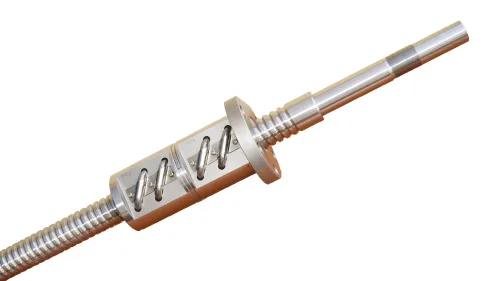
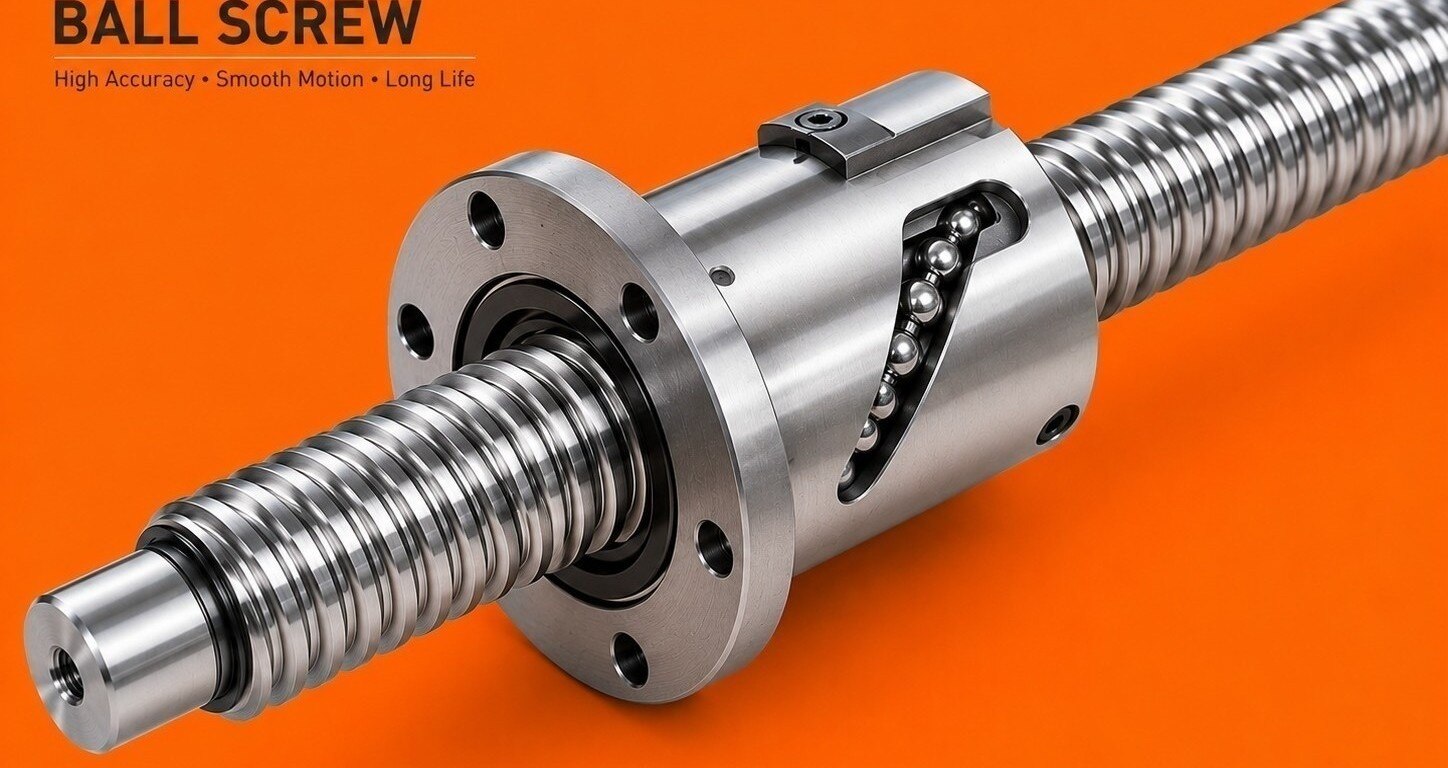
- Return-system arrangement, ball size or circuit design, and preload
- Accuracy class, shaft-end geometry, bearing seats and key or coupling details
- Mounting orientation, guideway relationship and available housing space
Send the shaft-end drawing and nut mounting drawing for confirmation. A different nut length, flange pattern or return system can make an apparently available screw impossible to install.
Request an ISO 3408 report covering lead deviation over the specified travel, local lead variation, axial runout and radial runout. Accuracy class does not prove good assembly alignment; bearing stiffness, guideway parallelism, coupling eccentricity, thermal gradients, servo tuning and encoder resolution affect final positioning.
Before commissioning, compare the measured lead-error map with the CNC compensation. Review thermal-growth assumptions, encoder position and the machine coordinate system instead of copying previous compensation values. This prevents a correctly manufactured screw from producing incorrect coordinates after replacement.
Check local availability, provenance and supplier support
An online listing does not prove high precision ball screw availability in Indore. Ask for written confirmation of the exact diameter, lead, travel length, nut style, accuracy class, preload and quantity; a nearby substitute with different dimensions is not usable.
Request these records and answers before issuing a purchase order:
- Manufacturer’s part number, factory address and the seller’s role: manufacturer, authorised distributor, reseller or machine-tool integrator.
- Whether the quoted lead time means stock in Indore, India inventory or factory production.
- A serial-numbered certificate tied to the supplied screw and nut.
- Measured lead accuracy over your requested travel, runout, preload or drag torque, and dimensional inspection results.
- Material and heat-treatment traceability when the application or specification requires it.
- The stated ISO 3408 accuracy class; “precision” or “high accuracy” alone is incomplete.
- Capped screw ends, sealed packaging, storage-period rust protection, and cleaning and initial-lubrication instructions.
A capable precision ball screw supplier in Indore will explain how it checks critical speed and buckling using free length, support arrangement, diameter, rpm and compression load. Those checks are separate from rolling-contact life.
Balaji Engineering Works belongs on your comparison list only after it supplies the same traceable evidence, not because a catalogue calls the screw high precision.
Reject any seller who will not identify the source, certify the actual assembly or explain local inspection and replacement support. A reseller can still be suitable, but only when its documentation and after-sales responsibility are explicit.
Related products
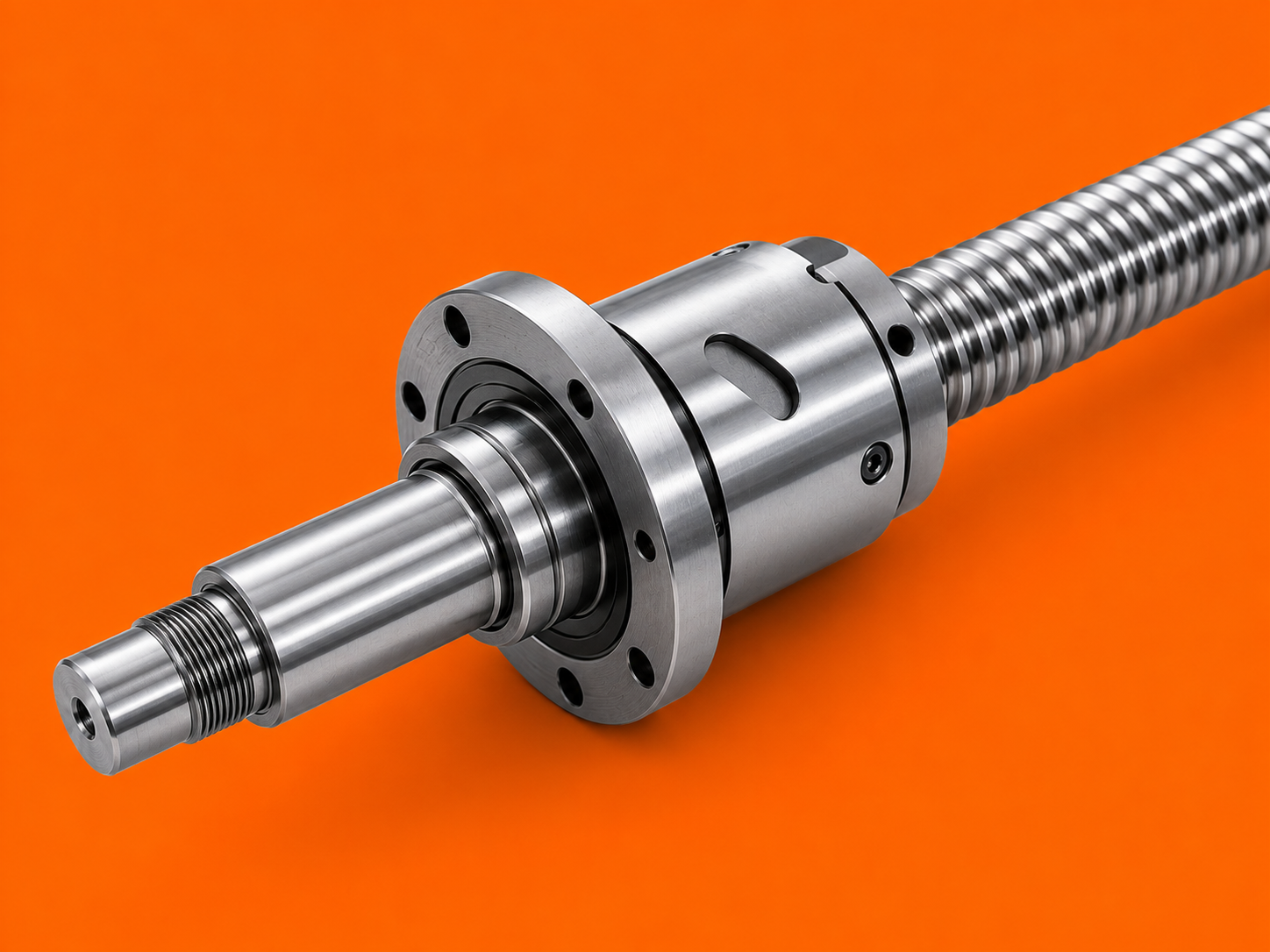 | Precision Ballscrews Balaji Engineering Works offers premium quality High Precision Ball Screws in Pune, designed for applications that demand exceptional accuracy,... View product → |
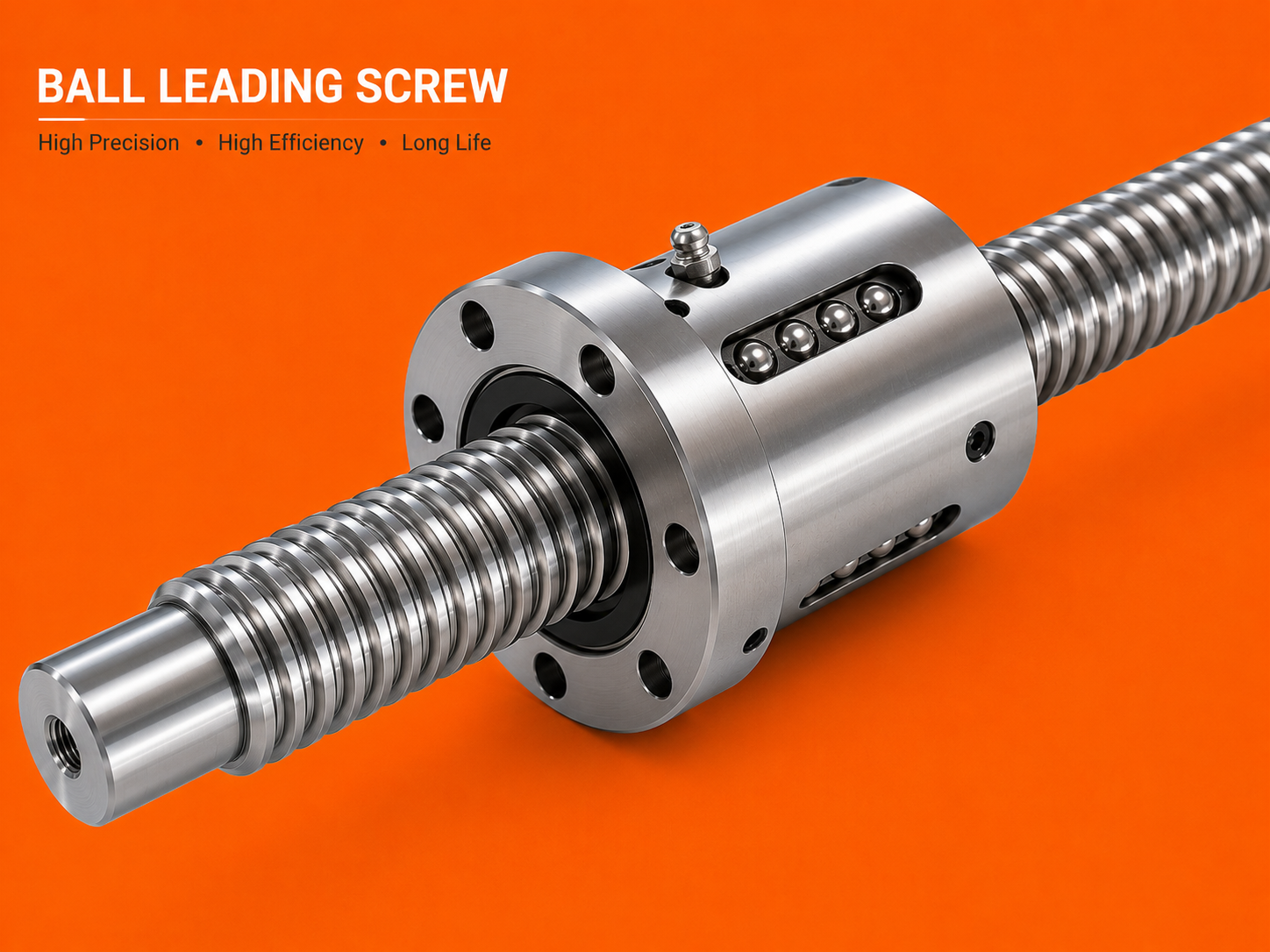 | Precision Ballscrews Balaji Engineering Works offers high-quality Ball Lead Screws in Pune, designed for precise and efficient conversion of rotary motion into linear... View product → |
Inspect, install and commission without losing the specification
Accept the assembly only when its identity and condition match the purchase order. Check the serial number, nominal diameter, lead, nut style, preload, accuracy class and shaft-end drawing against your approved specification. Ask for a serial-numbered certificate tied to that screw and nut, showing:
- Measured lead accuracy over the specified travel
- Local lead variation, axial and radial runout
- Preload or drag-torque results
- Dimensional inspection and material or heat-treatment traceability, where specified
Reject or quarantine a package with torn seals, exposed raceways, missing end caps, corrosion or an unexplained substitute part.
Keep the caps on until the assembly reaches a clean installation bench. Remove protective oil with the specified cleaner; never scrub raceways with an abrasive cloth or force a contaminated nut along the screw. Align supports and nut without using the screw to pull misaligned parts together, then apply the stated grease or oil quantity.
They are not interchangeable by default.
During commissioning, verify free travel, drag torque, backlash and abnormal temperature before applying cutting loads. Recheck mounting alignment at operating temperature. Load the measured lead-error map, thermal-growth model, encoder position and machine coordinate system into the CNC controller; do not copy the old compensation values without review.
Choose another technology when severe shock, heavy radial loading or very high static load dominates the duty. A planetary roller screw may suit that service. Rack-and-pinion or a linear motor can be better for exceptionally long, high-speed travel where ball-screw critical speed and thermal growth control the design.
Frequently asked questions
What information should you send a ball screw supplier before requesting a quote?
Send the screw diameter, lead, travel length, accuracy class, preload, nut type, mounting dimensions, end machining and operating duty.
What is the difference between ground and rolled ball screws?
Ground screws provide tighter accuracy and smoother motion after precision grinding, while rolled screws offer lower cost and faster production for less demanding applications.
How do you verify that a replacement ball screw will fit?
Compare diameter, lead, nut dimensions, mounting-hole pattern, shaft length, end machining, travel, preload and the required accuracy class.
What should you check when sourcing a ball screw in Indore?
Check stock status, manufacturer and batch traceability, inspection records, delivery condition, technical support and whether the supplier can match the original specification.
How should you inspect and commission a new ball screw?
Inspect for damage and contamination, verify runout and backlash, use the specified lubricant, align the assembly, set limits and confirm positioning accuracy under operating conditions.
Related products
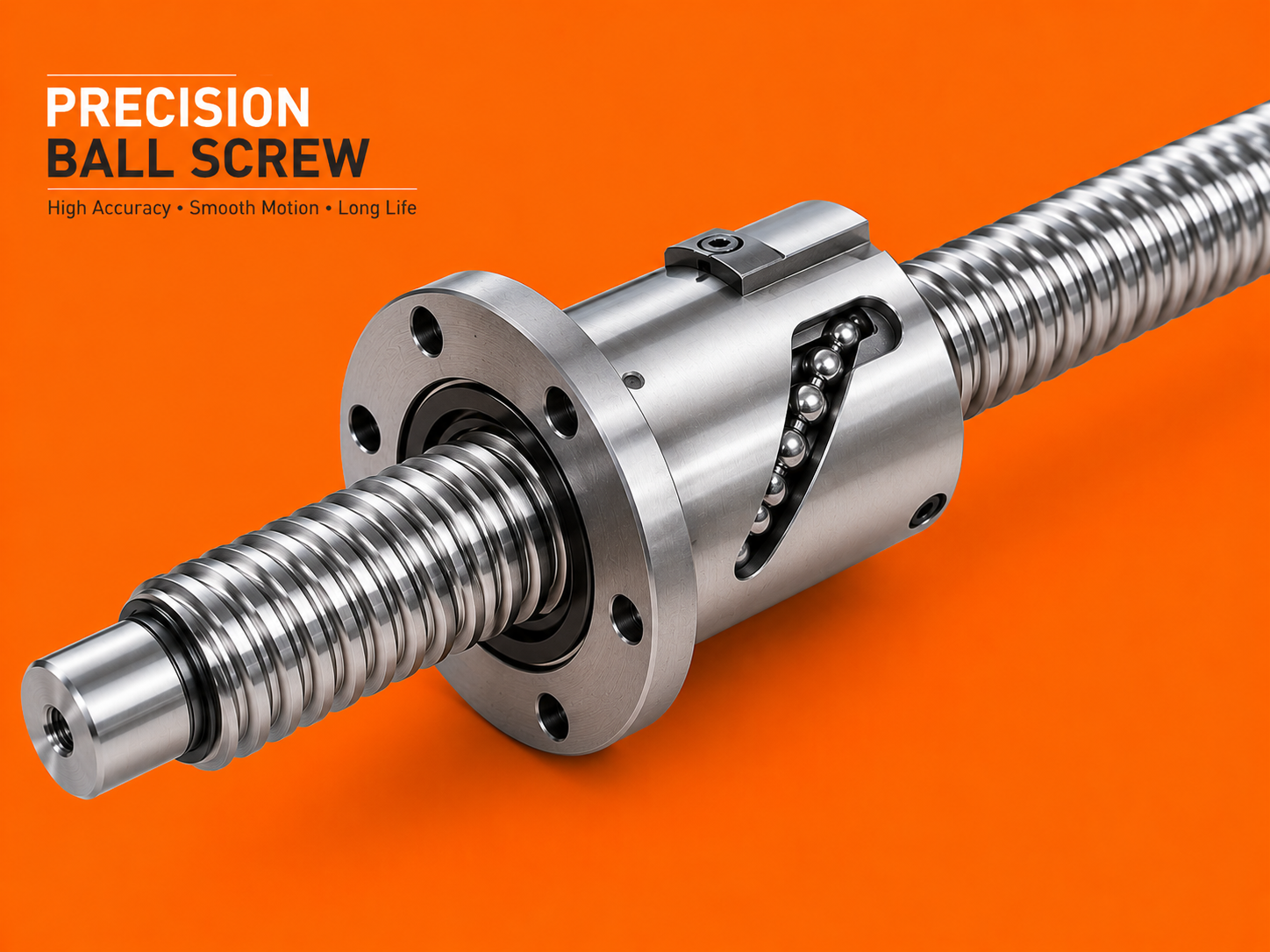 | Precision Ballscrews Balaji Engineering Works is a trusted manufacturer and supplier of Precision Ball Screws in Pune, designed for high-accuracy linear motion and... View product → |
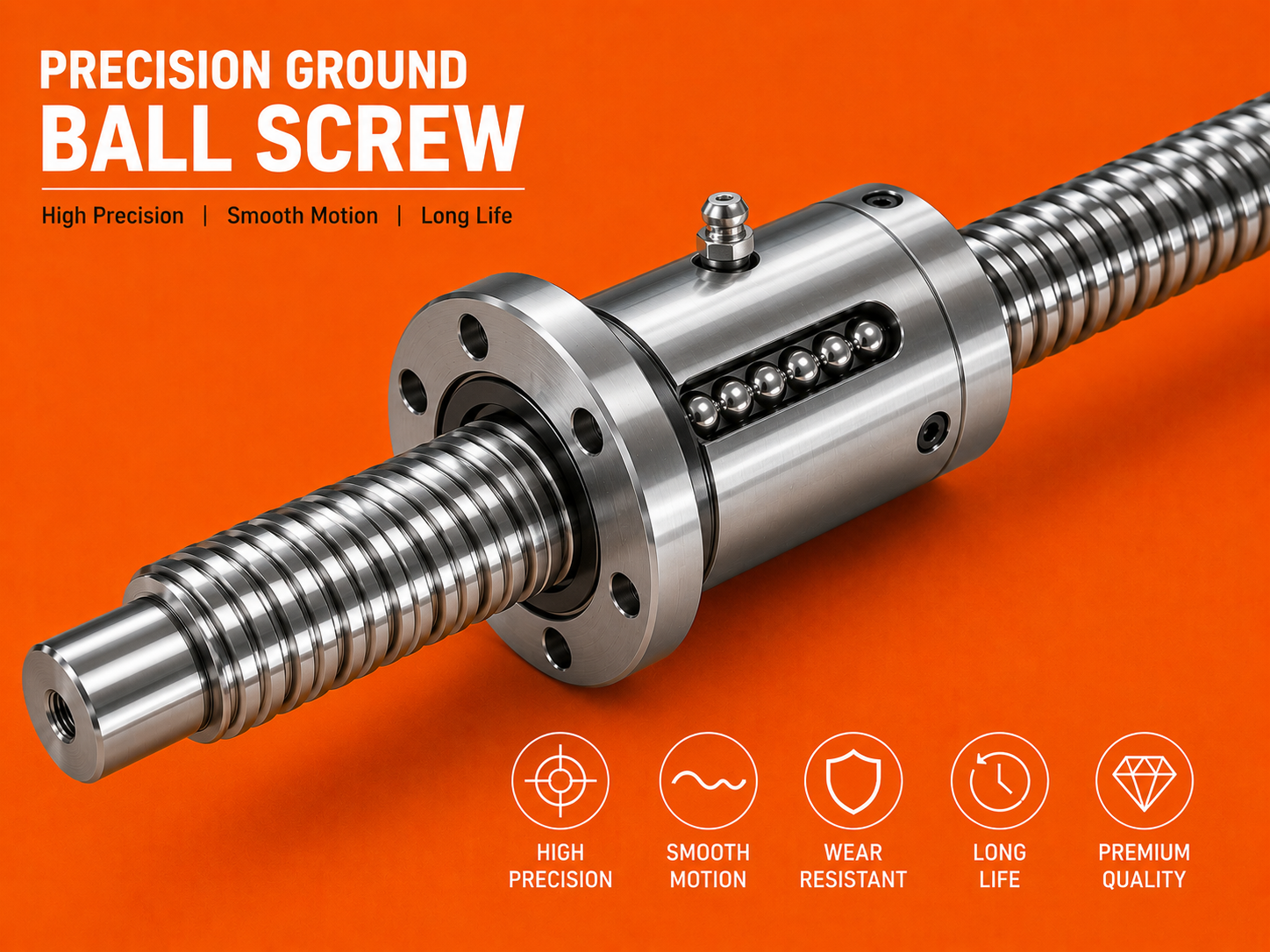 | Precision Ballscrews Balaji Engineering Works is a trusted manufacturer and supplier of Precision Ground Ball Screws in Pune, designed for applications that demand... View product → |
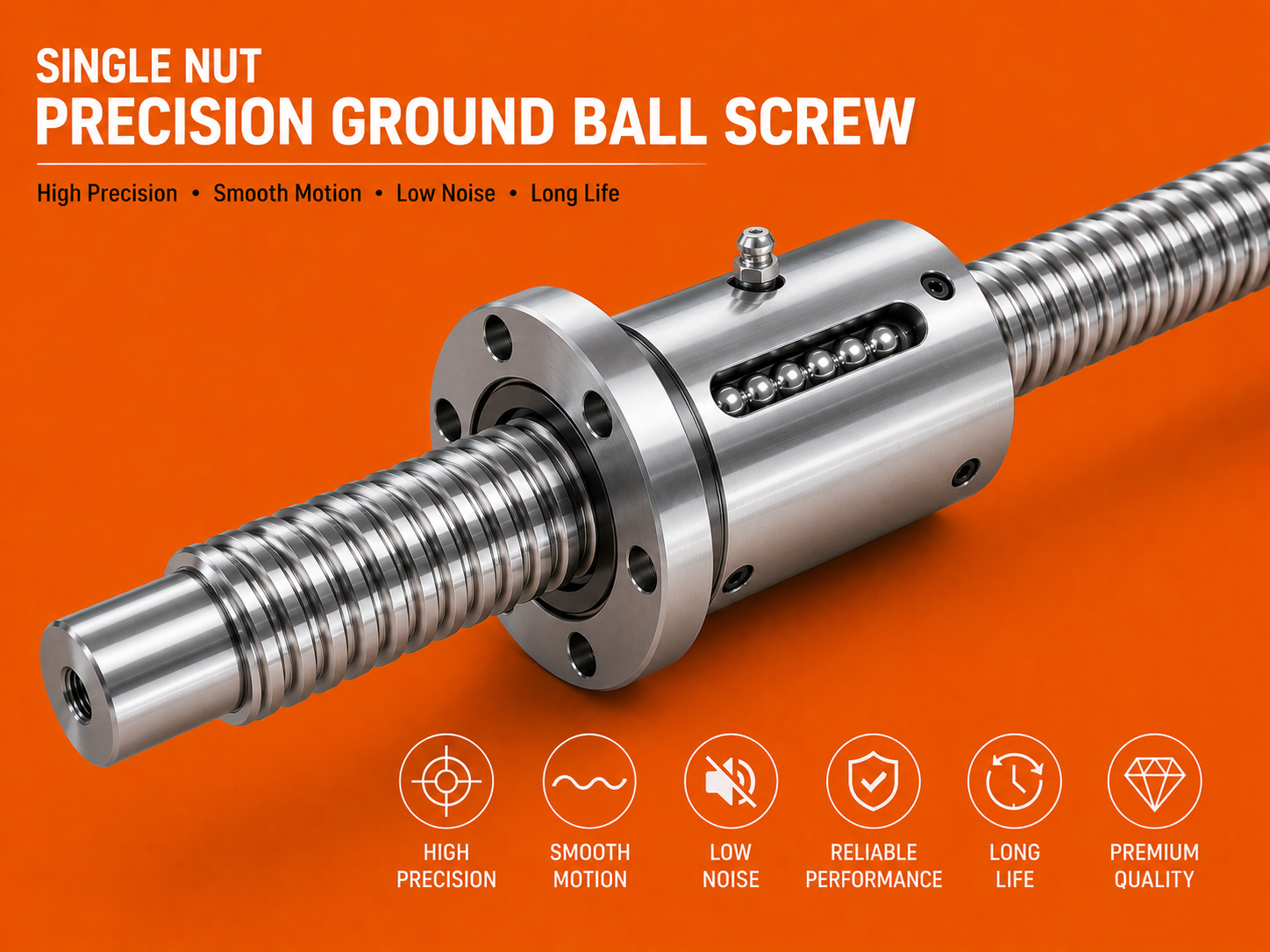 | Precision Ballscrews Single Nut Precision Ground Ball Screw Balaji Engineering Works offers high-precision Single Nut Precision Ground Ball Screws in Pune, engineered for applications requiring superior... View product → |
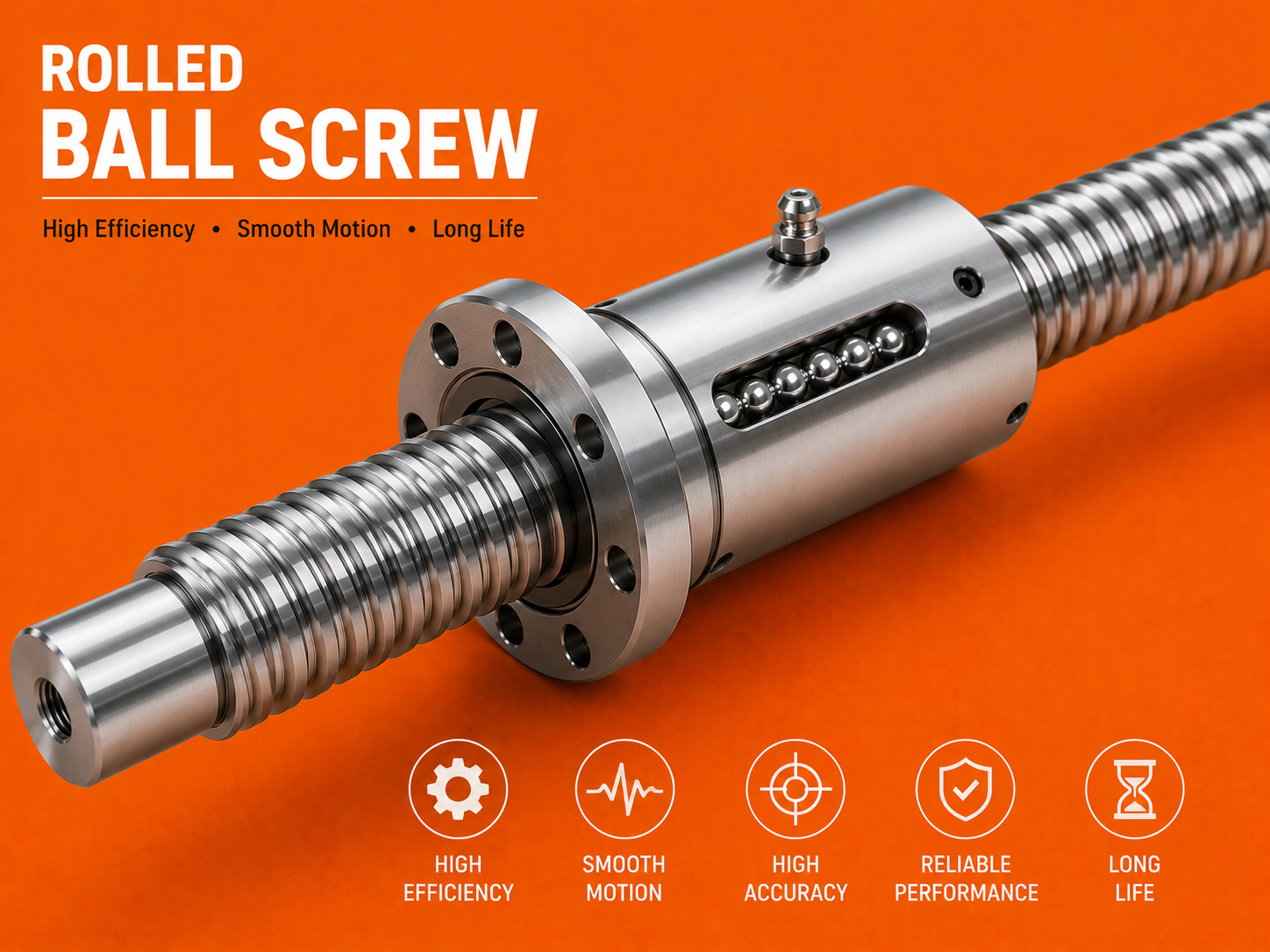 | Precision Ballscrews Balaji Engineering Works offers high-quality Rolled Ball Screws in Pune, designed for efficient linear motion with excellent performance and... View product → |