
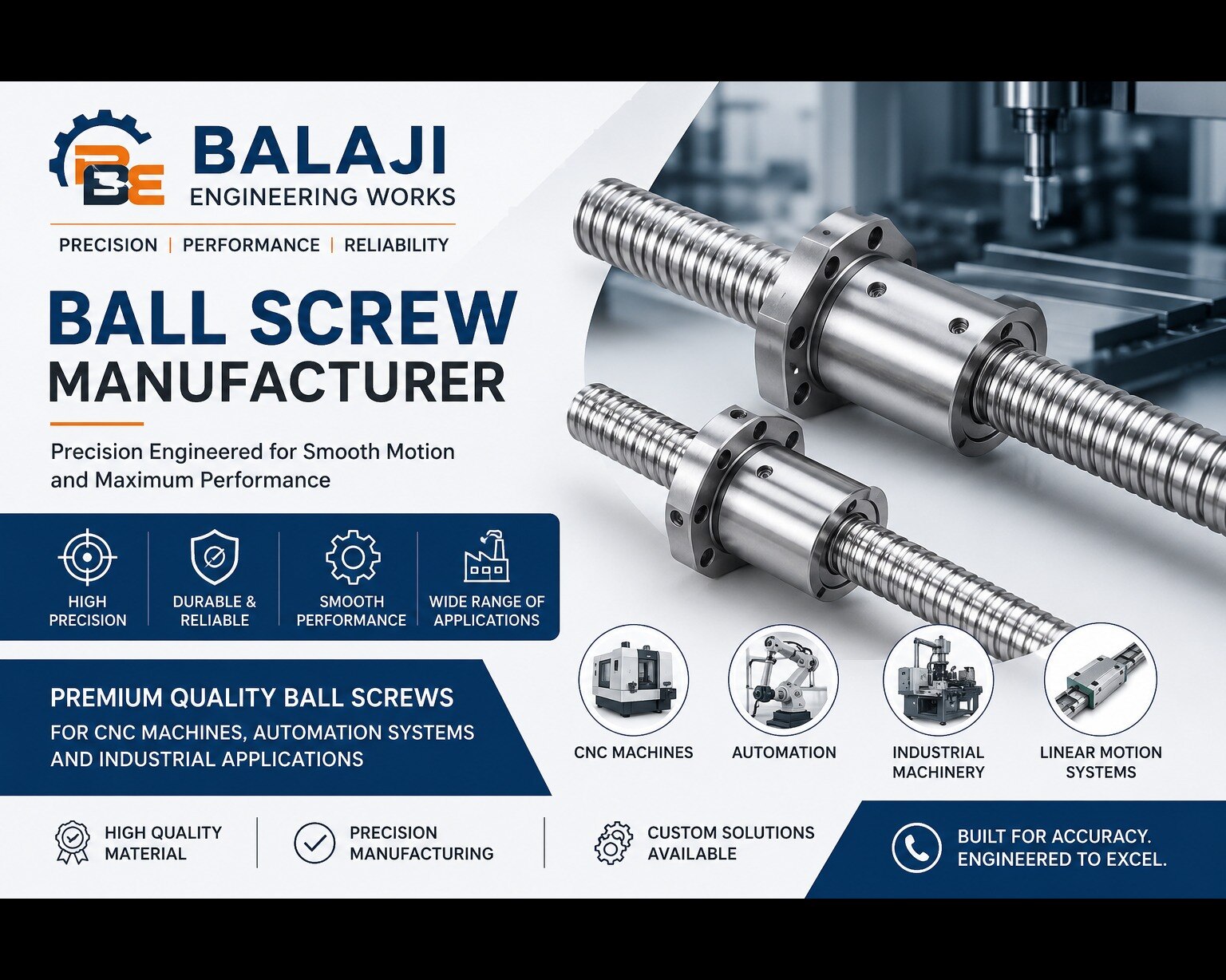
A quotation that says only “precision ground” and lists diameter, lead, and length leaves critical engineering decisions unresolved. Use the checks below to compare quotations, confirm machine fit, calculate service life, and define acceptance before placing the order.
Key takeaways
- Request the ISO 3408 accuracy grade and measurement method on every quotation.
- Record stroke, travel, mounting dimensions, speed, load, and duty cycle before ordering.
- Specify nut construction, preload class, lubrication, and mounting orientation.
- Require inspection reports, traceability, delivery terms, and acceptance criteria in writing.
Which precision ground ball screw specifications must appear on the quotation?
A quotation is incomplete unless it states the applicable ISO 3408 accuracy grade and exactly how that grade was measured. Request these precision ground ball screw specifications before comparing suppliers.
| Ground | Identifies the grinding process used to make the screw |
|---|---|
| Accuracy result | Describes measured lead and positioning performance |
Require the following precision ground ball screw for details:
- Measurement basis, effective-thread lead deviation, cumulative lead deviation, test temperature, measurement length, reference datum, and confirmation that results apply to the screw alone or the assembled screw-and-nut pair.
- Nominal diameter and lead: a 20 mm diameter × 5 mm lead screw has a 20 mm screw size and travels 5 mm per revolution. Higher lead increases travel speed but reduces mechanical advantage and positioning resolution; lower lead improves resolution and thrust at lower speed.
- Ball-circle diameter or nut series, nut outside diameter and length, total shaft length, usable travel, axial play or defined preload, and radial runout.
- Dynamic and static load ratings, plus permissible rotational speed for the stated support arrangement.
- Shaft-end geometry, mounting shoulder or datum, and the manufacturer’s limits for thread runout and nut overrun.
“Ground” names a manufacturing process, not a guaranteed positioning result. Also ask whether accuracy data excludes thermal growth, bearing compliance, coupling error, guideway error, servo tuning, and backlash elsewhere in the axis.
How do you turn machine dimensions into a complete ball screw ordering checklist?
A 20 mm diameter × 5 mm lead does not identify a usable screw. Two screws with those same dimensions can remain incompatible if their nuts, shaft ends, bearing seats, or available travel differ.
Use this ball screw ordering checklist:
1. State nominal diameter, lead, effective stroke, overtravel, nut overrun allowance, thread runout, end machining, and overall shaft length. Nominal threaded length is not usable travel: reserve space so the nut never enters runout or strikes an end, and check the manufacturer’s unsupported-span and critical-speed limits.
2. Supply a dimensioned machine envelope showing nut-body diameter and length, flange or cylindrical mounting, mounting shoulder and reference datum, shaft-end geometry, support-bearing arrangement, coupling bore, motor interface, and space for seals and lubrication access. Require a shaft-end drawing, not a verbal description.
3. Identify the support arrangement and supported span. Fixed-fixed gives the highest axial stiffness but demands accurate alignment; fixed-supported raises stiffness at one end; supported-supported reduces stiffness and critical speed; cantilevered leaves the longest unsupported span and lowest allowable rpm. Request allowable rpm for that arrangement, not merely for the screw series.
4. Specify a grease-filled or oil-compatible nut, grease grade or oil viscosity, initial fill, relubrication interval, and exposure to coolant or chips. Incompatible grease or contaminated return paths rapidly increase torque and damage ball tracks.
Check every dimension against the machine datum before ordering. A matching diameter and lead cannot compensate for an incompatible flange, bearing seat, coupling bore, or lubrication access.
How should you choose nut construction and specify preload?
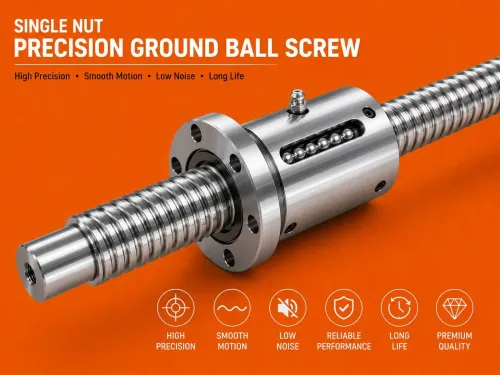
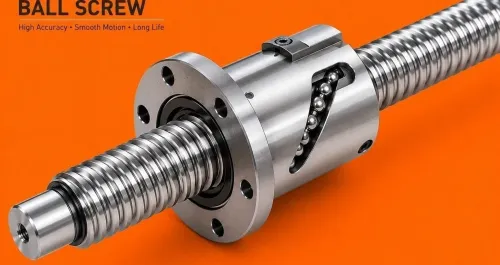
Choose the nut arrangement from reversal frequency, backlash, stiffness, available axial space, cost, and maintenance access. A single nut suits compact axes and lower purchase cost; a double nut earns its space and price when frequent reversals demand controlled backlash and higher axial rigidity.
| Arrangement | Best fit | Main trade-off |
|---|---|---|
| Single nut, clearance | Low reversal frequency and non-critical backlash | Lowest drag and cost, but axial play remains |
| Single nut, light preload | Moderate reversals and modest stiffness | Compact, with limited drag and heat |
| Single nut, medium preload | Regular reversals and tighter backlash | Higher stiffness, torque, and lubrication sensitivity |
| Single nut, heavy preload | High rigidity in a compact envelope | High drag torque, heat, motor demand, and misalignment risk |
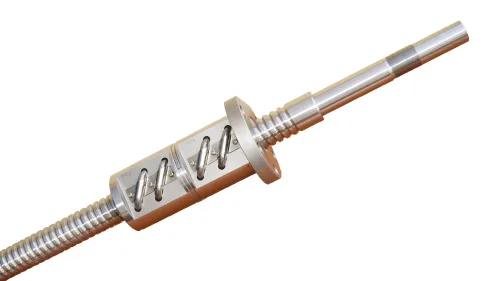
| Double nut with spacer or adjustment | Frequent reversals and strict backlash control | Highest stiffness, axial space, cost, and maintenance burden |
Do not specify “preloaded” alone. Require measured preload force or a defined preload class, an axial-clearance limit, and the resulting drag-torque range. Ask how preload is verified after assembly and what operating torque limit applies.
Specify the performance target separately:
- Positioning accuracy: commanded position versus actual position.
- Repeatability: return to the same position.
- Backlash: lost motion during reversal.
- Lead error: travel deviation along the screw.
- Running smoothness: torque variation, vibration, and stick-slip.
Higher preload is not automatically better; it raises friction, motor torque, temperature, and sensitivity to poor alignment or lubrication.
How do load, life, speed, and thermal checks prove the screw suits the axis?
A screw suits the axis only when its life, speed, strength, and thermal behaviour match the real duty cycle, not just the catalogue rating. Provide axial load in both directions, maximum and average speed, acceleration, duty-cycle percentages, orientation, operating temperature, contamination level, preload, and required service life.
Require an L10 life calculation using the actual load spectrum. Comparing catalogue dynamic load ratings alone can hide early fatigue under repeated reversals.
Check static load capacity against the highest combined axial and shock load, then request two separate safety checks: allowable rotational speed for the actual bearing support arrangement to prevent critical-speed whirl, and a buckling calculation for maximum compressive load.
An ISO 3408 accuracy grade does not guarantee machine-level positioning accuracy. Thermal screw growth, bearing compliance, coupling error, guideway geometry, servo tuning, and residual backlash can dominate the result. Ask whether the supplier provides a lead-error compensation map and state the test temperature and measurement basis.
Put these acceptance measurements on the order:
- Lead error and positioning accuracy
- Repeatability and backlash
- Radial runout and axial runout, with datums
- Torque variation across travel
- Smooth manual travel without tight spots or binding
If the supplier cannot calculate life from your load spectrum or cannot state the support arrangement behind its rpm limit, the selection is incomplete.
What should you verify about the manufacturer, delivery, and acceptance documents?
A listing that matches diameter and lead does not prove manufacturing capability. Ask any ball screw manufacturer in Indore or precision ground ball screw supplier in Indore for:
- Manufacturing location, traceable part number, inspection certificate, screw and nut origin, and material and hardness records where relevant.
- Disclosure of whether grinding, heat treatment, assembly, and testing are in-house or subcontracted.
| Check | Acceptable evidence | Failure risk |
|---|---|---|
| Local stock | Exact nut style, preload, accuracy grade, shaft-end drawing, usable travel, batch identity, and quantity | Rework or incompatible replacement |
| Delivery | Confirmed replacement lead time in writing | Machine downtime |
| Traceability | Part number linked to inspection results and batch | No accountable acceptance decision |
Agree acceptance criteria before payment: dimensioned drawing; ISO 3408 grade and measurement basis; lead-error report; preload or clearance value; runout limits; axial and radial datum requirements; load-life calculation; lubrication instructions; corrosion protection; packaging; warranty; and rejected-result procedure.
Before installation, inspect for impact and corrosion, check packaging and thread cleanliness, turn the nut manually through the usable travel, measure torque variation and runout, and verify lead error against the agreed report. Balaji Engineering Works should be evaluated through these same documents and checks, not through a manufacturer claim alone.
Related products
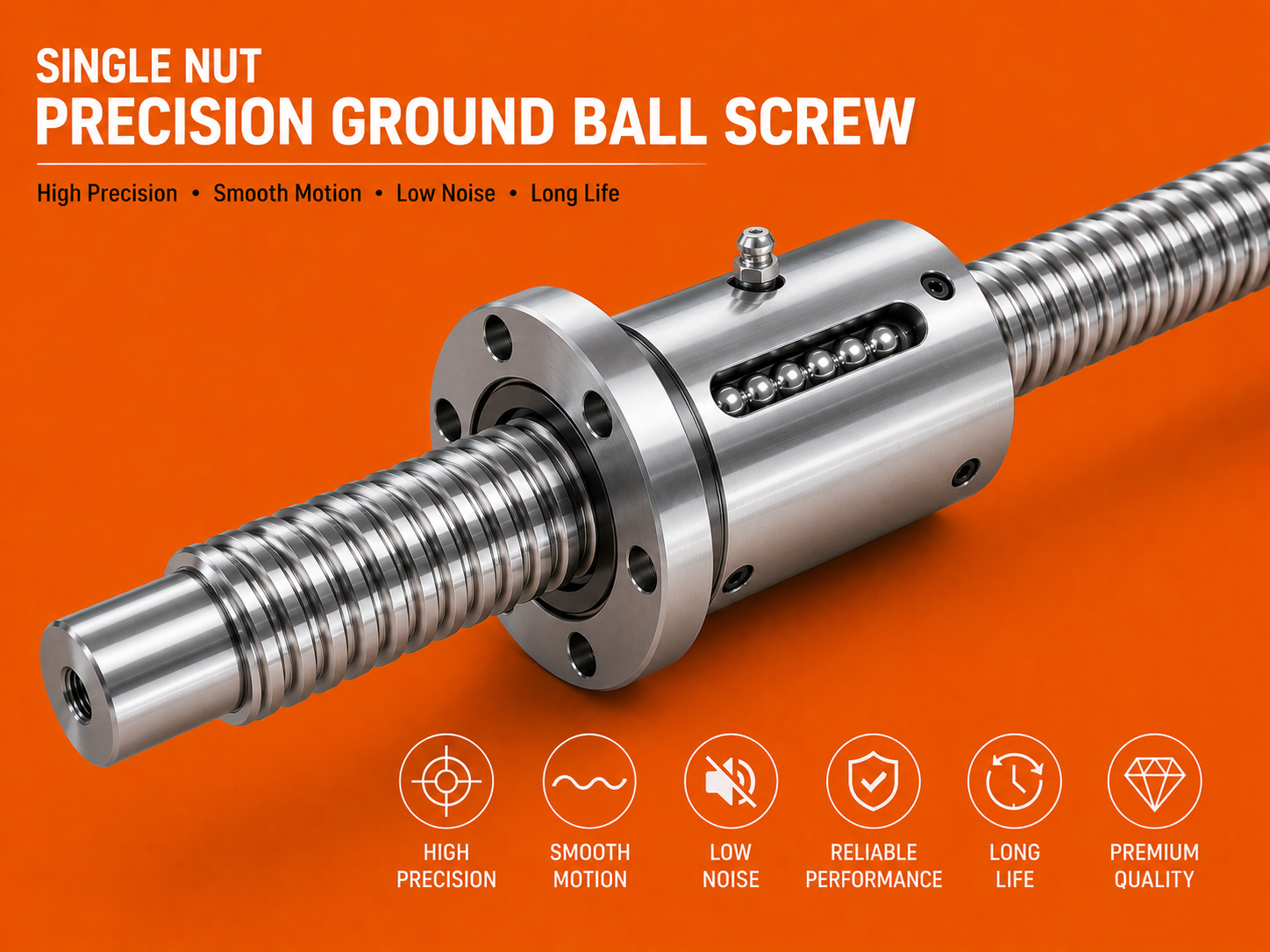 | Precision Ballscrews Single Nut Precision Ground Ball Screw Balaji Engineering Works offers high-precision Single Nut Precision Ground Ball Screws in Pune, engineered for applications requiring superior... View product → |
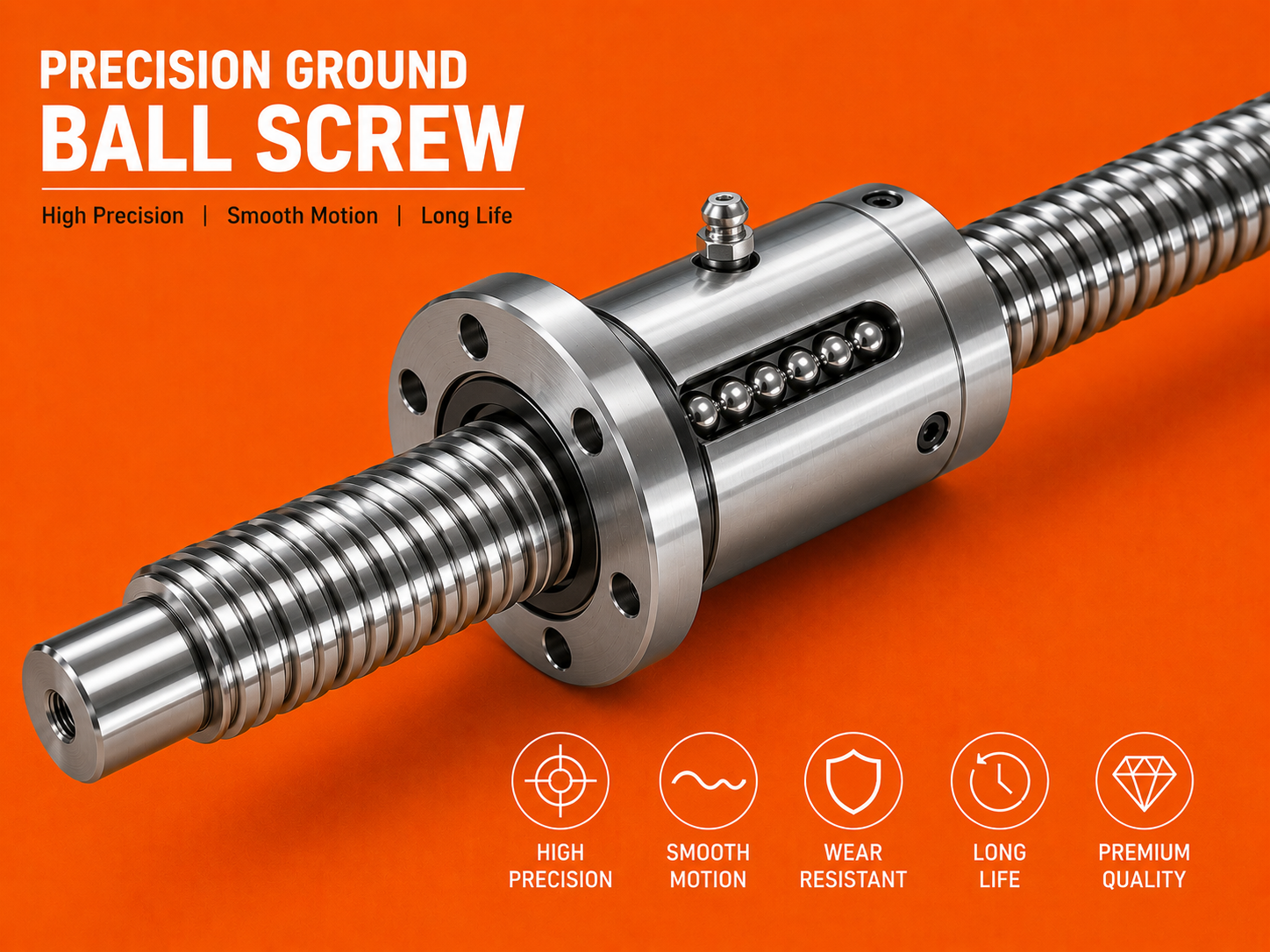 | Precision Ballscrews Balaji Engineering Works is a trusted manufacturer and supplier of Precision Ground Ball Screws in Pune, designed for applications that demand... View product → |
Frequently asked questions
Which precision ground ball screw specifications must appear on the quotation?
Request the ISO 3408 accuracy grade, measurement method, lead, diameter, effective travel, nut model, preload, lubrication requirements, and inspection documents.
How do you turn machine dimensions into a complete ball screw ordering checklist?
Record axis stroke, screw length, support arrangement, mounting dimensions, load direction, speed, acceleration, duty cycle, environment, and motor connection details.
How should you choose nut construction and specify preload?
Choose a single or double nut based on stiffness, space, and load requirements, then state the preload class or axial preload value and its measurement condition.
How do load, life, speed, and thermal checks prove the screw suits the axis?
Compare dynamic and static load ratings with the calculated axial and moment loads, calculate rated life, check critical speed, and confirm temperature stays within the lubrication and machine limits.
What should you verify about the manufacturer, delivery, and acceptance documents?
Verify inspection capability, traceability, lead-time commitments, packaging, warranty terms, dimensional drawings, accuracy reports, preload records, and agreed acceptance limits.
Related products
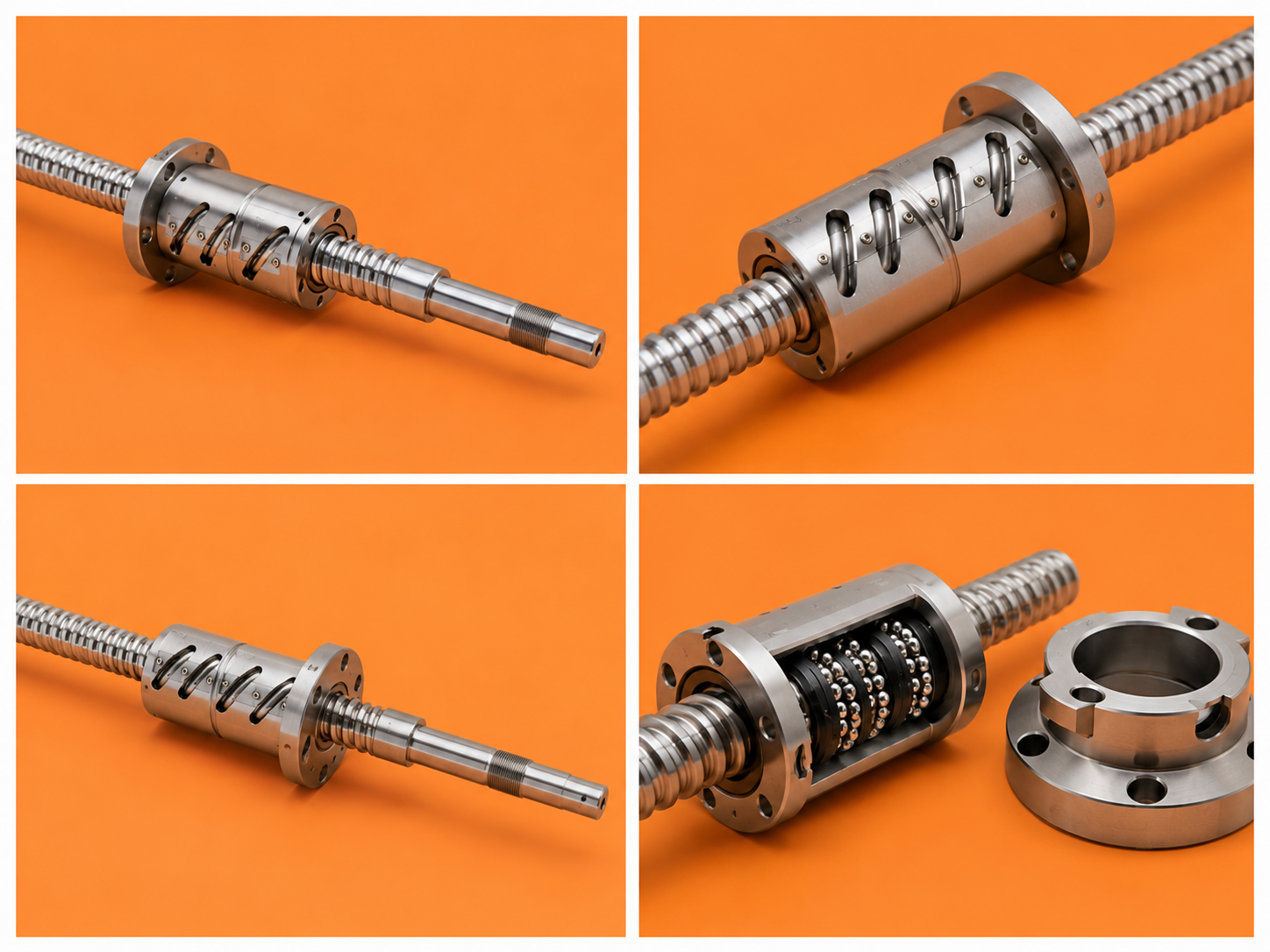 | PRECISION GROUND BALL SCREW We are Manufacturing of precision Ground ball screw with nut As per Customer View product → |
 | Precision Ballscrews Balaji Engineering Works offers premium quality High Precision Ball Screws in Pune, designed for applications that demand exceptional accuracy,... View product → |
 | Precision Ballscrews Balaji Engineering Works is a trusted manufacturer and supplier of Precision Ball Screws in Pune, designed for high-accuracy linear motion and... View product → |
 | Precision Ballscrews Balaji Engineering Works offers high-quality Ball Lead Screws in Pune, designed for precise and efficient conversion of rotary motion into linear... View product → |