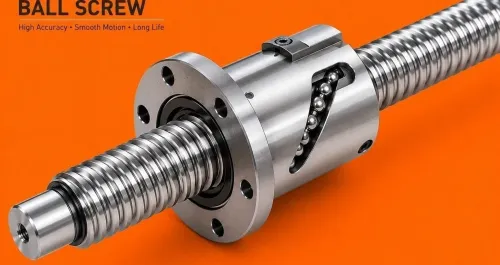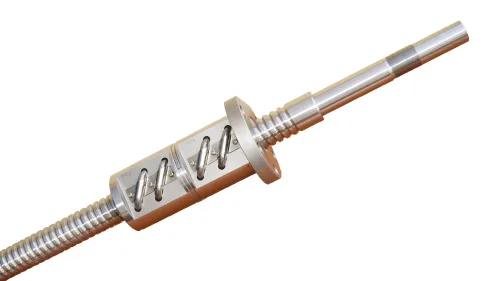

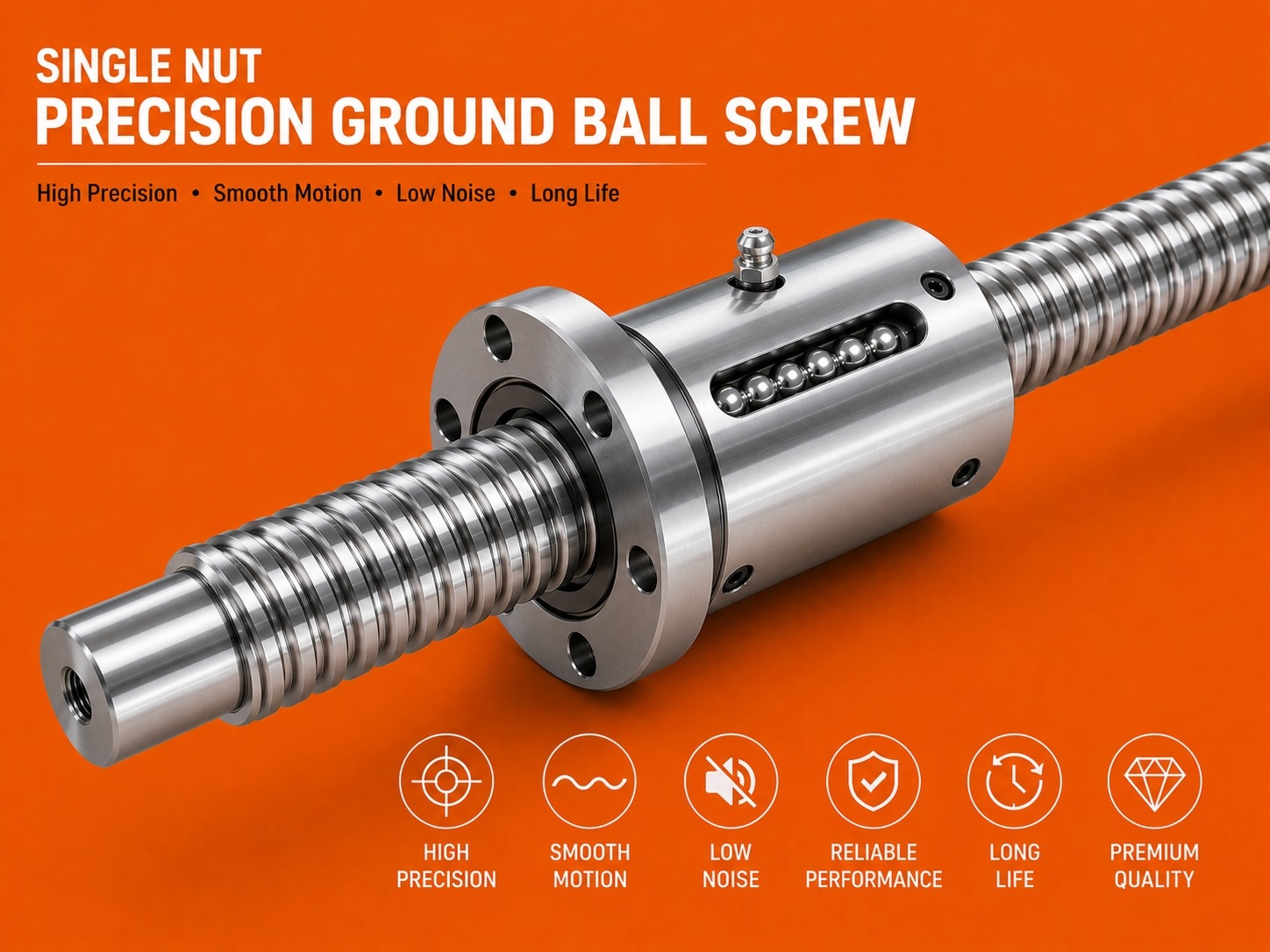
A single-nut precision-ground ball screw can show apparent backlash, rising motor current, or positioning drift as temperature, lubricant viscosity, and machine geometry change. By comparing cold and warm measurements, checking the mounting and lubrication system, and documenting the environment, you can separate thermal behavior from damage before replacing the nut or changing the drive.
Key takeaways
- Measure accuracy cold and warm before replacing the ball screw.
- Check lubrication, alignment, support bearings, and coupling symptoms separately.
- Inspect the installed single nut for play without dismantling the axis.
- Choose replacement or double-nut conversion based on measured preload and error.
How seasonal temperature creates apparent backlash and positioning error
Cold start changes both the ball-screw geometry and the friction inside the nut, so positioning error can appear before any wear exists. As the screw warms, it expands along its length; the nut, housing, supports, machine frame, and encoder scale expand at different rates. The control system then reports a position that shifts with temperature.
Cold lubricant increases starting torque and can make a tight section feel worse. As it thins, friction falls, but excessive preload can generate heat, raise motor current, and alter contact between balls and raceways.
A single nut that is too heavily preloaded loses load capacity and becomes more sensitive to dust, alignment error, and mounting distortion.
Temperature does not create true clearance, yet unequal expansion can look like backlash during reversal or produce bidirectional positioning error. Measure backlash, repeatability, and thermal drift separately. Record screw temperature near the working span, nut-housing temperature, machine-structure temperature, motor current, and error at the same positions from cold start through stable operating temperature.
These single nut precision ground problems do not prove that the screw is worn. A single nut precision ground in Indore still needs defined preload, lead accuracy, runout, inspection datum, and acceptance limits; “precision ground” alone specifies none of them. If error follows temperature, investigate growth and lubrication before ordering a replacement.
Run a cold-to-warm temperature and accuracy test
Run the same bidirectional positioning test at cold start and after the axis reaches a stable operating temperature. A fault that changes with temperature points to thermal growth, preload change, or lubricant viscosity; a fault that remains after warm-up points to mechanical lost motion.
- Mark three or more screw positions, including both ends and the location where the error is worst.
- Record screw surface temperature, nut-housing temperature, and machine-structure temperature at each stage. Use the same sensor location and measurement method every time.
- At each position, approach from both directions and record the commanded position, actual position, repeatability, and bidirectional positioning error.
- Log motor current or torque, reversal noise, and travel time during the same moves.
- Repeat the warm test after the axis has stopped gaining temperature, then repeat the cold test on another cycle.
Thermal drift produces a repeatable error change as the screw and structure warm; the error often follows elapsed warm-up time rather than travel direction. True backlash produces a direction-dependent position gap that remains at stable temperature, especially during reversal.
If error follows screw position, inspect lead accuracy, raceways, and alignment; if it follows direction, inspect preload, coupling slip, loose fasteners, and thrust-bearing stiffness.
Do not enter a software backlash value before this test. Compensation can hide lost preload or bearing movement and become wrong when temperature changes. This procedure gives single nut ball screw troubleshooting a measurable separation between thermal drift and mechanical backlash.
Use symptoms to isolate lubrication, alignment, and component faults
Record screw, nut-housing, and machine-structure temperatures alongside motor current, noise, and bidirectional error at the same positions. That pattern separates single nut ball screw troubleshooting causes faster than feel alone.
| Symptom or check | Likely cause | Confirming check |
|---|---|---|
| Cold tightness that eases as the axis warms | Lubricant viscosity change | Compare starting torque cold and warm; verify the lubricant grade and relubrication quantity |
| Dark, gritty grease, seal debris, or rising roughness | Contamination | Wipe a sample onto clean white paper and inspect seals, wipers, and exposed raceways |
| Tight travel at one screw position with periodic torque variation | Misalignment or localized raceway loading | Check axial and radial runout, coupling alignment, and support mounting; do not use the nut to correct guideway parallelism |
| Direction-dependent error, end float, or support-unit heat | Bearing preload or thrust-bearing fault | Check bearing temperature, shaft end play, mounting torque, and coupling float |
| Noise, repeatability loss, or error that follows screw position | Race or ball damage | Inspect for pitting, brinelling, flaking, or damaged ball-return components at that position |
A viscosity fault follows temperature; contamination produces roughness and progressive torque increase. Misalignment produces cyclic resistance, while bearing faults concentrate at the supports. Raceway damage remains tied to screw position even after lubrication and temperature equalize. This distinction resolves many single nut precision ground problems before you condemn the nut.
Inspect the installed single nut without dismantling the axis
Do not order a replacement until you prove which part is moving, binding, or changing size. These checks expose single nut precision ground problems without removing the axis.
1. Lock out power and clean the exposed screw. Inspect the nut flange, body, seals, and wipers for cracks, looseness, hardened lubricant, metal dust, or grease pushed past a seal. Rotate the screw by hand through the accessible travel and record tight spots, noise, and uneven starting torque.
2. Sweep a dial indicator along the screw while rotating it slowly. Check axial runout at the working diameter, visible dents or corrosion on the raceways, flaking, scoring, and damage where the ball-return tube or deflector enters the nut. Mark any defect by machine position.
3. Check both support units for heat, noise, looseness, and axial movement. Put the indicator against the shaft near each bearing and push-pull the screw; movement at an end support points to bearing or locknut trouble, not automatically nut wear.
4. Inspect the coupling, key, spacer, locknuts, flange bolts, and locating shoulders. Look for fretting dust, witness marks, loose fasteners, uneven flange contact, or a coupling that pulls the screw sideways. Verify that the carriage travels freely with the supports in their operating position.
5. Compare motor current and dial-indicator reversal readings at cold start and warm operation. Record nut temperature, screw temperature, and support temperature beside each result before requesting a replacement.
Specify the right replacement or decide on a double-nut conversion
Require a documented preload, accuracy grade, and acceptance test before approving a replacement. A ball screw manufacturer in Indore should not treat “precision ground” as a complete specification: it does not define lead accuracy, starting torque, end machining, inspection datum, or allowable lost motion.
Give the supplier these inputs:
- Nominal diameter, lead, travel, shaft-end drawing, support arrangement, nut orientation, flange dimensions, mounting orientation, duty cycle, speed, acceleration, and axial load.
- Cold-start and warmed-up ambient temperatures, screw and nut-housing temperatures, coolant type, enclosure condition, monsoon water exposure, and dry-dust exposure.
- Required lead accuracy, axial and radial runout limits, preload class, backlash or lost-motion limit, allowable load and speed, lubricant, wiper or seal construction, and acceptance temperature.
- A measured report covering lead accuracy, runout, starting torque, preload, ball-return condition, raceway condition, nut-to-shaft matching, and bidirectional positioning error.
Choose a double-nut conversion when measured lost motion remains excessive after alignment, lubrication, bearing, and support checks, or when the machine needs higher rigidity that a single nut cannot provide. Do not ask for maximum preload: it raises friction, heat, drive torque, and sensitivity to contamination.
Balaji Engineering Works should receive this operating data when evaluating a single nut precision ground in Indore or a double-nut replacement for seasonal service. A request for a ball screw manufacturer for seasonal single nut problems in indore becomes useful only when it includes these limits and test conditions.
Related products
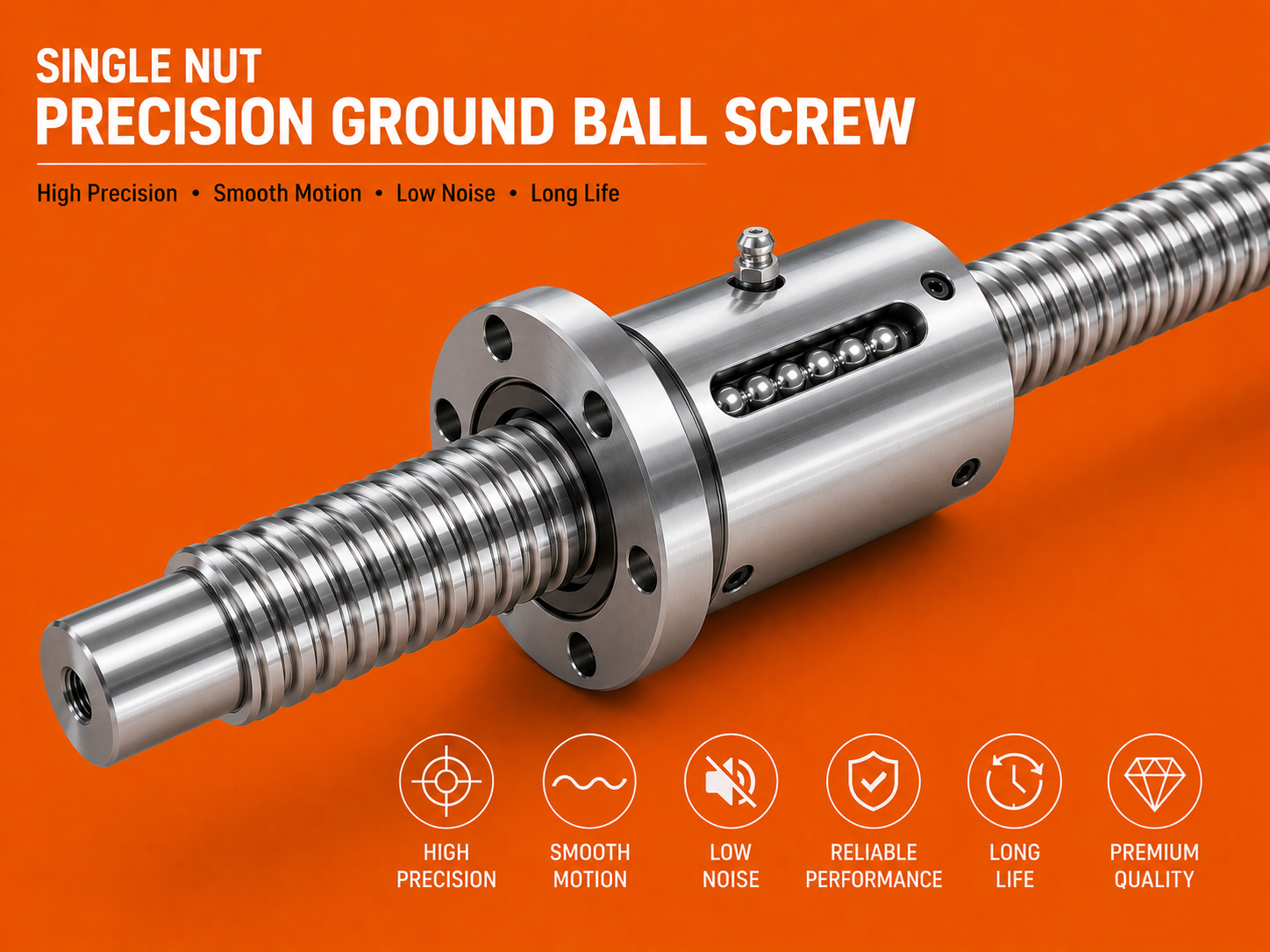 | Precision Ballscrews Single Nut Precision Ground Ball Screw Balaji Engineering Works offers high-precision Single Nut Precision Ground Ball Screws in Pune, engineered for applications requiring superior... View product → |
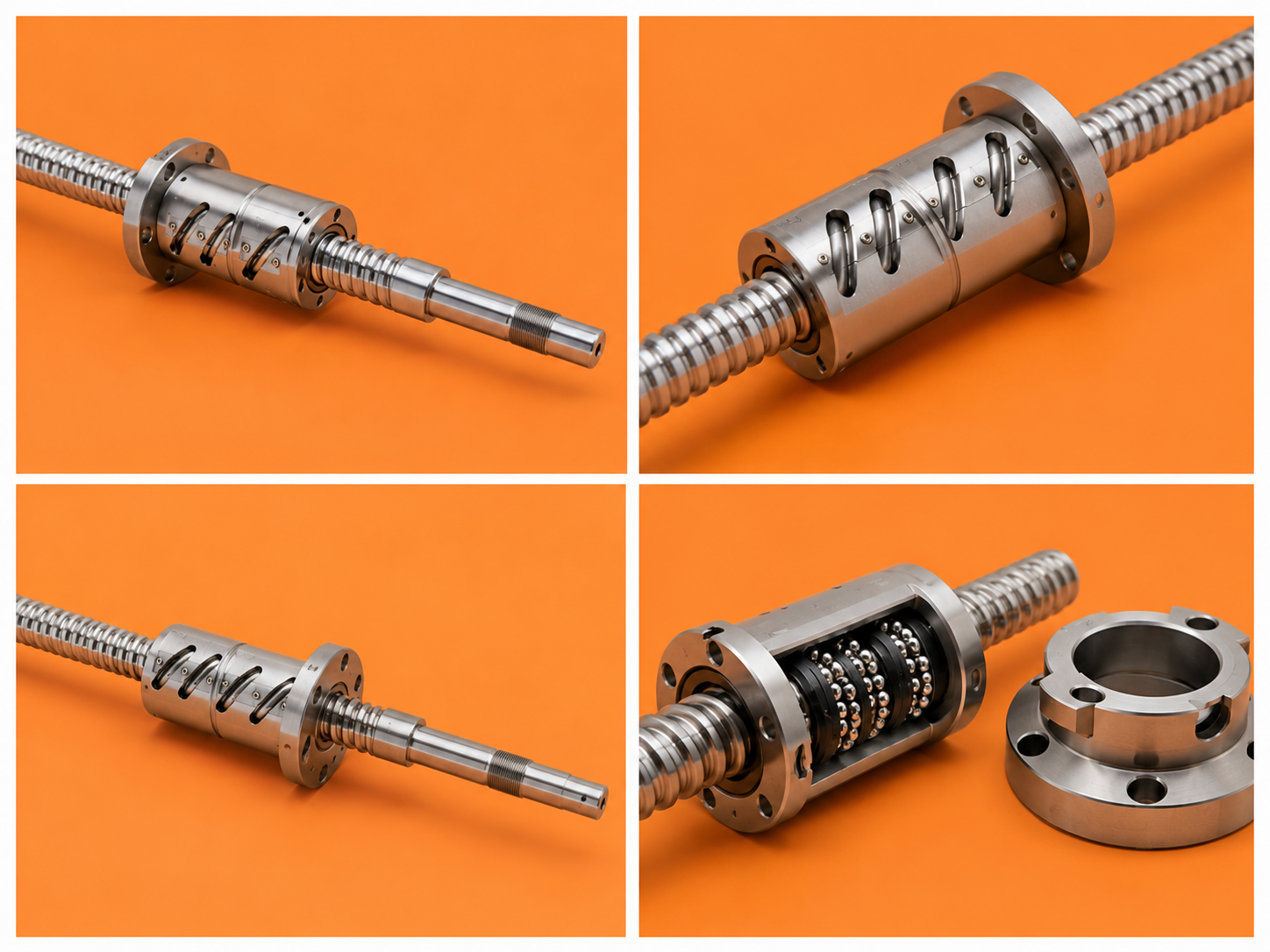 | PRECISION GROUND BALL SCREW We are Manufacturing of precision Ground ball screw with nut As per Customer View product → |
Frequently asked questions
How does seasonal temperature create apparent backlash in a single-nut ball screw?
The screw, nut, supports, machine frame, and encoder scale expand at different rates. Friction also changes during a cold start, creating positioning error that can look like backlash before wear exists.
How do you test ball-screw accuracy from cold to warm?
Record axis position and repeatability when cold, then repeat the same measurements after the screw reaches operating temperature. Compare the error pattern with screw expansion and thermal drift.
How can symptoms separate lubrication, alignment, and component faults?
Changing noise or stiffness points toward lubrication; position-dependent error points toward alignment; persistent play, roughness, or repeatability loss points toward nut, screw, bearing, or coupling damage.
Can you inspect an installed single nut without dismantling the axis?
Yes. Check backlash, repeatability, noise, torque changes, lubrication condition, mounting security, and visible coupling or support problems during controlled axis tests.
When should you replace a single nut or convert to a double-nut arrangement?
Replace the nut or screw when measured wear, roughness, damage, or repeatability loss remains after correcting lubrication and alignment. Consider double-nut conversion when the application needs adjustable preload and the machine can accommodate the added length and load.
Related product
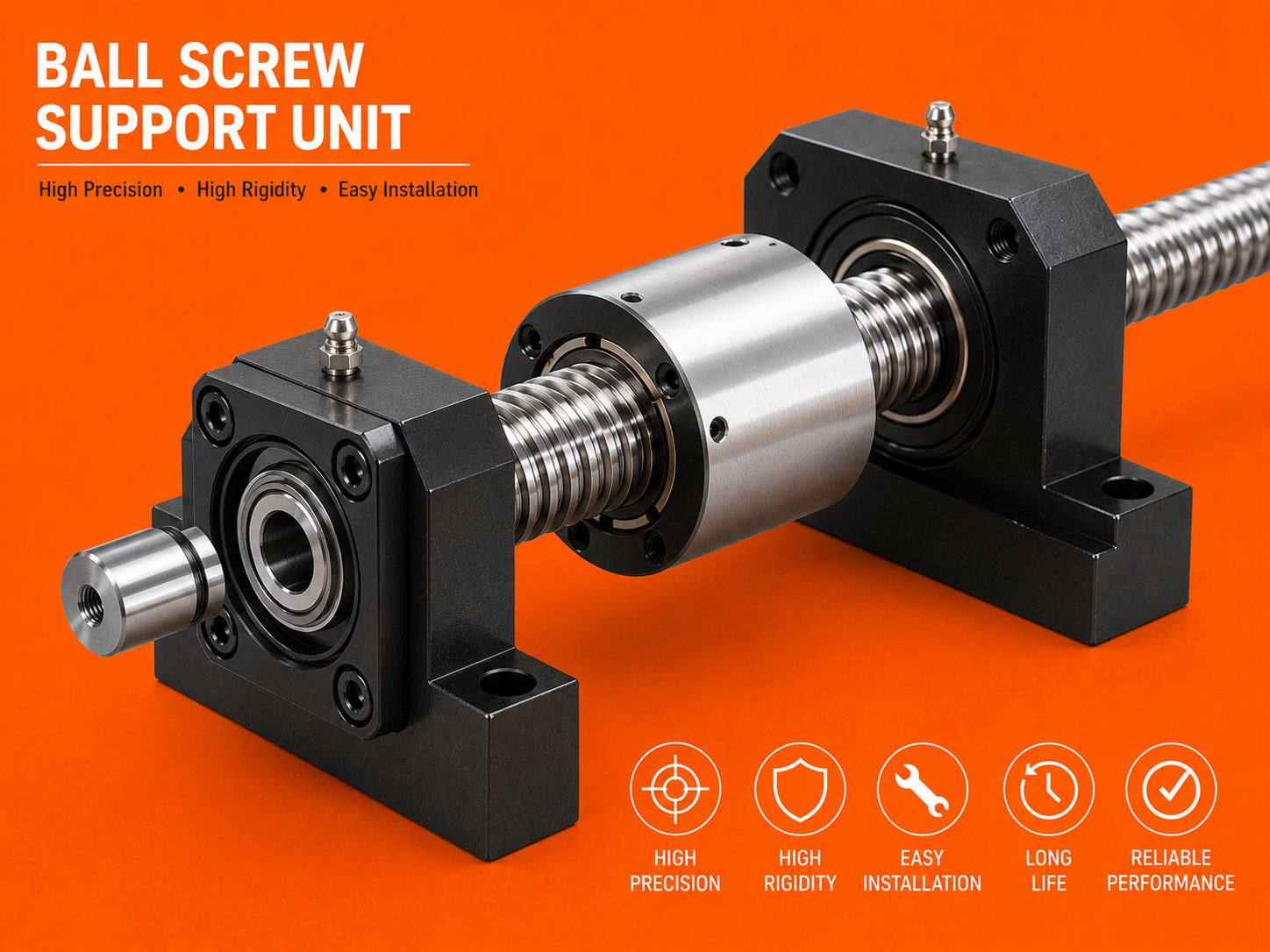 | Precision Ballscrews Balaji Engineering Works offers high-quality Ball Screw Support Units in Pune, designed to provide stable and precise support for ball screw... View product → |