
A rolled ball screw is not produced by simply pressing a thread onto a steel bar: blank size, die geometry, heat treatment, straightness, and ball-to-raceway contact all determine whether the finished assembly performs correctly. By following each production stage, you can understand what the manufacturer controls, which defects inspection must catch, and when rolled production suits your machine better than grinding.
Key takeaways
- Check the steel blank for seams, cracks, hardness variation, straightness, and diameter.
- Confirm hardened dies form the raceway to the specified lead and profile.
- Ask how heat treatment, straightening, and inspection control screw accuracy.
- Compare nut preload, ball circulation, and inspection records before choosing a supplier.
How the Steel Blank and Rolling Setup Are Prepared
The manufacturer prepares a plain steel blank to a controlled diameter before any helical raceway is formed. Incoming bar stock is checked against its material certificate, then inspected for surface seams, cracks, excessive hardness variation, straightness, and diameter. A flawed bar carries defects directly into the ball track.
1. Turn the blank to the calculated rolling diameter. The allowance must provide enough metal to fill the die groove without creating excessive forming load; an incorrect diameter produces incomplete groove fill, undersized flanks, or surface folds.
2. Machine the ends and reference features. Centres, journals, shoulders, and temporary driving features establish the datum used to control axial position, runout, and feed during rolling.
3. Confirm the steel condition. The blank is usually supplied in a machinable annealed or normalized condition, while the selected route determines whether the raceway is hardened after rolling or the material is rolled in a semi-hardened state.
4. Install and align the forming dies. The manufacturer matches the die profile to the nominal screw diameter, ball groove geometry, lead, helix direction, and number of starts, then sets die spacing, rolling force, rotation speed, and axial feed synchronization.
A trial pass verifies that the blank enters the dies centrally and that the rolling force remains within the process window. Operators record blank diameter, die identification, setup values, and trial measurements as part of the ball screw manufacturing steps. These controls prevent a misaligned or poorly sized blank from becoming a defective screw.
How Hardened Dies Form the Rolled Raceway
A hardened die forms the ball track by plastic displacement, not by cutting away thread material. Its inverse groove presses into the prepared steel blank while the blank and die rotate together, forcing metal to flow around the helical profile.
The die’s lead, pitch, groove radius, helix angle, and number of starts determine the raceway geometry. Because the process removes little or no material, rolled ball screw production creates minimal chip waste and suits repeat production.
Rolling accuracy depends on keeping the forming conditions stable:
- Align the die and blank concentrically so the groove does not wander or vary in depth.
- Apply controlled lubricant to prevent scoring, pickup, and uneven metal flow.
- Hold rolling force, speed, and penetration within the validated process window.
- Replace worn or damaged dies before their groove radius changes the ball contact pattern.
A smooth rolled surface is not automatically a defect-free surface. Plastic compression can improve surface integrity, work-harden the raceway, and create compressive residual stress, but excessive force can cause laps, tearing, raised edges, or lead variation. Inspect the first pieces and periodic samples for groove diameter, profile, pitch, surface damage, and runout.
Control the blank’s hardness and the die’s hardness together. Hardness variation, decarburized steel, or an unstable induction-hardened layer can produce uneven flow and later pitting, spalling, or cracking. Record die condition, machine settings, lubricant, and inspection results for each batch.
How Heat Treatment, Straightening, and Inspection Set the Screw’s Accuracy
Rolling is not the accuracy certificate. After forming, the screw is heat-treated, straightened, finish-machined, cleaned, and measured against the drawing before anyone matches it with a nut.
A typical post-rolling control sequence is:
- Heat treatment hardens the raceway. Through-hardening treats the section; induction hardening creates a controlled hardened layer. Inspectors check hardness, case depth where applicable, decarburization, cracks, and quench distortion. Excessive variation can cause pitting or spalling.
- Straightening removes runout introduced by rolling or quenching. A bent shaft can create cyclic torque, vibration, uneven preload, and rapid wear even when its thread lead is correct.
- Final end machining establishes the journals, shoulders, keyways, and mounting features. The manufacturer then cleans the raceway so chips, scale, and abrasive residue do not damage the balls.
A credible release inspection covers:
- Raceway dimensions: lead, pitch diameter, groove profile, ball contact geometry, and local diameter variation.
- Shaft geometry: total straightness, radial runout, and end-feature-to-raceway concentricity, measured with suitable fixtures, indicators, or coordinate equipment.
- Surface condition: laps, folds, torn material, grinding or rolling marks, corrosion, and other defects that visual inspection alone can miss.
- Material condition: hardness readings, hardened-layer depth where specified, and records showing the heat-treatment batch and process.
- Functional behaviour: torque variation, axial movement, preload, and smooth travel using the intended or matched nut.
Request the supplied batch’s heat-treatment certificate, dimensional report, straightness results, and torque record. Also confirm which operations are performed in-house and which are subcontracted; Pune’s location alone proves neither accuracy nor process control.
How the Nut, Balls, Return System, and Preload Are Assembled
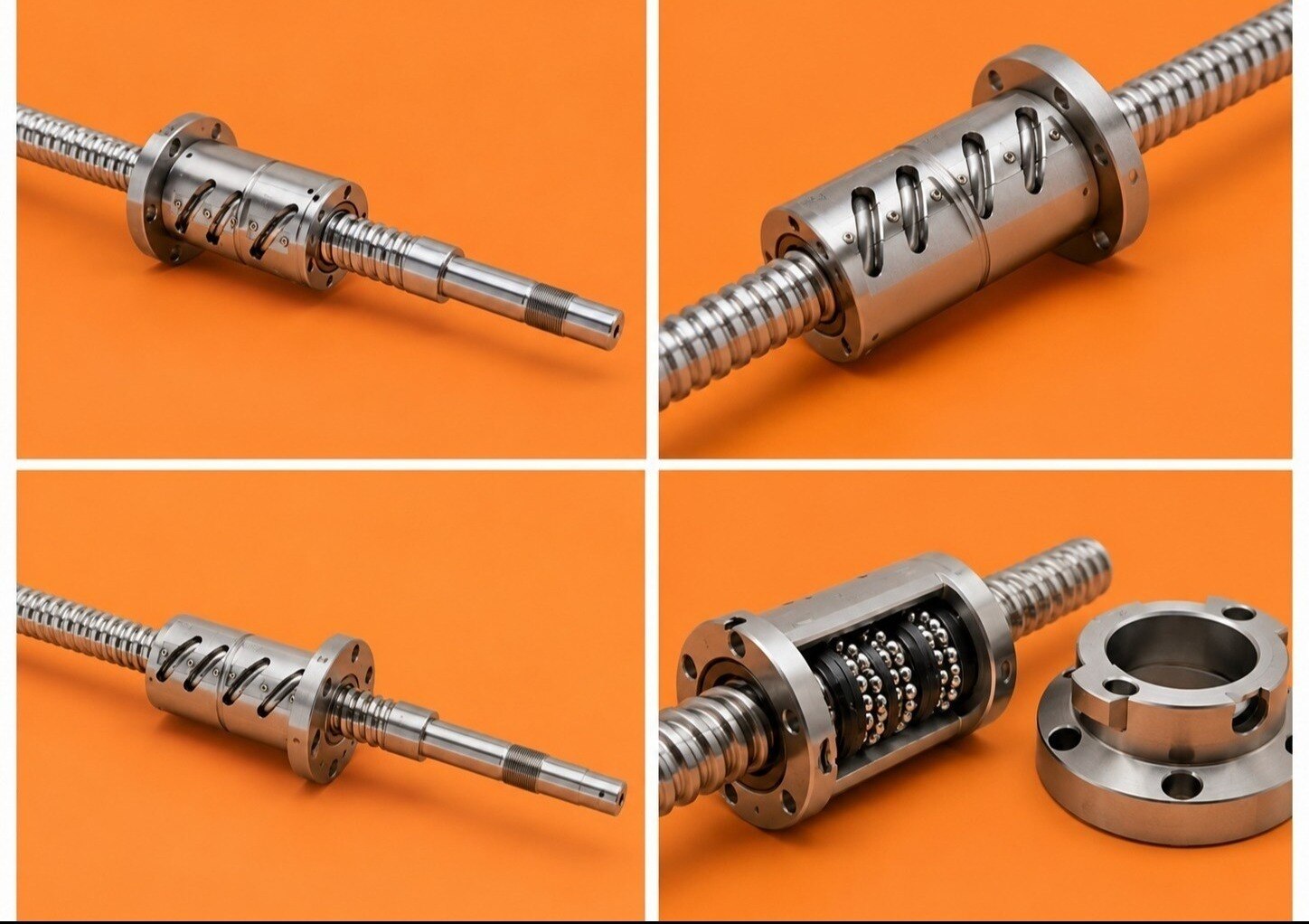
The nut starts as a steel body bored to the required envelope, then receives its internal helical raceway, return passages, mounting features, and seal grooves.
The raceway profile must suit the screw’s lead, nominal diameter, ball diameter, and contact geometry; a nut that merely fits the outside dimensions can still produce excessive torque or premature wear.
Assembly follows a controlled sequence:
- Wash the nut, screw, balls, return components, and seals to remove chips and abrasive particles.
- Select balls from a controlled size class. Mixing nominally identical balls from different size groups can change preload and running torque.
- Load the balls into the raceway, install the return tube or internal deflector, and fit the seals.
- Pair the nut with the specified screw, apply the declared lubricant, and measure running torque, axial play, and torque variation.
| Assembly | What changes | Result |
|---|---|---|
| Single nut | One raceway circuit carries the load; preload comes from ball-size selection or a defined interference fit. | Compact and lower-cost, but with less stiffness and limited preload adjustment. |
| Double nut | Two nuts are installed on one screw and separated by a spacer or adjusted against each other. | Higher rigidity and controllable preload, with greater length, friction, starting torque, and alignment sensitivity. |
A single nut with excessive preload can run hot and shorten seal and ball life. A double nut set too tightly creates the same failure, while insufficient adjustment leaves backlash. Specify the preload class or method, measured running torque, allowable torque variation, and the nut-screw matching record.
How to Evaluate Rolled Ball Screw Production in Pune
Choose a rolled screw only when its lead accuracy, stiffness, speed, and life meet the machine’s error budget; a Pune address proves none of those things. Ask how rolled ball screws are made by a ball screw manufacturer in Pune, then request evidence for the supplied batch.
A credible rolled ball screw supplier in Pune will identify which operations are in-house and which are subcontracted. Ask for:
- Thread-rolling setup records, die identification, steel grade, heat-treatment chart, hardness readings, straightness results, and lead-accuracy measurements.
- The declared nominal diameter, lead, travel, accuracy class, preload, axial load, speed, duty cycle, mounting dimensions, lubrication, and expected life.
- Cleaning, lubricant quantity, seal inspection, corrosion protection, and packaging controls; particles trapped during assembly can cause dents and repeating torque variation.
- Acceptance limits for decarburization, quench distortion, cracking, raceway hardness variation, and runout.
The rolled ball screw manufacturing process in Pune should be judged against your application, not its location.
| Option | Rolled screw | Ground screw |
|---|---|---|
| Lead accuracy | Moderate precision; confirm the measured class | Tighter accuracy for demanding positioning |
| Cost and production time | Usually lower cost and faster at volume | Higher machining effort and longer production |
| Best fit | General CNC axes, moderate contouring, cost-sensitive duty | Tight interpolation error, smooth motion, precision contouring |
If Balaji Engineering Works quotes either type, require the same drawing, acceptance figures, and batch report before comparing alternatives.
Related products
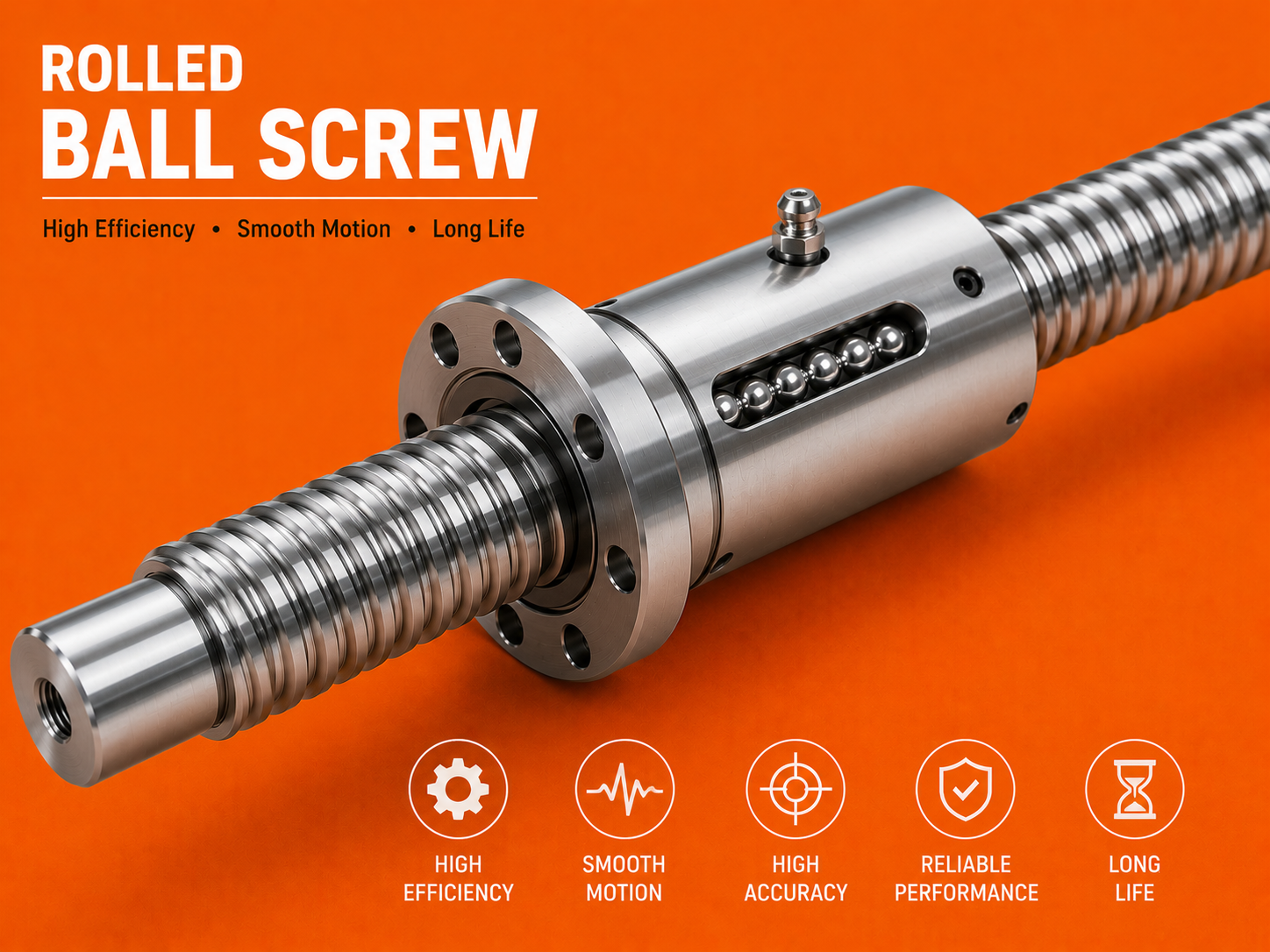 | Precision Ballscrews Balaji Engineering Works offers high-quality Rolled Ball Screws in Pune, designed for efficient linear motion with excellent performance and... View product → |
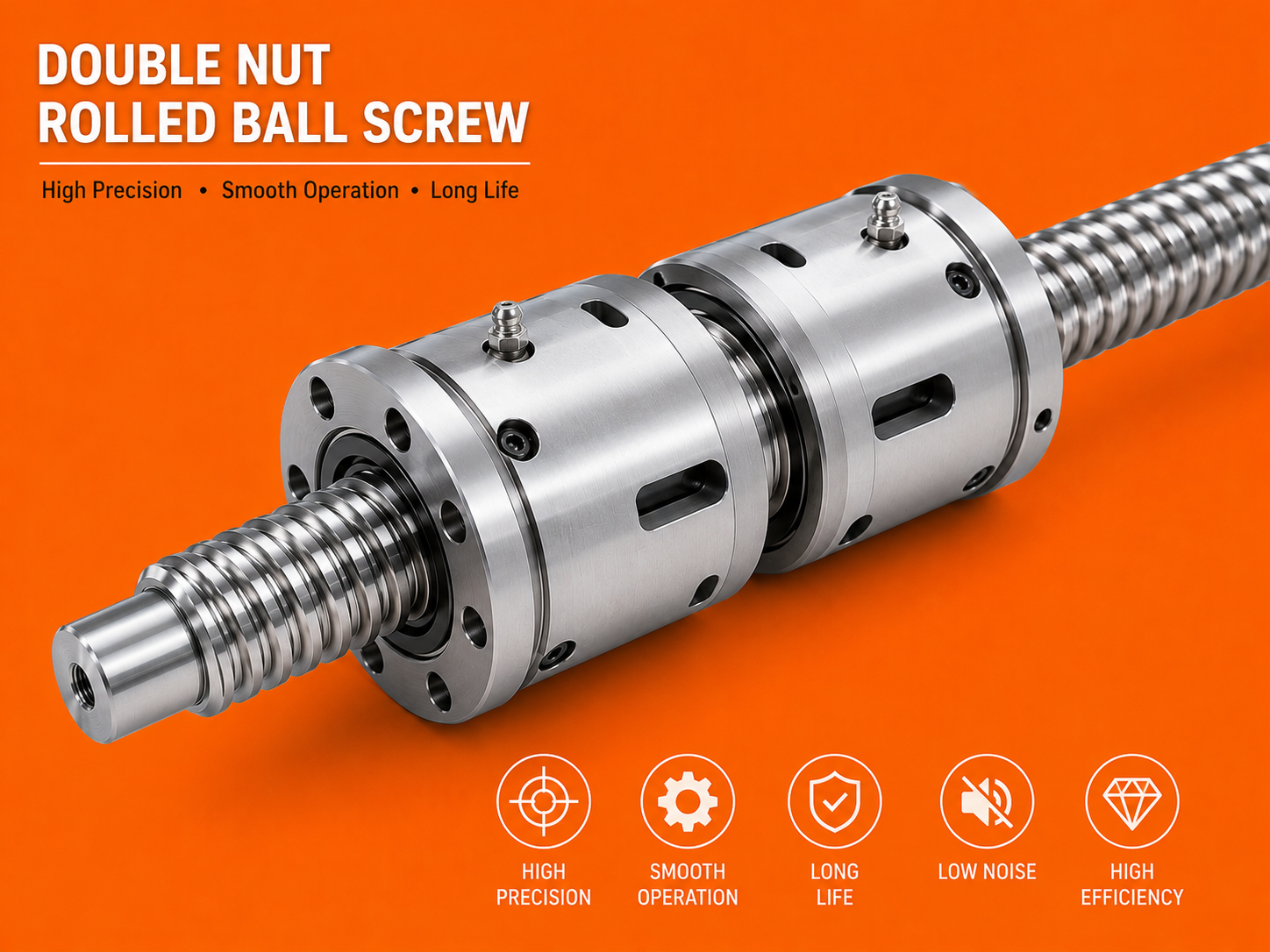 | Precision Ballscrews Balaji Engineering Works offers high-performance Double Nut Rolled Ball Screws in Pune, designed for applications requiring reduced backlash,... View product → |
Frequently asked questions
What are the main rolled ball screw manufacturing steps?
The process covers steel blank preparation, raceway rolling with hardened dies, heat treatment, straightening, accuracy inspection, and assembly of the nut, balls, return system, and preload.
Why is the steel blank inspected before rolling?
Surface seams, cracks, hardness variation, poor straightness, and incorrect diameter can pass defects into the helical ball track and reduce final accuracy.
How do hardened dies form a rolled ball screw raceway?
Hardened dies press the helical groove into the prepared steel blank while controlling the raceway profile, lead, and relationship between the screw and circulating balls.
What is checked after heat treatment and straightening?
The manufacturer checks straightness, raceway condition, lead accuracy, runout, dimensions, and other inspection results required for the screw’s application.
What should you compare when evaluating a rolled ball screw supplier in Pune?
Compare material traceability, rolling and heat-treatment controls, accuracy inspection records, ball and return-system assembly, preload selection, and support for your machine’s load and travel requirements.