
An urgent ball-screw replacement can fail even when the nominal diameter and overall length match. You will learn how to identify the complete assembly, separate screw wear from other axis faults, compare rolled and ground options, and evaluate Pune suppliers on technical evidence and dispatch reality.
Key takeaways
- Record diameter, lead, length, nut dimensions, mounting, and end machining.
- Compare pitch error, runout, preload, bearing seats, and machine travel before ordering.
- Choose rolled or ground based on accuracy, speed, duty cycle, and replacement urgency.
- Request inspection records and a complete-assembly drawing before comparing supplier prices.
Record the complete ball-screw specification before requesting a quote
A quote based only on screw diameter and lead can produce a shaft that fits the drawing but fails at the bearing seat, nut mount, or machine travel. For a replacement rolled ball screw in Pune, record the complete assembly specification before asking for availability or price.
1. Measure and record nominal screw diameter, lead, handedness, overall shaft length, threaded length, usable travel, and the nut’s body length, outside diameter, flange shape, and mounting-hole pattern.
2. Photograph every marking on the screw and nut, including faint engraving, labels, and manufacturer codes. If markings are unreadable, provide the machine model, axis name, service manual page, assembly drawing, and previous purchase record.
3. Detail the return system: internal tube, external tube, or end-cap arrangement. State whether the offer must include a matched screw-and-nut assembly or only a nut, because ball diameter, raceway geometry, conformity, and preload prevent automatic interchangeability.
4. Send a shaft-end drawing or measured sketch showing bearing-seat diameters and lengths, retaining-thread diameter and pitch, keyways, coupling diameter, circlip grooves, and motor-side and support-side dimensions.
5. State accuracy class and standard, preload, nut style, lubrication, wiper configuration, and sealing arrangement. Chips, abrasive dust, coolant, damaged wipers, and incorrect grease can create torque spikes in a dimensionally correct replacement.
For rolled ball screw sourcing in Pune, ask the supplier to separate locally ready stock from items needing nut matching, end machining, inspection, import clearance, or freight. Obtain a committed dispatch date for the complete tested assembly, not merely the bare screw, and request the inspection report, load ratings, permissible speed, and liability for mismatch.
Confirm compatibility and prove whether the existing screw is worn
A replacement nut will run on an existing screw only when its ball diameter, raceway geometry, ball conformity, return system, and preload match the shaft. Ask for a complete matched screw-and-nut assembly unless the supplier confirms nut-only compatibility from the original drawing and inspection data.
For a replacement rolled ball screw in Pune, do not approve a quote based only on nominal diameter and lead.
- Remove the coupling and brake load, clean the screw, and check for dents, flaking, scoring, pitting, or polished bands on the raceways.
- Measure reversal backlash at several positions with a dial indicator while applying the same test force in both directions. Record whether backlash increases in the centre of travel, where wear is usually greatest.
- Check axial movement with the nut locked and the shaft rotated. Excess movement can come from worn screw threads, a loose nut, damaged bearings, or a loose support housing.
- Compare positioning error and motor torque at multiple positions. A repeatable error pattern points toward lead variation; rising torque, roughness, or current at one position points toward damage or contamination.
- Reject a nut-only replacement when the shaft has pitting, measurable diameter loss, rough rotation, or a damaged return path. Request a matched assembly and its preload or torque record.
Give the supplier the nut drawing, return-tube or end-cap design, preload, shaft-end drawing, and accuracy report. A ball screw manufacturer near Pune should identify who formed the thread, assembled the nut, inspected the pair, assigned the batch or serial number, and carries replacement liability. Local stock proves dispatch access, not manufacturing compatibility.
Choose rolled or ground, then match nut type and preload to the axis
Choose a rolled ball screw when the axis needs dependable positioning, quick availability, and lower replacement cost rather than the tightest lead accuracy. A ground screw suits contouring, interpolation, and high-precision inspection axes where lead variation and surface finish directly affect positioning error.
Compare the declared accuracy class under the same standard; diameter and lead alone do not prove equivalence.
| Option | Accuracy and finish | Best replacement use |
|---|---|---|
| Rolled | Lower lead consistency and rougher raceway finish; economical and faster to produce | General CNC, transfer, handling, and axes with moderate positioning demands |
| Ground | Tighter lead control and smoother raceway finish; higher cost and production time | Precision machining, interpolation, and inspection axes |
| Single nut | Lower friction, shorter body, and lower cost; more residual backlash | Axes where backlash is controlled by the application |
| Double nut | Adjustable preload, higher stiffness, and reduced backlash; needs more space and creates more drag | Reversing or positioning axes where lost motion is unacceptable |
Match the nut to the shaft’s ball diameter, raceway conformity, return-tube or end-cap system, and wiper arrangement. Do not fit a nut-only replacement unless the supplier confirms compatibility; a complete matched assembly is safer.
Select preload for the axis: light preload limits friction and motor heating, while heavier preload improves stiffness but raises torque and reduces tolerance to contamination.
Give a rolled ball screw manufacturer in Pune or rolled ball screw supplier in Pune the accuracy class, nut style, preload value, and shaft-end drawing. Request torque data and an accuracy report, not a promise that the part is “equivalent.”
Check load, speed, contamination, and incoming-test requirements
A dimensionally matching screw can fail on the first rapid traverse if its unsupported length, root diameter, or end-support arrangement produces excessive deflection or critical-speed vibration. Before approval, obtain the manufacturer’s limits for the complete assembly, not just its diameter and lead.
1. Calculate the screw’s maximum permissible rpm from its unsupported length, root diameter, bearing arrangement, and end-support configuration. Compare that figure with commanded speed, lead, rapid-traverse speed, and acceleration; a larger lead can push the screw past its rpm limit.
2. Check axial loading in both directions. Compare the machine’s compression load and acceleration forces with the screw’s dynamic and static load ratings, then check buckling for the unsupported span. A screw that passes the load rating can still buckle under compression.
3. Specify contamination controls before ordering. Confirm the wiper configuration, lubrication type and quantity, sealing arrangement, and compatibility with coolant. Chips, abrasive dust, damaged wipers, or incorrect grease create raceway dents and torque spikes.
4. Require incoming checks for shaft diameter, lead, overall length, nut mounting pattern, end geometry, runout, and nut travel. Ask for the accuracy test report, preload or running-torque data, batch or serial traceability, and visual evidence that the return system and wipers are undamaged.
5. For a replacement rolled ball screw in Pune, separate a complete assembly ready to dispatch from a bare screw awaiting nut matching or end machining. During rolled ball screw sourcing in Pune, obtain a committed dispatch date for the inspected assembly, including freight, taxes, and replacement liability.
Compare Pune suppliers by complete-assembly evidence, not quoted price
Compare the promised complete assembly, not the bare screw or lowest price. A rolled ball screw supplier in Pune may hold the shaft locally while the nut, end machining, matching, or inspection comes from elsewhere. Ask for one committed dispatch date covering the screw, nut, machined ends, documentation, and packing.
Request these details before accepting an urgent quotation:
- State whether the offer is a complete matched screw-and-nut assembly or a nut-only replacement.
- Confirm thread-forming origin, nut assembly location, and responsibility for final matching.
- Request batch or serial traceability, accuracy test results, preload or running-torque data, and warranty terms.
- Price end machining, inspection, freight, taxes, and replacement liability as separate lines.
- Send the shaft-end drawing, including bearing seats, retaining threads, keyways, coupling diameter, circlip grooves, and support-side lengths.
Compare responses in one table:
| Check | Strong evidence | Red flag |
|---|---|---|
| Dispatch | Date for the complete tested assembly | “Screw in stock” with no nut date |
| Compatibility | Diameter, lead, nut style, return system, preload, and end drawing confirmed | Diameter and lead only |
| Manufacturing control | Named rolled ball screw manufacturer in Pune or documented subcontractor chain | Sales address presented as factory proof |
| Inspection | Signed accuracy report and serial-linked torque or preload record | Certificate promised after dispatch |
| Failure cover | Written correction or replacement terms | Warranty excludes matching or machining |
A ball screw manufacturer near Pune should identify who made and inspected each precision part. Ask Balaji Engineering Works the same questions; evidence, not proximity, decides whether its quote is comparable.
Related products
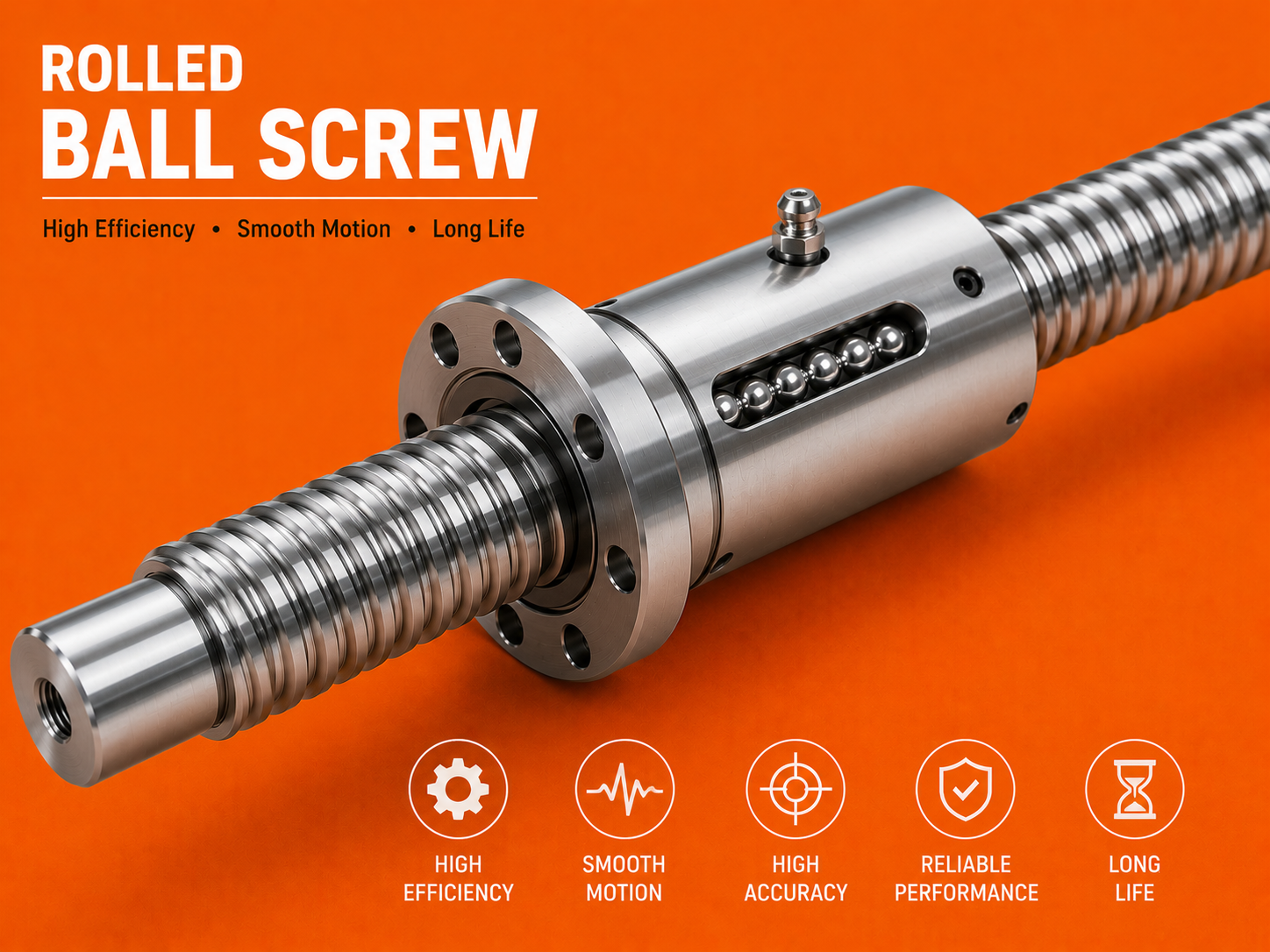 | Precision Ballscrews Balaji Engineering Works offers high-quality Rolled Ball Screws in Pune, designed for efficient linear motion with excellent performance and... View product → |
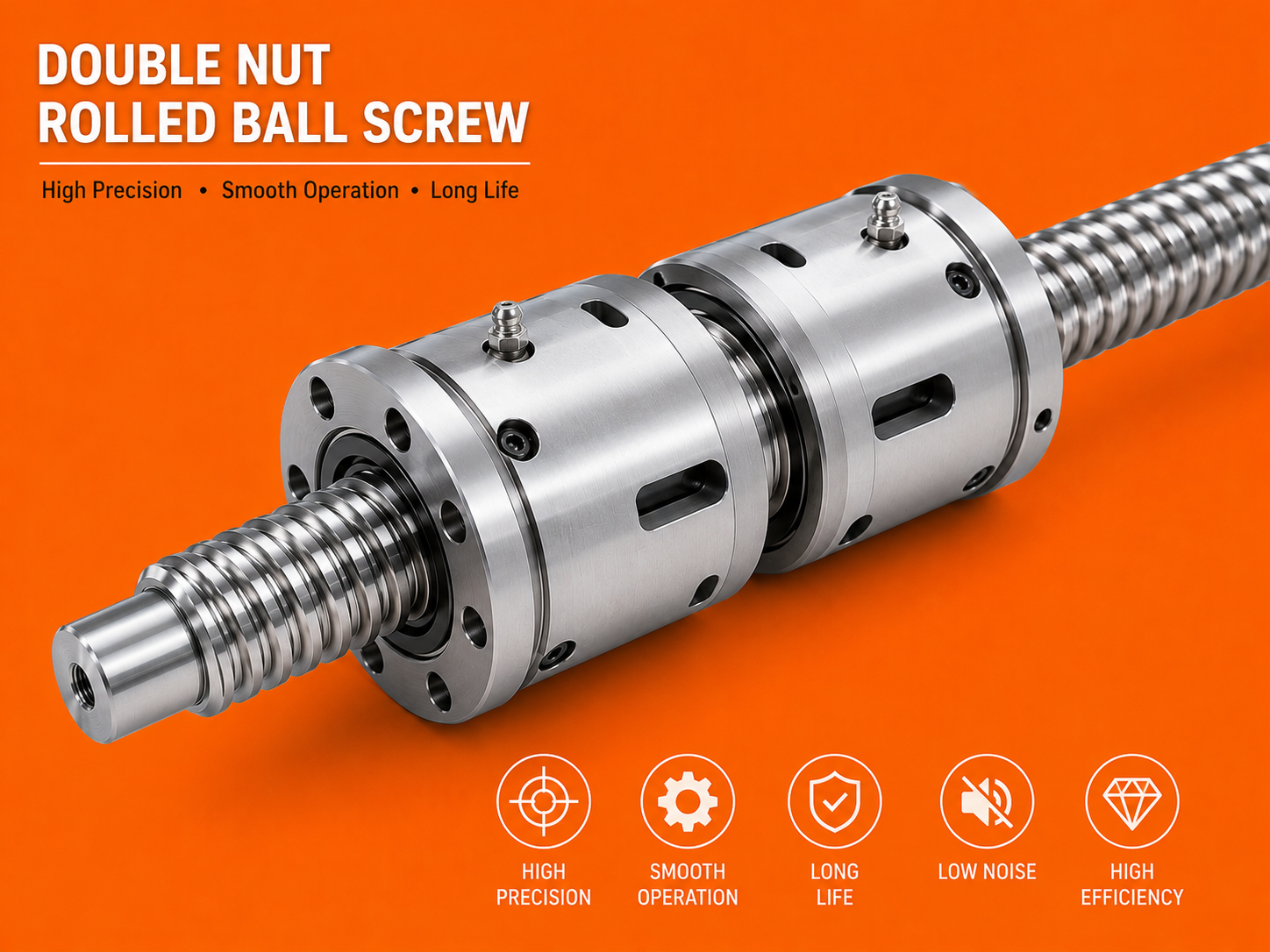 | Precision Ballscrews Balaji Engineering Works offers high-performance Double Nut Rolled Ball Screws in Pune, designed for applications requiring reduced backlash,... View product → |
Frequently asked questions
What information should you record before requesting a replacement ball-screw quote?
Record nominal diameter, lead, overall length, effective travel, nut type, nut mounting dimensions, return system, preload, end machining, bearing-seat dimensions, thread details, lubrication method, and the machine-axis application.
How can you confirm that an existing ball screw is worn?
Measure backlash at multiple positions, inspect the raceways and balls for pitting or scoring, check axial runout and bearing-seat condition, and compare positioning error against the machine control or laser-measurement record.
When should you choose a rolled ball screw instead of a ground ball screw?
Choose a rolled screw when replacement speed, cost, and the machine’s required positioning accuracy suit its pitch-accuracy class. Choose a ground screw when the axis requires tighter pitch accuracy, repeatability, or high-speed performance.
What evidence should you request from a Pune ball-screw supplier?
Request a drawing showing the complete assembly, pitch and lead details, nut dimensions, preload, end machining, material or heat-treatment information, inspection results, and confirmation that the quoted parts match your recorded machine interface.