
A Pune quotation for a double-nut rolled ball screw is only useful when it identifies the complete screw-and-nut assembly, its accuracy, preload, end machining, and inspection evidence. By the end, you will know how to screen local sellers, specify a double nut ball screw for CNC, compare rolled with ground screws, and reject prices that conceal incompatible parts.
Key takeaways
- Confirm whether the Pune seller manufactures, stocks, or imports the screw assembly.
- Specify nut style, lead, diameter, preload, accuracy grade, and end machining on the RFQ.
- Match screw diameter, lead, stroke, speed, and load to the CNC axis.
- Compare preload records, inspection data, lead accuracy, delivery, and total price.
Start with the right Pune supplier: manufacturer, distributor, or component seller
A Pune stocking address does not prove local manufacture. If you searched for a precision ballscrew manufacturer offering a double nut rolled ball screw in Pune, first establish whether the seller rolls the shaft or only supplies an imported or third-party assembly.
Ask the seller for:
- The screw-making plant’s address and the actual manufacturing location
- The process scope: shaft rolling, heat treatment, thread finishing, nut assembly, and end machining
- Lot traceability linking the screw, nuts, balls, material, and heat-treatment record
- The maker’s dimensional and lead-accuracy inspection report, including measurement length
- One representative sample or inspection report before placing a batch order
A genuine supplier can identify the manufacturing lot and show measured results, not just a catalogue specification. Request nominal diameter, lead deviation, radial runout, surface condition, axial play or measured preload torque, and final end-machining inspection. “Preloaded” and “zero backlash” are claims until the supplier provides the preload method and measured starting torque.
Compare the report with your purchase request: diameter, lead, shaft length, nut style, preload, accuracy class, lubrication, wipers, and quantity must match.
A distributor can still be a sound choice when it discloses the original maker and supplies traceable inspection data; reject the offer when it hides the source or provides only a Pune warehouse address.
Choose between single-nut, double-nut, rolled, and ground designs
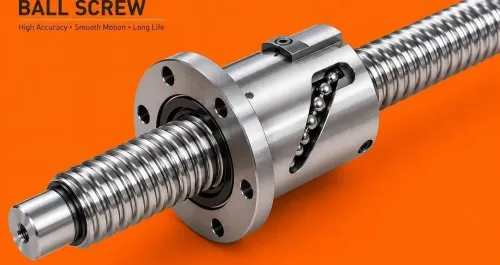
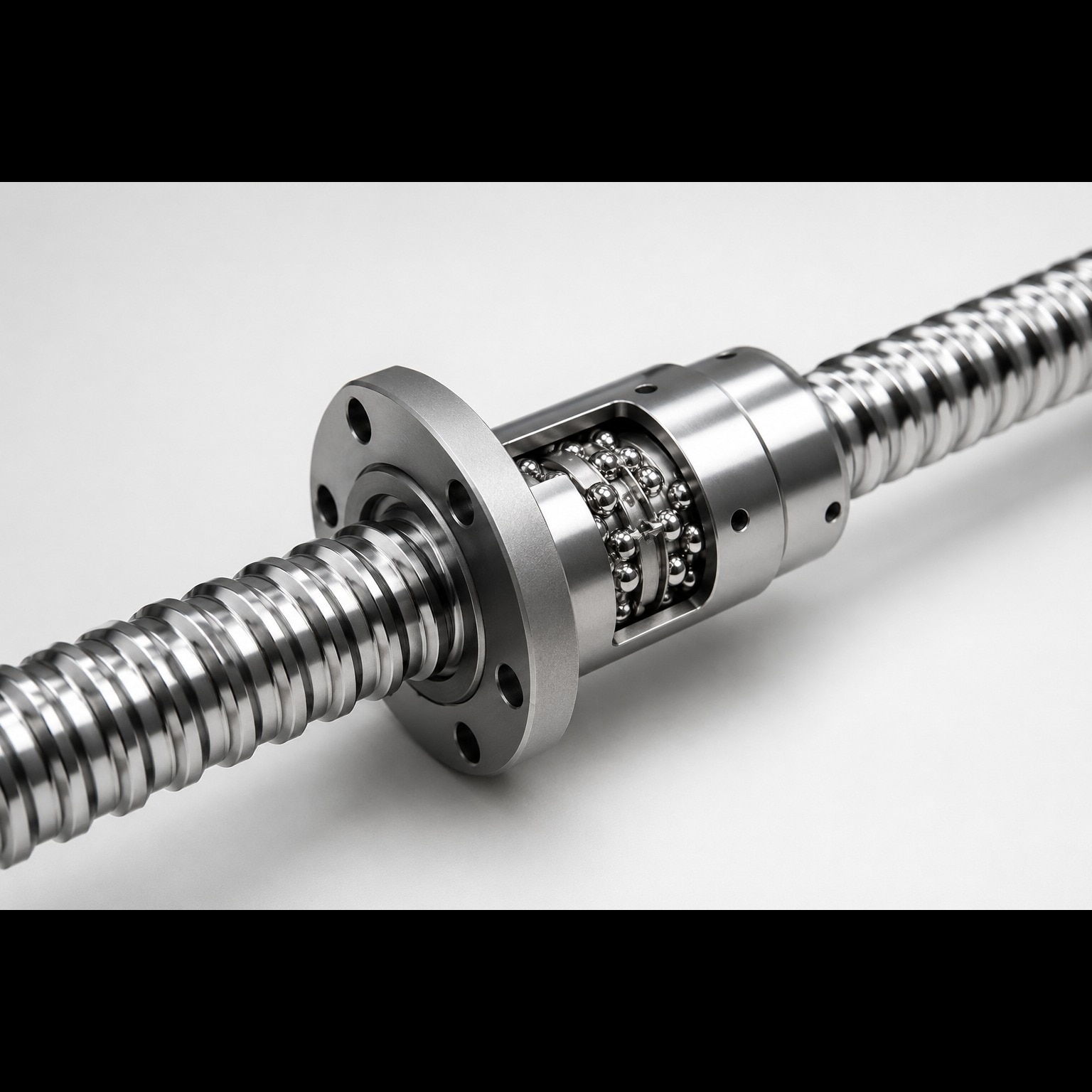
A single-nut rolled screw suits moderate accuracy, limited space, lower cost, and faster delivery. Choose a double nut when reversal backlash and axial stiffness matter more than minimum friction and torque. Rolled and ground describe how the shaft is made; either can use one or two nuts.
| Construction | Backlash and stiffness | Accuracy, friction, space, cost, delivery |
|---|---|---|
| Single-nut rolled | Lowest preload; backlash depends on fit and wear | Lower lead accuracy; low friction, compact nut, lowest cost, usually quickest supply |
| Double-nut rolled | Opposing nuts reduce backlash and raise stiffness | Moderate accuracy; higher friction, heat, torque and nut length, with good cost and availability |
| Single-nut ground | Better lead consistency than rolled | High accuracy with low-to-moderate friction; compact, but costly and slower to produce |
| Double-nut ground | Highest controllable stiffness and lowest axial backlash | Best for demanding CNC contouring; highest friction, length, cost and lead time |
Do not accept “zero backlash” as a specification. Require the preload method—spacer, keyed adjustment, or another defined arrangement—and measured starting torque. Excessive preload raises motor load and temperature; lost preload appears as reversal backlash and contour error.
Ask a precision rolled ball screw manufacturer for the accuracy standard, lead-accuracy grade, measured travel-deviation data, and measurement length. “Precision” alone proves nothing. If a quote offers a rolled screw at ground-screw accuracy, demand the inspection result, maker’s plant location, lot traceability, and dimensional report before comparing prices.
Put the complete screw specification on the RFQ and drawing
A supplier cannot quote the same double-nut assembly from “rolled ball screw” alone. Put these fields on the RFQ and the machine drawing:
- Nominal screw diameter, lead, effective threaded length, and total shaft length
- Double-nut style, nut body dimensions, mounting-hole pattern, and nut orientation
- Preload class or target preload, plus permissible backlash or axial play at delivery
- Lead-accuracy class and required positioning accuracy over the effective travel
- End machining: bearing-seat diameters, shoulder locations, datum faces, thread sizes, keyway dimensions, coupling diameter, and retaining features
- Wiper or seal arrangement at both nut ends, including contamination protection
- Lubricant type, lubrication port position, and initial lubrication requirement
- Required quantity, replacement-unit quantity, and whether the quote covers the complete shaft-and-double-nut assembly
State the axis travel separately from the shaft length. A shaft that is long enough for travel can still fail installation if its bearing seats or coupling end are wrong.
Specify the acceptance documents with the part description: dimensional inspection report, lead-accuracy report, runout measurement, preload or torque data, batch or lot traceability, and the maker’s name and manufacturing location. Ask the supplier to identify every included item, such as support bearings, seals, spacers, or end machining.
Also require the quotation to state the supplier’s policy if backlash increases or preload is lost after installation; a double nut alone does not guarantee zero backlash throughout service.
Match the ball screw to the CNC axis and define measurable performance
Check fit by matching the machine drawing, load-speed calculations, bearing arrangement, and acceptance limits before ordering. A double nut ball screw for CNC is not interchangeable on dimensions alone: incorrect end machining can prevent installation even when the nut and shaft specifications are correct.
- Confirm nominal diameter, lead, effective travel, overall shaft length, nut length, flange or cylindrical nut dimensions, and available installation space.
- Match bearing seats, shoulder locations, thread, keyway, coupling diameter, and datum faces to the axis drawing. State fixed-side and floating-side support bearings.
- Calculate screw speed from axis speed and lead, then check critical speed, buckling load, acceleration, duty cycle, and lubrication interval.
- Check motor torque using axial load, lead, efficiency, acceleration, and friction; verify motor speed, coupling bore, reflected inertia, and brake or back-drive requirements.
- Specify guideway alignment, screw runout, bearing-seat concentricity, and nut-to-guideway parallelism. Misalignment raises running torque and shortens service life.
- Define positioning accuracy using the applicable lead-accuracy class, measured travel-deviation data, and measurement length—not the word “precision” alone.
Require the supplier to state the preload method, preload class, and measured starting torque for the double-nut assembly. “Preloaded” or “zero backlash” proves nothing by itself: excessive preload creates heat and abnormal torque, while lost preload appears as reversal backlash and contour error.
Set acceptance checks for axial runout, starting torque, temperature rise, travel deviation, and backlash after installation. A quotation is comparable only when it covers the same nut, shaft, end machining, supports, seals, and inspection scope.
Compare Pune quotations through preload, inspection data, and total price
Choose a double nut ball screw supplier in Pune by matching preload, inspection evidence, and complete assembly scope before comparing the double nut ball screw price. Higher preload reduces axial play and increases stiffness, but also raises friction, heat generation, and motor torque.
| Measure | Comparable quotation | Evidence to request |
|---|---|---|
| Scope | Same diameter, lead, shaft length, nut style, accuracy class, end machining, lubrication, and wipers | Line-by-line RFQ confirmation |
| Preload | Same preload class or specified axial play and preload torque | Measured torque, axial-play result, and adjustment or spacer details |
| Inspection | Same acceptance limits for lead deviation, radial runout, dimensions, and surface condition | Signed inspection report linked to the lot |
| Total price | Screw, two nuts, machining, seals, support bearings, packing, freight, and taxes shown separately | Drawing, delivery scope, warranty, and replacement terms |
A nut-only offer cannot be compared with a machined, inspected assembly. Ask whether the seller rolls the shaft or resells an imported or third-party product; request the manufacturing location, lot traceability, and maker’s report. A Pune stocking address proves neither manufacture nor accuracy.
Before a batch order, request one representative sample or report covering:
- Nominal dimensions and final end-machining inspection
- Lead deviation and radial runout
- Axial play or preload torque
- Material and heat-treatment traceability
- Wiper, seal, and surface-condition checks
A quotation from Balaji Engineering Works deserves this same evidence-based comparison. Confirm the supplier’s policy if preload changes through wear, contamination, or raceway damage; double nuts do not guarantee permanent zero backlash.
Related product
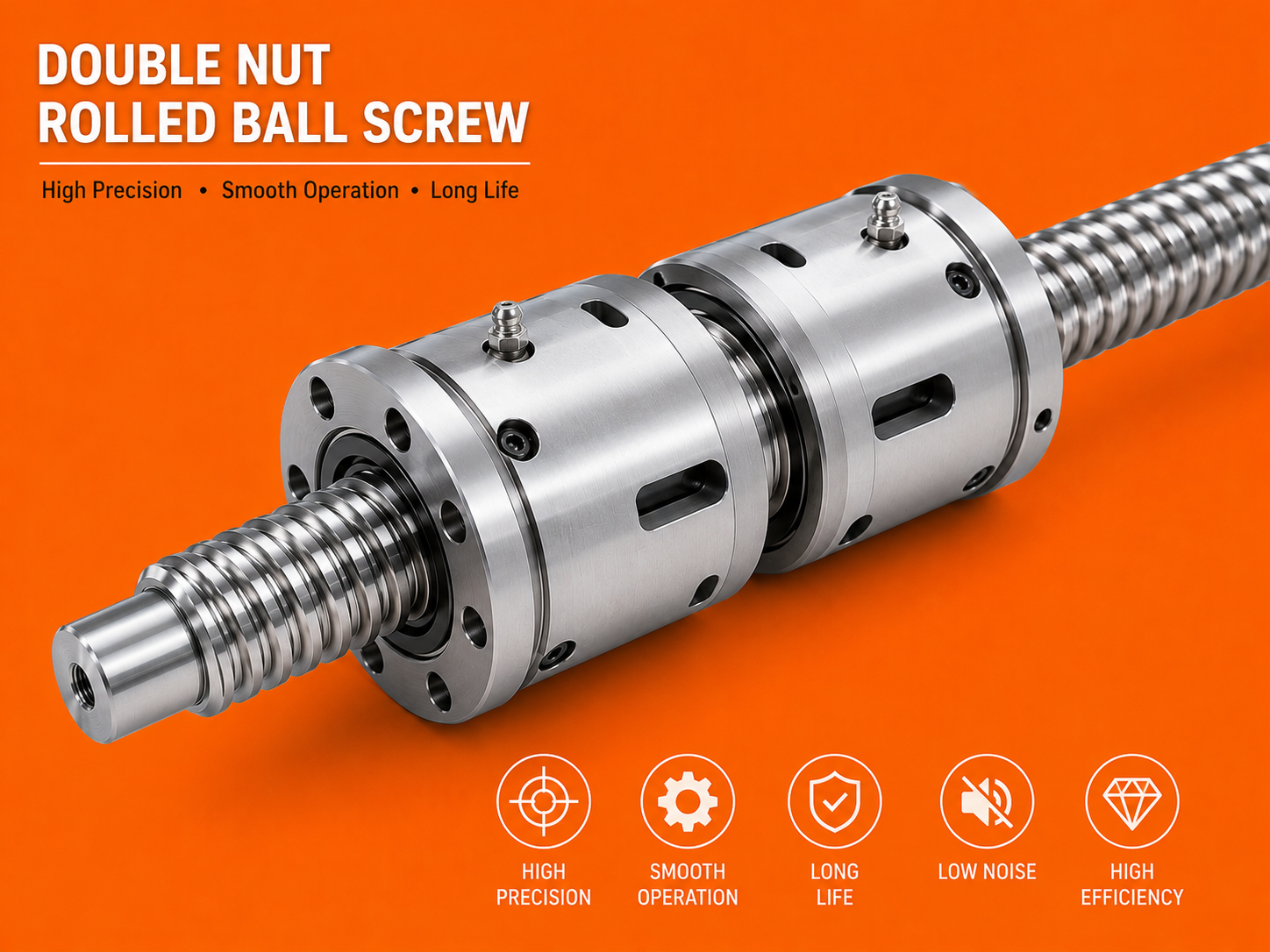 | Precision Ballscrews Balaji Engineering Works offers high-performance Double Nut Rolled Ball Screws in Pune, designed for applications requiring reduced backlash,... View product → |
Frequently asked questions
How do you verify a Pune ball screw supplier is a manufacturer?
Ask whether the company rolls the shaft in-house and request manufacturing details, inspection records, and traceability for the quoted assembly. A Pune stocking address alone does not prove local manufacture.
What is the difference between single-nut and double-nut ball screws?
A single nut uses one recirculating ball-nut assembly. A double nut uses two nuts adjusted against each other to control backlash and preload, which suits CNC axes that need higher stiffness.
What specifications belong on a double nut rolled ball screw RFQ?
Include shaft diameter, lead, overall length, usable stroke, nut type, preload, accuracy grade, end machining, return-system configuration, lubrication requirements, and inspection documents.
How do you match a double nut ball screw to a CNC axis?
Check the axis load, travel, required positioning accuracy, rapid-traverse speed, acceleration, critical speed, mounting arrangement, and duty cycle before selecting diameter, lead, and nut configuration.
How should you compare double nut ball screw quotations in Pune?
Compare preload and lead-accuracy data, inspection records, included end machining, warranty and delivery terms, replacement support, and the complete installed cost rather than the listed price alone.