
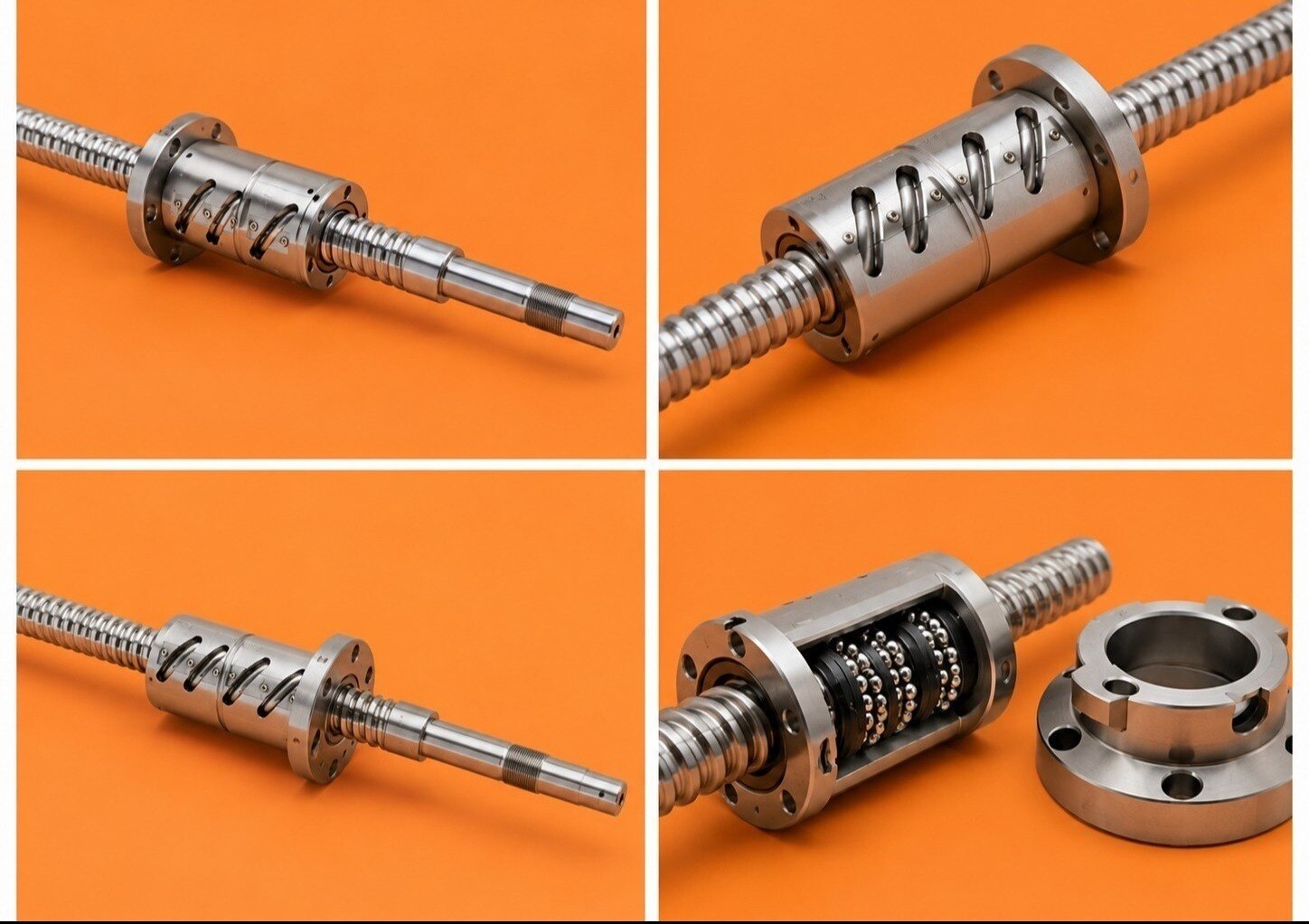
“Ball leading screw” does not identify one universally defined product: some suppliers use it for a recirculating ball screw, while others contrast it with a sliding-contact lead screw. You will be able to fix the terminology, compare performance and cost, calculate the main selection limits, and write an RFQ that prevents an unsuitable screw from reaching your CNC or automation machine.
Key takeaways
- Confirm whether “ball leading screw” means a ball screw or sliding lead screw.
- Match lead, accuracy grade, and thread manufacturing method to axis demands.
- Size for load, speed, buckling, critical speed, life, and mounting conditions.
- Request dimensions, tolerances, nut type, preload, testing, and alternatives in writing.
Does “ball leading screw” mean a ball screw or a sliding lead screw?
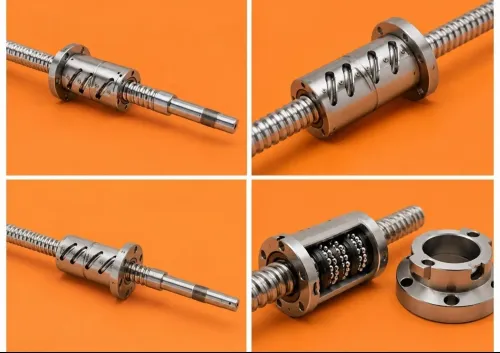
“Ball leading screw” can mean either product. A recirculating ball screw uses hardened balls between the screw and nut; a conventional lead screw uses sliding contact with a polymer, bronze, or similar nut.
Indian procurement uses the term inconsistently, so a ball leading screw comparison in Noida must name the nut type, screw diameter, lead, accuracy class, and preload.
| Option | Contact | Typical efficiency | Practical effect |
|---|---|---|---|
| Recirculating ball screw | Hardened balls roll between screw and nut | About 90–98% when lubricated | Low friction, high duty-cycle efficiency, predictable motion, and easier backdriving |
| Sliding lead screw | Nut slides on the screw thread | About 20–70% | Lower purchase cost and possible self-locking, but more heat, wear, and friction |
A ball screw is not self-locking. A vertical axis needs a brake, counterbalance, or another holding device, because gravity can backdrive it. A sliding lead screw can self-lock when its helix angle stays below the friction angle, but wear, lubrication, vibration, and load direction can remove that margin.
The phrase “ball leading screw versus ball screw manufacturer in Noida” therefore describes no definite product until the RFQ fixes the design.
Choose a lead screw for short-stroke, low-speed, intermittent motion where low cost or holding ability matters. Choose a ball screw for CNC feed axes requiring low friction, repeatability, and continuous-duty efficiency.
How do lead, pitch, accuracy, and ground or rolled threads change axis performance?
Lead is axial travel per screw revolution; pitch is the distance between adjacent thread starts. In a single-start screw, lead and pitch are equal. In a multi-start screw, lead equals pitch multiplied by the number of starts. A 10 mm lead at 1,200 rpm produces 12,000 mm/min, while a 5 mm lead produces 6,000 mm/min.
The smaller lead gives finer commanded travel per revolution, but usable resolution still depends on the controller, encoder, backlash, stiffness, and servo tuning.
| Term | What it means | Why it matters |
|---|---|---|
| Positioning accuracy | Difference between commanded and achieved position | Includes screw, bearings, structure, thermal growth, and control errors |
| Repeatability | Ability to return to the same position | A screw can repeat well while still having poor absolute accuracy |
| Backlash | Reversible clearance between mating parts | Creates reversal error before the axis moves |
| Lost motion | Total position error during reversal or load change | Includes backlash, elastic deflection, and other compliance |
Ask whether each figure is cumulative lead error or complete machine positioning data. Ground threads provide better lead accuracy, surface finish, and repeatability for precision axes. Rolled threads usually reduce cost and delivery time, but require verification of the accuracy class and measured lead error.
Price reflects grinding time, inspection, material, diameter, length, nut design, preload, and custom production—not thread manufacture alone. Ask a precision ballscrew manufacturer in Noida for the accuracy standard, measurement length, measurement temperature, lead-error report, runout data, and preload or running-torque results.
How do you size a screw before ordering it for CNC or automation?
Size the screw from the complete load spectrum, not from steady cutting force alone. Use this sequence:
1. Record required axial load, peak acceleration, travel, cycle time, duty cycle, horizontal or vertical orientation, contamination level, and mounting arrangement. Add acceleration and shock loads to the cutting or thrust load before selecting components.
2. Select diameter and lead together. Lead sets travel per revolution and influences torque; diameter and unsupported length control stiffness, buckling resistance, and critical speed. Check critical speed against the manufacturer’s allowable speed for the actual end supports: fixed-fixed, fixed-supported, or fixed-free. Whip also depends on unsupported length, straightness, balance, and bearing arrangement.
3. Check buckling when the screw carries compressive vertical or thrust load. Use the supplier’s end-condition factor and unsupported length; nominal diameter alone does not prove safe compression capacity. Calculate drive torque with T = F × lead ÷ (2π × efficiency), then add preload, seal, bearing, and acceleration torque.
Calculate motor power as P = T × angular speed.
4. Estimate life with L10 = (Ca/P)^3 million revolutions, using equivalent axial load P and dynamic load rating Ca. Treat this as a rating-based estimate, not a promise: shock, contamination, poor lubrication, mounting error, preload, and uneven load distribution can shorten actual life substantially.
Reduce confidence further when the load spectrum is irregular or alignment is difficult to verify.
When should you choose a single nut, double nut, or a different installation design?
A single nut is the practical choice for many CNC and automation axes when the specified backlash and stiffness meet the application. Choose a double nut or another preloaded arrangement for high-force cutting, reversal-sensitive interpolation, or minimal lost motion.
| Design | Benefit | Cost or risk |
|---|---|---|
| Single nut | Lower friction, heat, torque, and service effort | More clearance and lower axial rigidity |
| Double nut or preloaded nut | Greater stiffness and minimal lost motion | Higher torque, heat, motor demand, and alignment sensitivity |
| Alternative drive | May suit long travel, contamination, or extreme duty better | Requires different guides, controls, or maintenance |
Preload removes internal clearance, but it does not mean “zero backlash” without evidence. Require the supplier to state whether preload uses oversized balls, a matched double nut, or an adjustable mechanism, and provide the preload amount and running-torque data.
Horizontal screws mainly face sag, contamination, and bearing-load problems. Vertical screws add gravity load, backdriving risk, brake or counterbalance requirements, and buckling or fall protection. Unsupported length, acceleration, shock loads, temperature, and thermal expansion change accuracy and service life.
Specify wipers, bellows, seals, grease or oil, relubrication interval, chip and coolant protection, and inspection access. A ball screw is not automatically superior in abrasive environments; contamination can quickly damage recirculation paths.
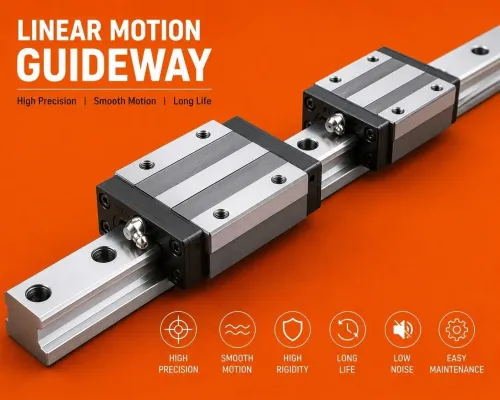
Compare ball screw alternatives for CNC in Noida when a sliding lead screw, roller screw, rack-and-pinion, belt, or linear motor better matches the installation.
What should a Noida supplier quote, and which alternatives deserve comparison?
A useful RFQ forces every ball leading screw supplier in Noida to quote the same engineering basis. Ask for:
- Diameter, lead, overall length, effective length, nut style, preload, accuracy class, dynamic and static load ratings
- Maximum allowable speed, end-support assumptions, lubrication, wipers, mounting dimensions, and replacement-part availability
- Traceable material and heat-treatment records where required, plus nut preload, running-torque, runout or straightness data
- Lead-error measurements showing measurement length and temperature, with mounting recommendations for the screw and bearings
Confirm whether the screw is ground or rolled. Also ask whether the stated accuracy applies to the screw alone or the complete machine axis; lead error, thermal expansion, bearings, mounting, servo tuning, and structure affect final positioning.
| Check | Acceptable quotation | Warning sign |
|---|---|---|
| Inspection data | Traceable reports with conditions stated | “High precision” without measurements |
| Speed rating | Based on actual supports and unsupported length | Motor rpm used as the limit |
| Serviceability | Replaceable nut, seals, and bearing guidance | No replacement-part commitment |
A local address proves neither precision, interchangeability, inspection capability, nor service support. Compare each precision ballscrew manufacturer in Noida using the same load spectrum, speed, life target, and test conditions. Balaji Engineering Works is one local supplier to evaluate against those documented criteria.
For ball screw alternatives for CNC in Noida, compare sliding lead screws for low-duty economy, planetary roller screws for very high loads or cycle rates, rack-and-pinion drives for long travel, belts for fast lower-stiffness axes, and linear motors when critical speed limits the screw.
Related products
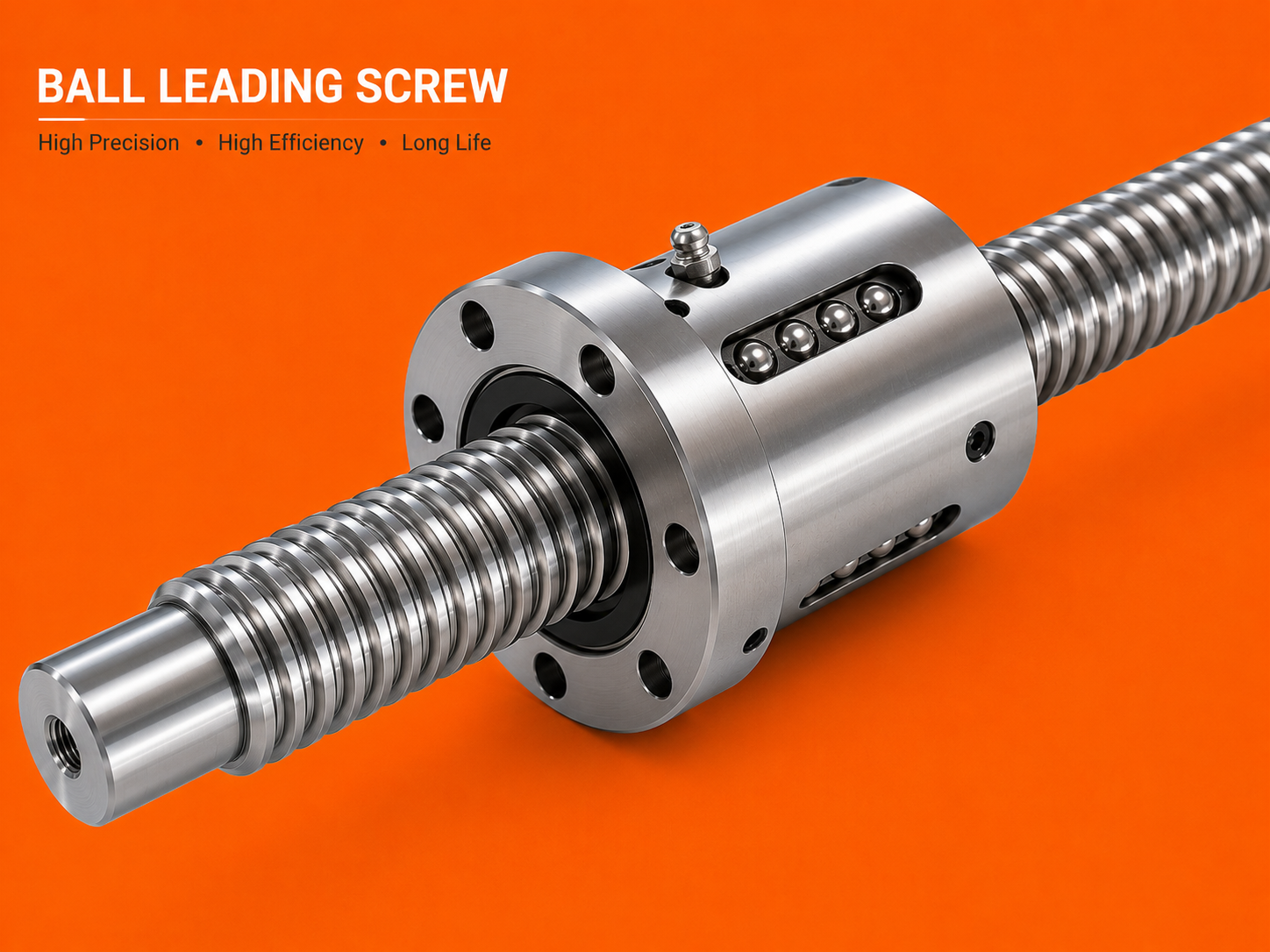 | Precision Ballscrews Balaji Engineering Works offers high-quality Ball Lead Screws in Pune, designed for precise and efficient conversion of rotary motion into linear... View product → |
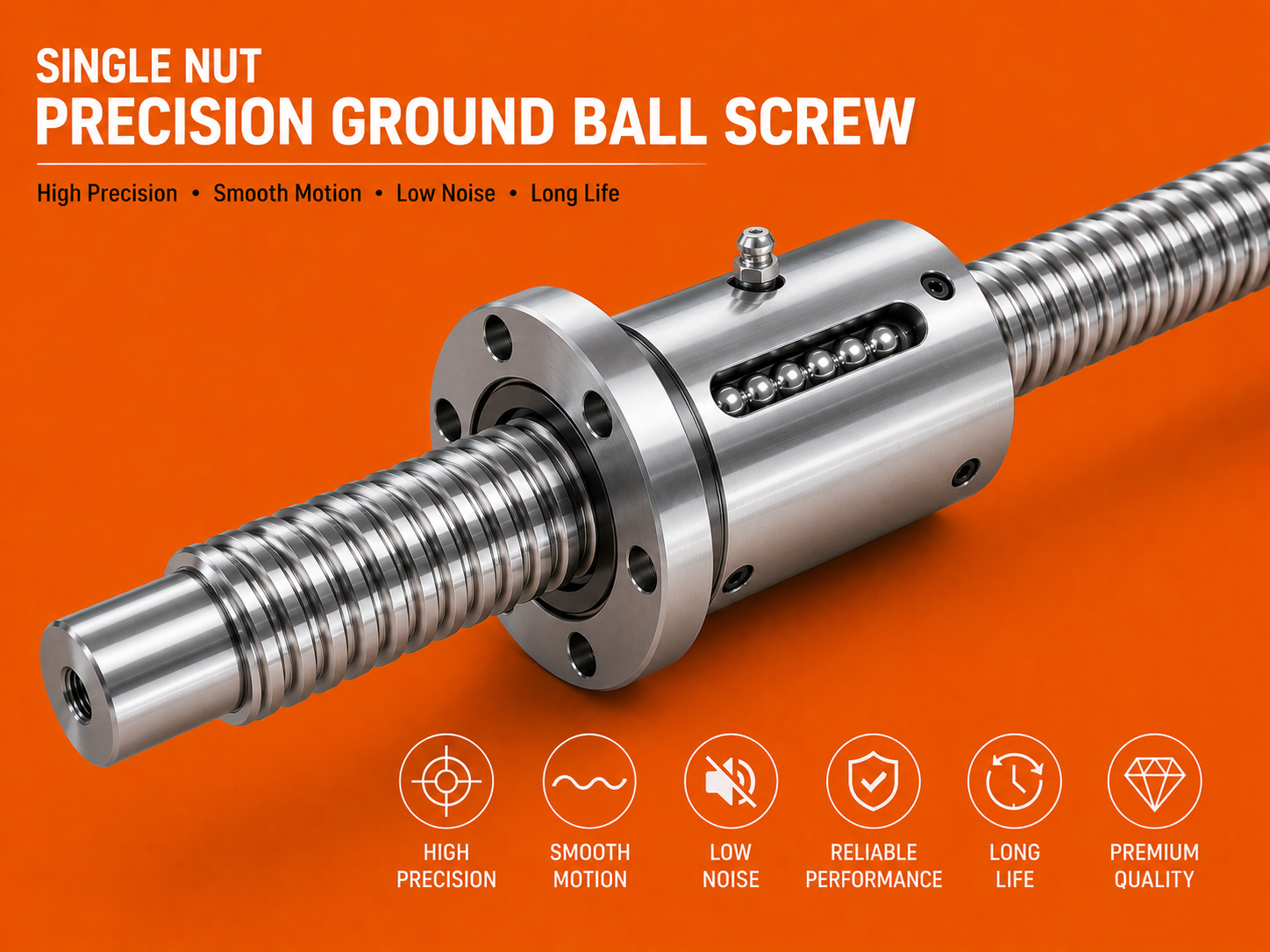 | Precision Ballscrews Single Nut Precision Ground Ball Screw Balaji Engineering Works offers high-precision Single Nut Precision Ground Ball Screws in Pune, engineered for applications requiring superior... View product → |
Frequently asked questions
Does “ball leading screw” mean a ball screw or a sliding lead screw?
The phrase is ambiguous. A ball screw uses recirculating hardened balls between the screw and nut, while a lead screw uses sliding contact with a polymer, bronze, or similar nut. Confirm the construction before comparing quotations.
How do lead, pitch, accuracy, and thread manufacture affect performance?
Lead determines linear travel per revolution, while pitch is the distance between adjacent thread crests. Accuracy affects positioning error, and ground threads generally support tighter precision than rolled threads at higher cost.
How do you size a screw for CNC or automation?
Provide axial load, stroke, travel speed, acceleration, duty cycle, orientation, support spacing, allowable positioning error, motor speed, and mounting details. Check life, buckling, critical speed, torque, and heat before ordering.
When should you choose a single nut or double nut?
Choose a single nut when its backlash and load capacity meet the application. Choose a preloaded double-nut arrangement when stiffness and low backlash matter more than added cost, friction, length, and adjustment complexity.
What should a Noida supplier include in a ball screw quotation?
Request diameter, lead, length, accuracy grade, thread type, nut style, preload, end machining, bearing arrangement, inspection results, delivery terms, and any comparable rolled, ground, lead-screw, or linear-motor alternative.
Related products
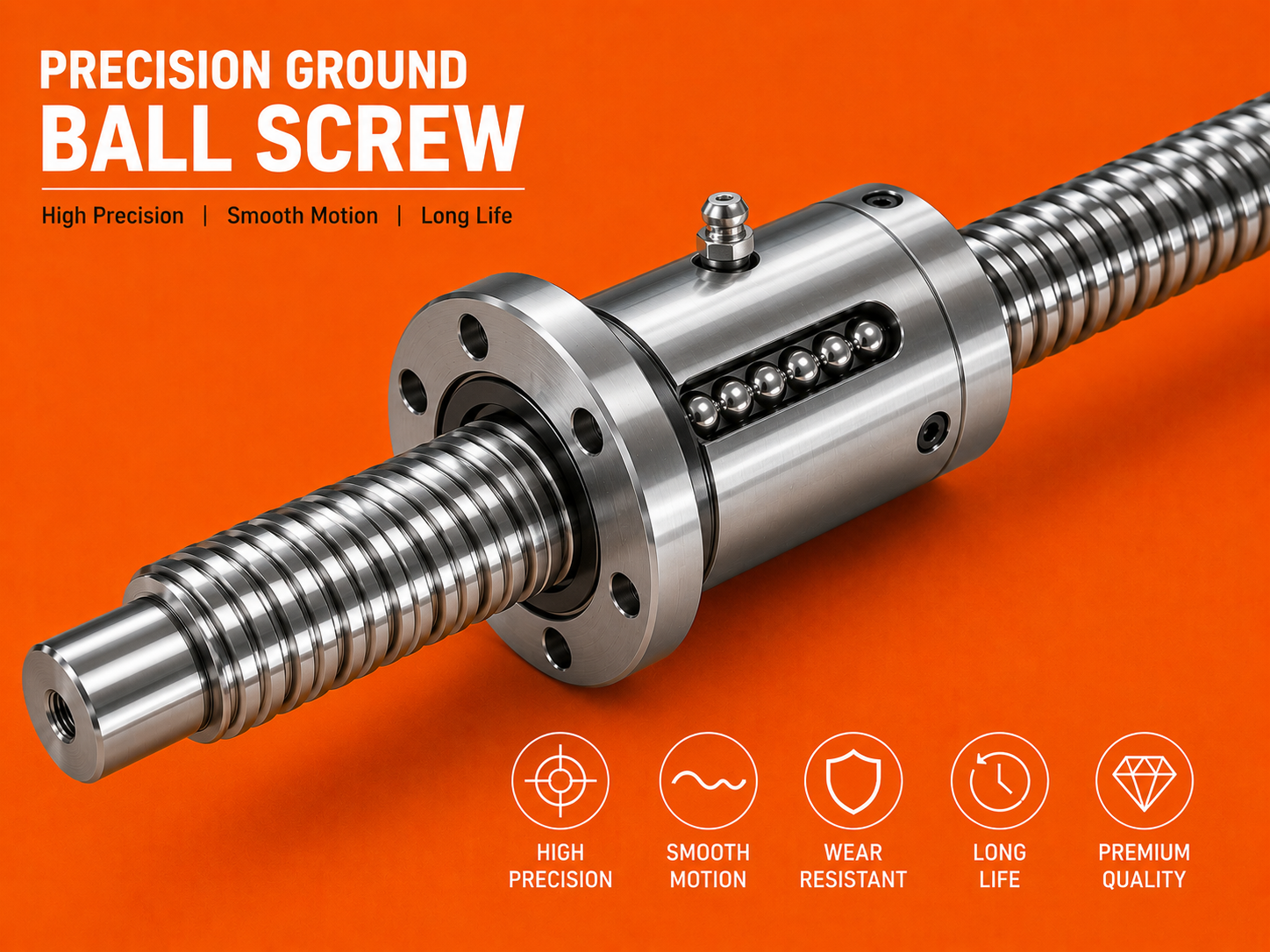 | Precision Ballscrews Balaji Engineering Works is a trusted manufacturer and supplier of Precision Ground Ball Screws in Pune, designed for applications that demand... View product → |
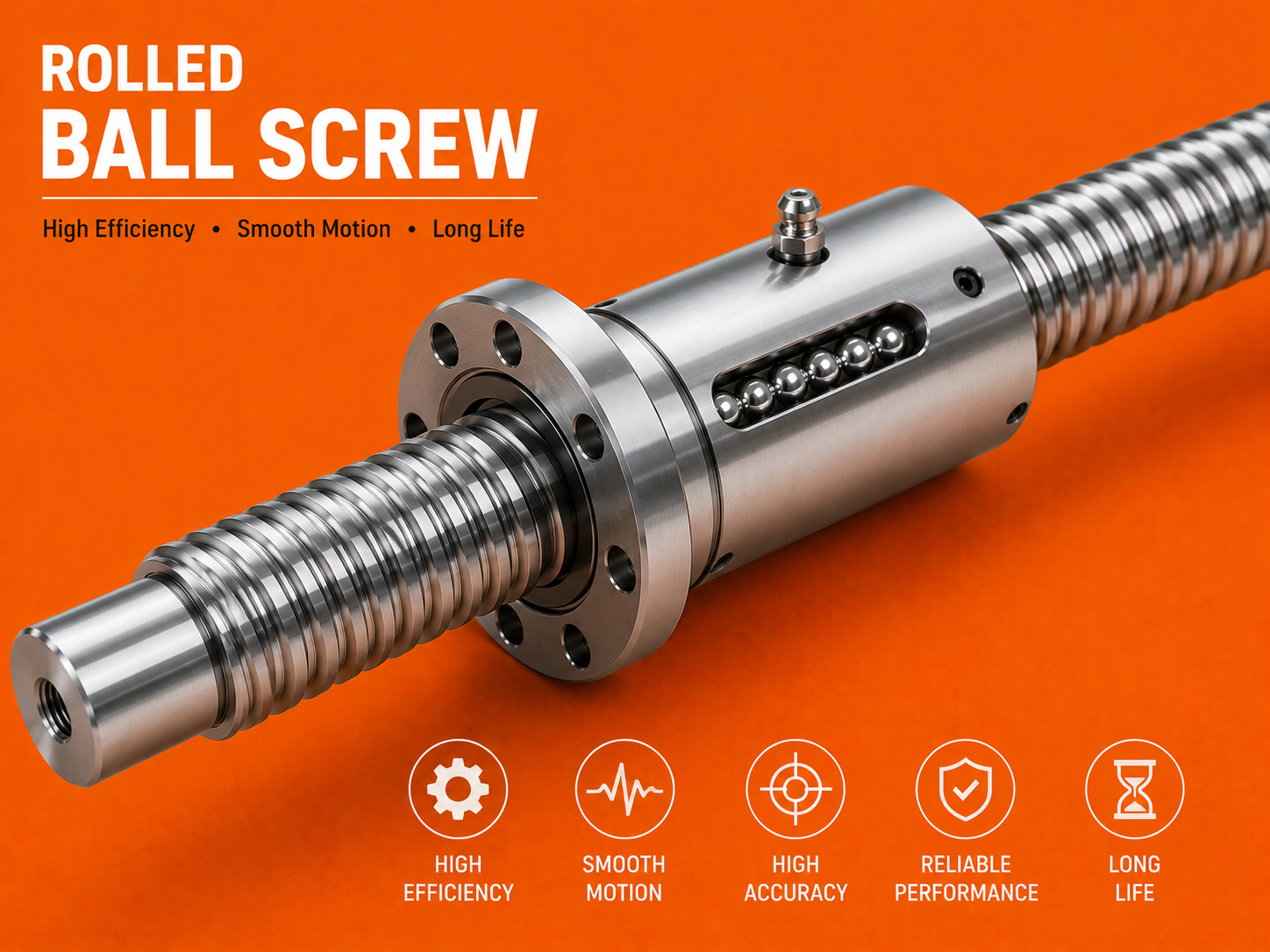 | Precision Ballscrews Balaji Engineering Works offers high-quality Rolled Ball Screws in Pune, designed for efficient linear motion with excellent performance and... View product → |
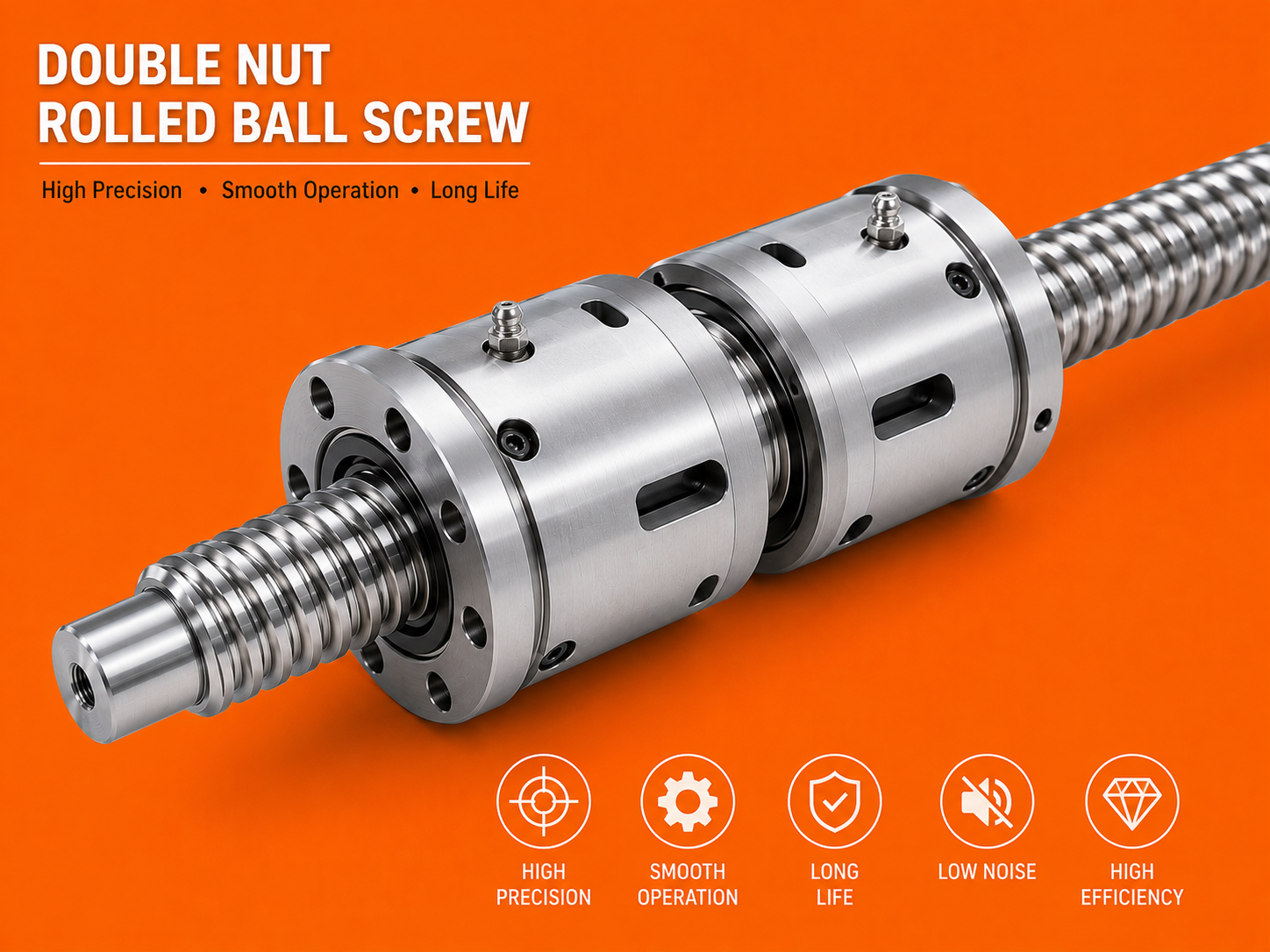 | Precision Ballscrews Balaji Engineering Works offers high-performance Double Nut Rolled Ball Screws in Pune, designed for applications requiring reduced backlash,... View product → |
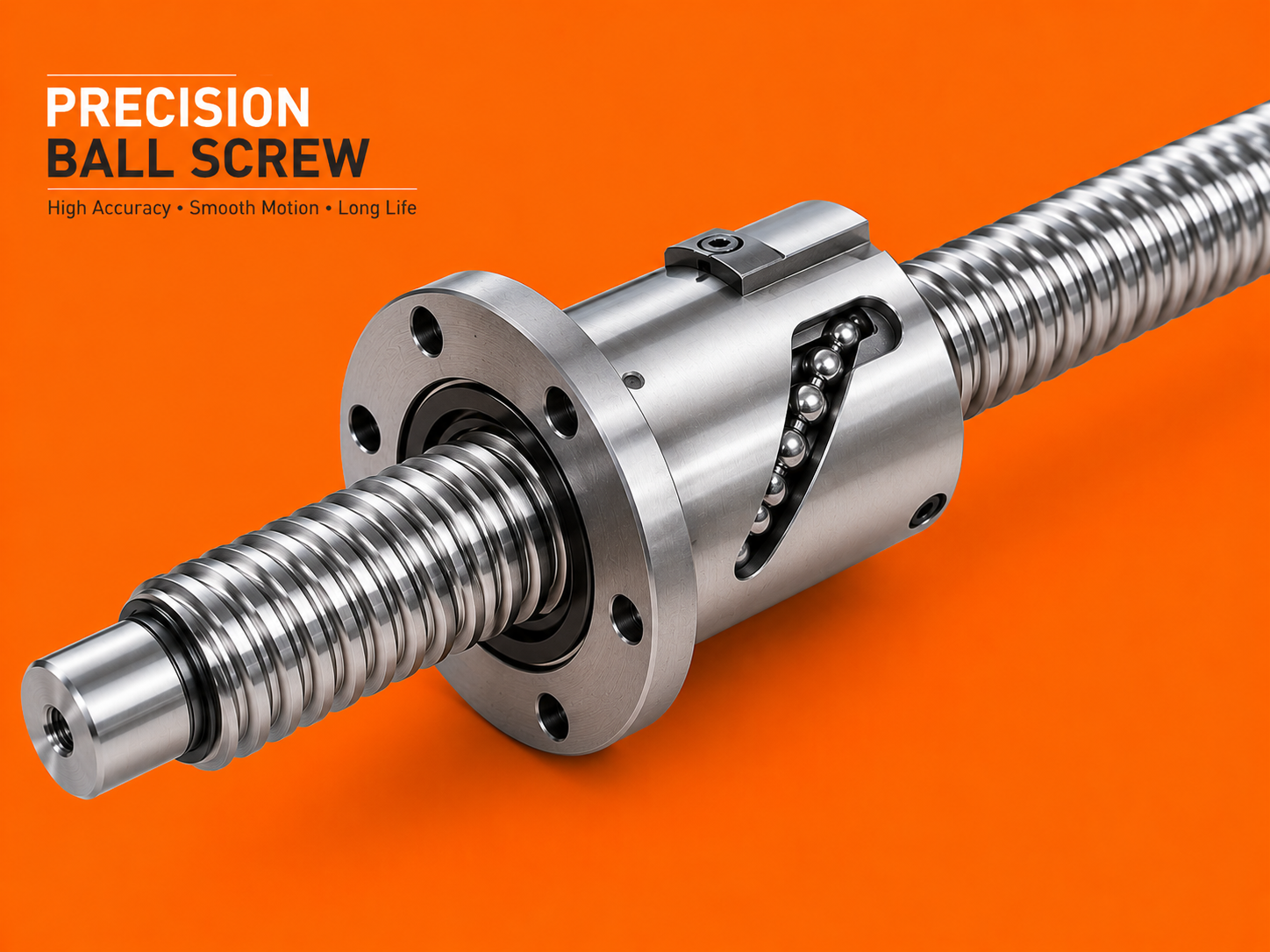 | Precision Ballscrews Balaji Engineering Works is a trusted manufacturer and supplier of Precision Ball Screws in Pune, designed for high-accuracy linear motion and... View product → |