
The process name alone cannot tell you whether a ball screw will meet your machine’s accuracy, speed, life, or budget requirements. By comparing full-travel lead error, nut construction, operating conditions, inspection data, and total cost, you can choose the manufacturer and screw type that fit the application rather than paying for precision you cannot use—or correcting errors after installation.
Key takeaways
- Choose by lead accuracy, preload, inspection data, and machine error budget.
- Use rolled screws when required accuracy and repeatability fit the machine.
- Specify diameter, lead, length, preload, accuracy class, and end machining.
- Demand drawings, inspection results, tolerances, and acceptance criteria from suppliers.
What actually changes between rolled and ground ball screws?
The process changes how the screw is made, not its automatic quality grade. A rolled ball screw versus ground ball screw decision must follow the specified lead accuracy, preload, inspection data, and machine error budget.
| Option | Manufacturing and performance | Purchase implication |
|---|---|---|
| Rolled | Dies plastically displace the steel, giving high throughput, good material utilisation, and lower cost. Lead accuracy and correction options are more limited; surface finish, noise, repeatability, and service life depend on forming quality, nut design, lubrication, and contamination control. | Strong choice for transfer axes, automation, presses, material handling, and CNC axes with moderate accuracy requirements. |
| Ground | Grinding removes material after hardening, allowing tighter control of lead, runout, and surface finish. It supports demanding repeatability, contouring, and geometric accuracy, but costs more. | Justified when interpolation, inspection, grinding, semiconductor, or high-precision machining accuracy leaves little error margin. |
Neither process determines backlash or rigidity alone. Nut geometry, ball diameter, contact angle, preload, assembly condition, and wear control axial play and stiffness; a ground screw can have backlash, while a rolled screw can be preloaded.
Compare them in this order:
- Match the declared travel-accuracy grade, mean lead error, lead-error variation, runout, and inspection method to the machine’s positioning and contouring requirement.
- Check speed, acceleration, preload, lubrication, and cooling. Thermal growth from a long or rapidly cycled screw can exceed its manufacturing difference.
- Add mapping, controller compensation, calibration, replacement, and downtime to the purchase price before choosing the cheaper rolled versus ground ball screw.
When is a rolled screw adequate for a CNC machine?
A rolled screw is adequate when its specified travel accuracy and repeatability fit the machine’s axis error budget over the useful travel—not merely because its nominal lead matches. If pitch-error compensation can absorb the measured lead map and total positioning error remains within tolerance, rolling can be the sensible choice.
| Application | Rolled screw decision | Reason |
|---|---|---|
| Production CNC milling, turning, or routing | Suitable when the declared accuracy class and measured lead error meet the part tolerance | Lower cost without paying for unused lead accuracy |
| Tight interpolation or high repeatability | Compare the individual error map before approving it | Periodic lead error can disturb contouring even when average lead is correct |
| Grinding equipment, inspection systems, semiconductor tools, or high-precision machining centres | Specify a ground screw unless test data prove the rolled alternative meets the axis budget | Small geometric and thermal errors directly affect results |
Choose grinding when the machine demands lead correction after heat treatment, a tighter travel-accuracy class, or a more consistent surface finish. A rolled screw that misses the budget forces extra compensation, calibration, probing, or scrap; a ground screw that exceeds the budget ties up capital without improving the part.
Ask a ball screw manufacturer for CNC machines to provide:
- The declared accuracy class and serialized lead-error record
- Measurement length, temperature, and individual-screw test data
- Preload, starting torque, runout, and critical-speed calculations
- Lubrication limits, contamination guidance, and replacement-nut availability
“Precision rolled” is a catalogue description, not acceptance evidence.
How should you specify a rolled ball screw before requesting quotes?
A quote built from “25 mm rolled screw” is incomplete. Give the supplier the axis, load case, speed profile, and accuracy target so it can size the assembly rather than match a catalogue diameter.
Include these values in the request:
- Nominal diameter, lead, usable travel, overall length, and shaft-end dimensions
- Axial load in both directions, radial load, orientation, and mounting arrangement
- Maximum speed, acceleration, duty cycle, stroke frequency, and operating temperature
- Required positioning accuracy, repeatability, backlash limit, and pitch-error compensation method
- Lubricant, contamination exposure, cooling arrangement, and expected service life
- Single-nut or double-nut preference, with available nut housing space and mounting datum
Choose a single nut for moderate loads, compact axes, and applications where low starting torque and simple installation matter. Choose a double nut when the axis needs higher axial stiffness or very low measurable backlash; specify the preload method and value, not merely “double nut.”
| Construction | Advantage | Main risk or requirement |
|---|---|---|
| Single nut | Lower friction, heat, length, and cost | Less stiffness; verify backlash and preload |
| Double nut | Higher stiffness and adjustable preload | Higher torque, heat, friction, length, and alignment sensitivity |
Preload is not accuracy. Excessive preload can overload the balls, increase motor demand, and shorten service life, so request preload or preload-torque value and tolerance. Require a matched screw-and-nut assembly: identical diameter and lead do not guarantee compatible ball diameter, groove geometry, or return-system fit.
What must a ball screw manufacturer prove in its drawing and quotation?
A quotation is comparable only when it states acceptance values for the individual screw, not just “precision rolled” or “ground.” A ball screw manufacturer for CNC machines must show how the part will be measured, at what temperature, over which travel, and which results will ship with it.
| Item | Require in drawing or quotation | Why it matters |
|---|---|---|
| Travel-accuracy grade | Declared grade, nominal lead, mean lead error, and lead-error variation | Sets positioning performance over useful travel |
| Lead-error record | Serialized error map, measurement length, temperature, and compensation data | Reveals whether the map belongs to your screw |
| Preload | Preload class plus starting torque or torque-versus-speed data | Excess preload creates heat; insufficient preload permits backlash |
| Dimensions | Diameter, lead, effective travel, shaft ends, nut envelope, mounting tolerances | Prevents an incompatible installation |
| Straightness and runout | Maximum values and inspection method | Prevents vibration, uneven loading, and coupling error |
| Critical speed and load rating | Calculated critical speed, dynamic and static ratings, duty-cycle assumptions | Exposes resonance or premature fatigue risk |
| Lubrication | Grease or oil specification, quantity, interval, and contamination protection | Chips, coolant, or dry raceways can destroy accuracy and life |
| Inspection results | Serial number, calibrated equipment, acceptance limits, and signed report | Gives you traceability instead of a catalogue promise |
Ask Balaji Engineering Works, or any rolled ball screw manufacturer, for these records before comparing prices. Reject a quote that omits:
- Individual inspection data
- Preload and torque values
- Life and critical-speed assumptions
Related products
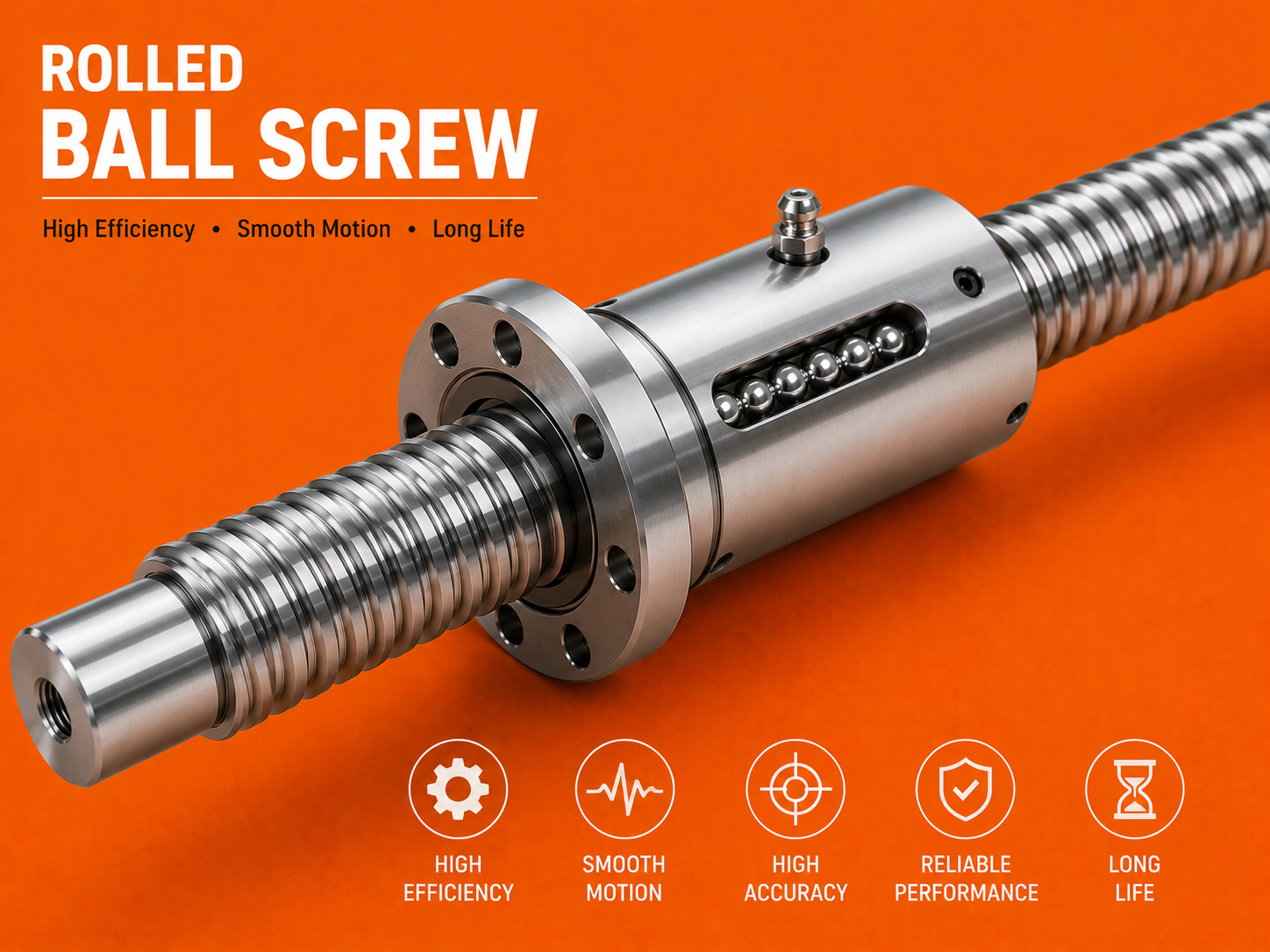 | Precision Ballscrews Balaji Engineering Works offers high-quality Rolled Ball Screws in Pune, designed for efficient linear motion with excellent performance and... View product → |
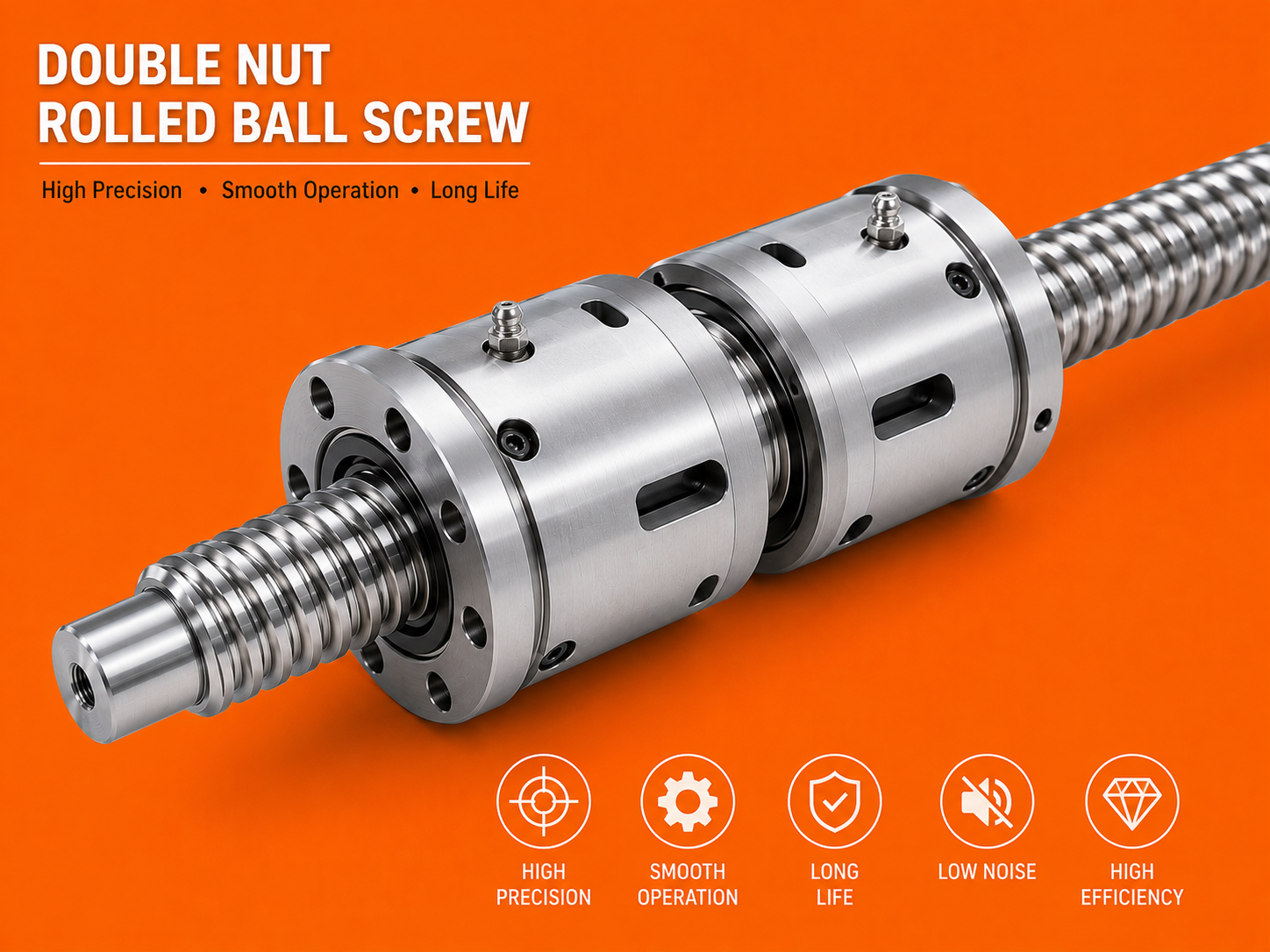 | Precision Ballscrews Balaji Engineering Works offers high-performance Double Nut Rolled Ball Screws in Pune, designed for applications requiring reduced backlash,... View product → |
How should you compare purchase price with the cost of being wrong?
A lower screw price loses its advantage when lead error forces mapping and compensation, calibration, tuning, or probing work after installation. Add thermal control, replacement labour, lost production during downtime, and the cost of a shortened service life before choosing a rolled ball screw manufacturer.
| Option | Purchase economics | Cost if the choice is wrong | Best fit |
|---|---|---|---|
| Rolled screw | Lower initial price and practical for moderate accuracy | Error mapping, controller compensation, thermal tuning, replacement, and downtime can erase the saving | Transfer axes, automation, presses, and contamination-controlled applications with suitable protection |
| Ground screw | Higher initial price and inspection burden | The extra price is wasted if thermal growth, poor mounting, or contamination remains the dominant error | High-precision machining, inspection, grinding, and semiconductor equipment |
Your rolled ball screw selection should compare the whole installed risk, not the word “rolled” against “ground.” A ground screw does not remove thermal error, and a rolled screw is not automatically unsuitable when its measured data meet the machine’s accuracy budget.
Before accepting a quotation, ask for:
- Serialized lead-error records, measurement temperature, measurement length, and the individual screw’s error map
- Preload, running-torque, life, and critical-speed calculations
- Lubrication intervals, seal design, contamination protection, and replacement nut compatibility
- The supplier’s calibration, service, and replacement response times
Reject a catalogue claim such as “precision rolled” when it supplies no acceptance data. The right manufacturer reduces the cost of being wrong before the screw reaches your machine.
Frequently asked questions
What changes between rolled and ground ball screws?
Rolling forms the thread by plastic deformation, while grinding removes material for tighter lead accuracy and controlled geometry. Compare the actual accuracy class and inspection data rather than assuming one process guarantees quality.
When is a rolled ball screw adequate for a CNC machine?
A rolled screw is adequate when its specified lead accuracy, preload, stiffness, speed rating, and repeatability fit the machine’s error budget. It is a poor choice when the axis requires tighter positioning accuracy than the supplier can verify.
How should you specify a rolled ball screw before requesting quotes?
State the nominal diameter, lead, usable travel, overall length, nut style, preload, accuracy class, load, speed, mounting orientation, lubrication, and end-machining drawing.
What must a ball screw manufacturer prove in its quotation?
Request a dimensioned drawing, lead-accuracy grade, preload value, axial play or preload test method, runout limits, material and heat-treatment details, inspection records, and defined acceptance criteria.
How should you compare purchase price with the cost of being wrong?
Compare the price with rework, lost machine time, replacement installation, calibration, scrap, and missed production. A cheaper screw is not economical if its unverified accuracy creates axis errors.
Related products
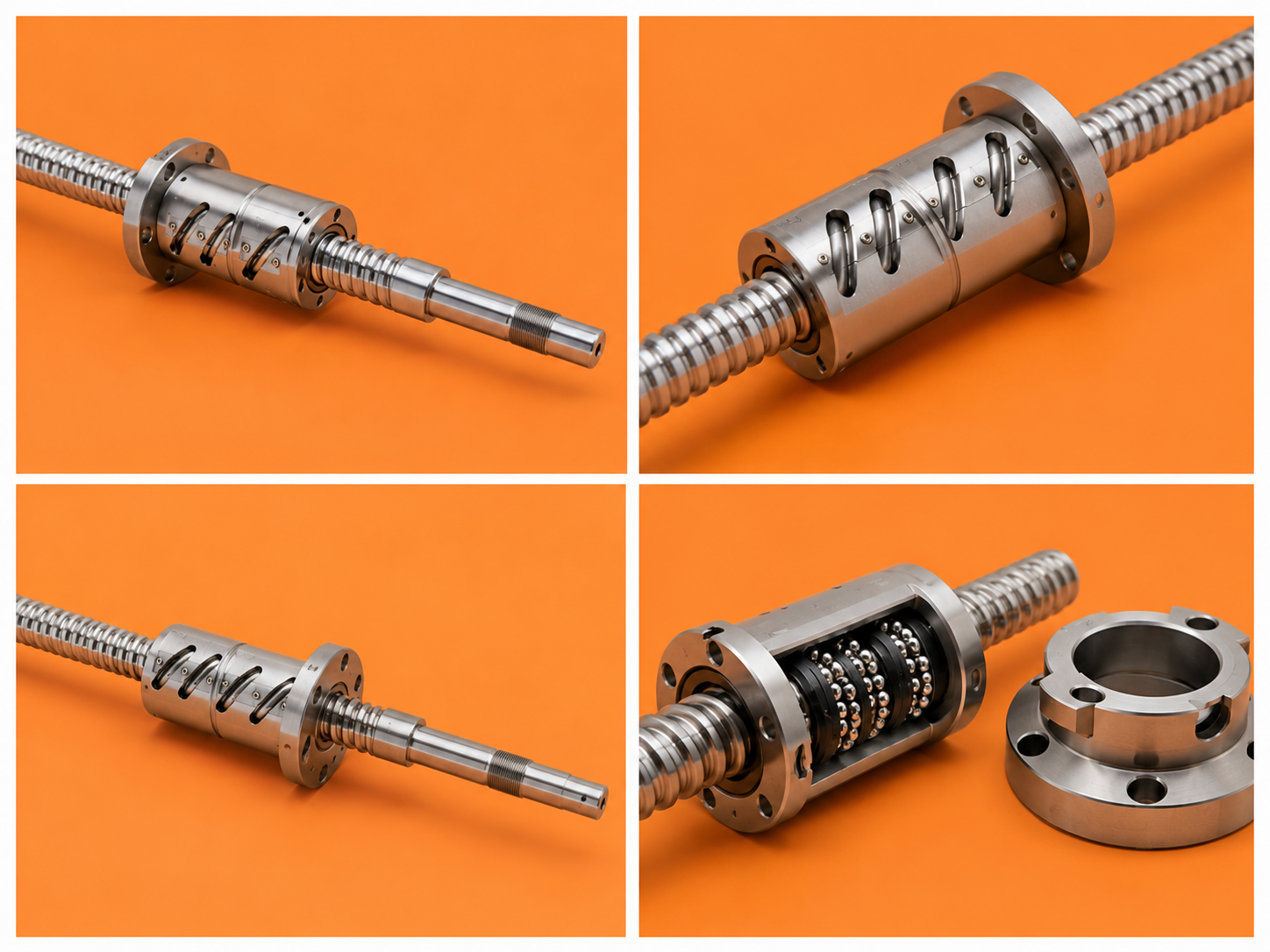 | PRECISION GROUND BALL SCREW We are Manufacturing of precision Ground ball screw with nut As per Customer View product → |
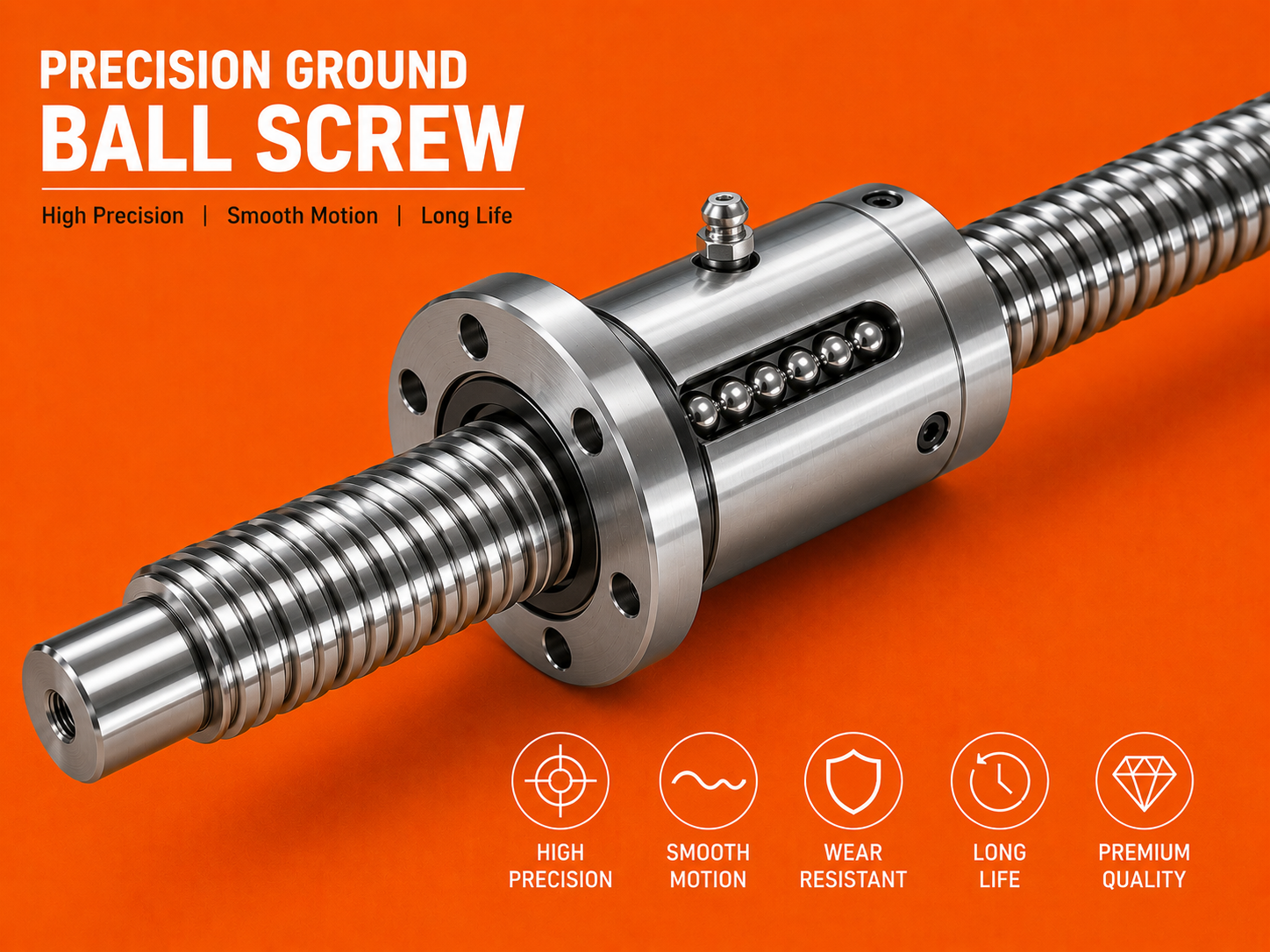 | Precision Ballscrews Balaji Engineering Works is a trusted manufacturer and supplier of Precision Ground Ball Screws in Pune, designed for applications that demand... View product → |
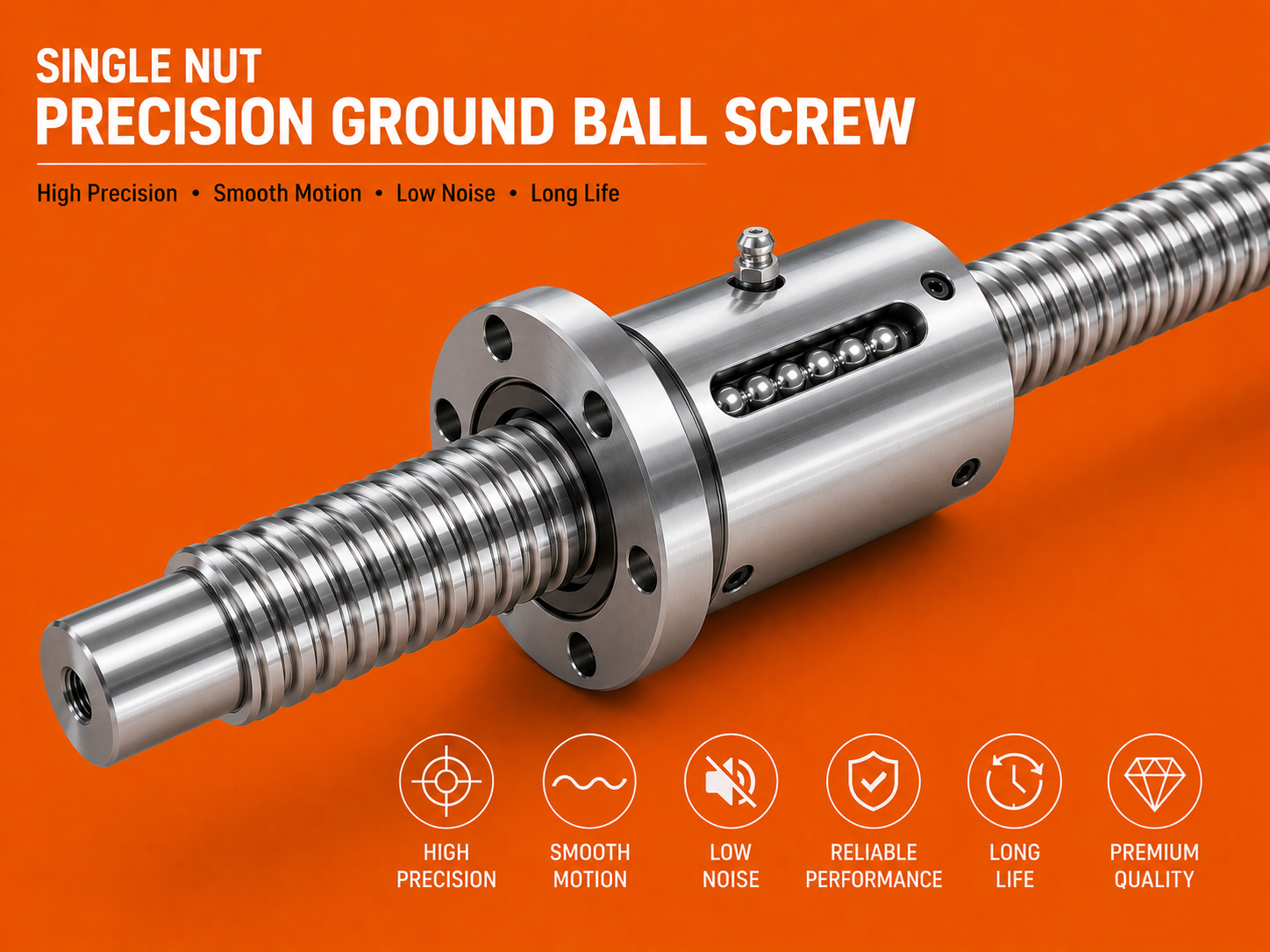 | Precision Ballscrews Single Nut Precision Ground Ball Screw Balaji Engineering Works offers high-precision Single Nut Precision Ground Ball Screws in Pune, engineered for applications requiring superior... View product → |