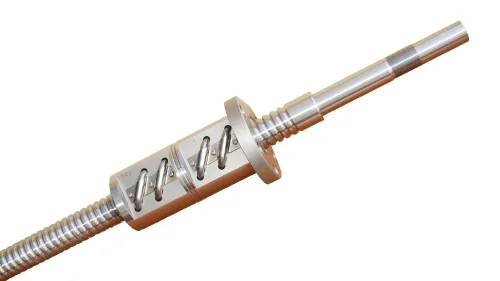

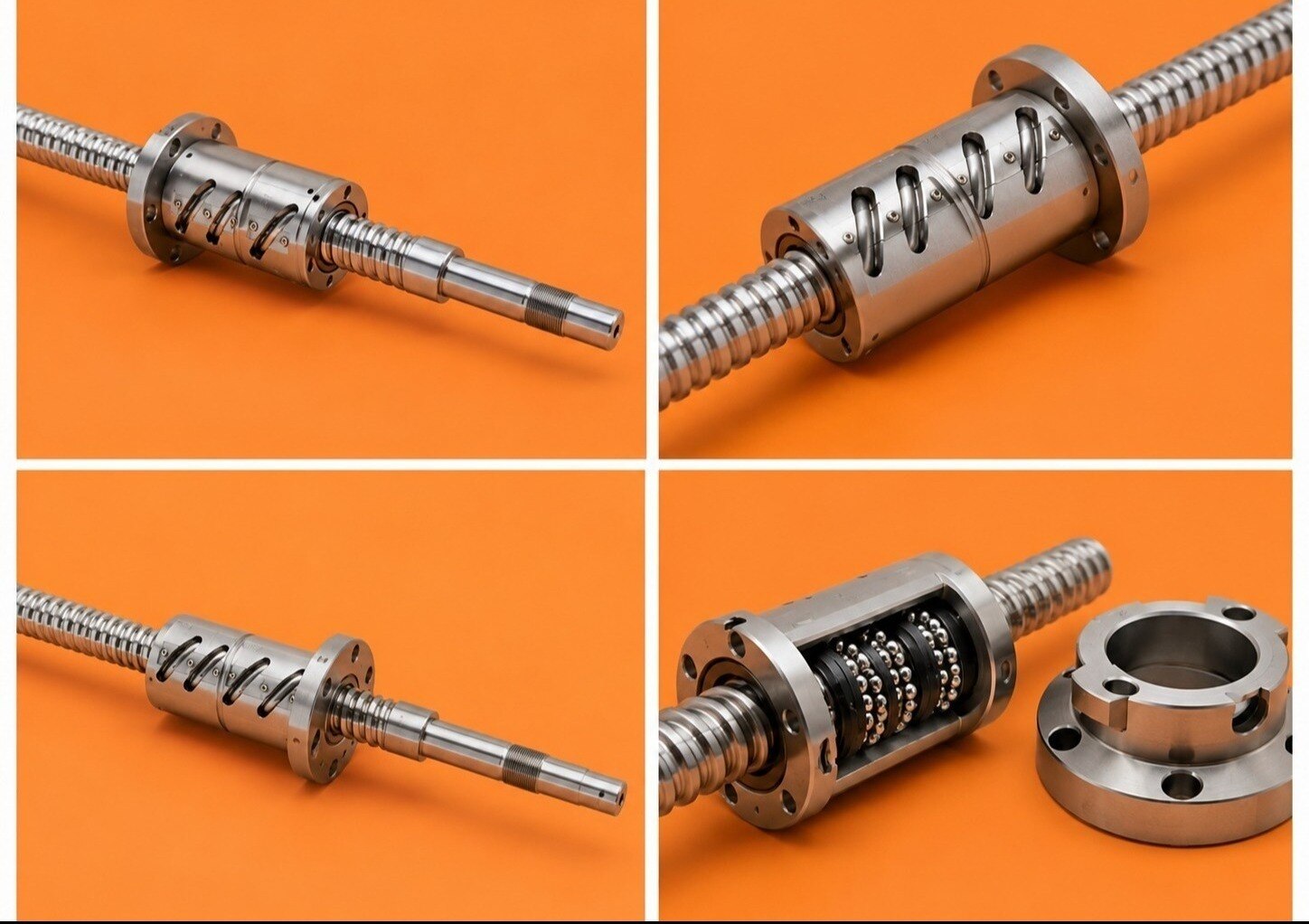
A seasonal shutdown gives you time to find contamination, lost preload, damaged recirculation parts, and alignment errors before they become production failures. By the end, you will know how to inspect the existing assembly, choose between repair and replacement, specify the correct screw, and verify the axis before returning it to service.
Key takeaways
- Measure backlash, axial runout, preload, and visible raceway damage before ordering.
- Clean the assembly only when contamination is the fault; replace damaged raceways or excessive-wear assemblies.
- Match diameter, lead, length, nut style, preload, mounting, and end machining to the machine.
- Use the specified lubricant, protect the screw from contamination, and verify motion accuracy after installation.
How to inspect a ball screw before the machine returns to service
Before approving an industrial ball screw for seasonal maintenance in Rajkot, establish whether the existing assembly is cleanable and serviceable.
1. Lock out electrical and stored energy, then support a vertical axis mechanically. A vertical screw is not a holding brake: verify the motor brake, counterbalance, mechanical lock, and emergency-stop behaviour before placing hands near the assembly.
2. Record baseline axial play, positioning error, repeatability, torque variation, motor current, and temperature. Use a dial indicator for gross play and screw runout; use a calibrated displacement system or laser interferometer for positioning accuracy over the full travel.
3. Remove chips, coolant residue, old lubricant, and abrasive debris without forcing contamination into the nut. Check for rust staining after monsoon storage and water pooling around the nut, supports, or exposed threads.
4. Inspect screw raceways for scoring, pitting, flaking, or brinelling. Examine the nut body, return tubes, seals, and wipers for cracks, distortion, hardening, gaps, or poor seating; account for every ball and replace the assembly if balls are damaged or missing.
5. Rotate and traverse the axis under controlled conditions, checking runout with the dial indicator and torque variation under servo operation. Smooth hand movement does not prove serviceability.
6. Trace visible backlash beyond the screw: inspect fixed and floating bearing preload, bearing seats, coupling play, loose mounting bolts, housing alignment, and machine structure. If measurements remain within the machine specification and the raceways and balls are sound, clean, correct the wipers, and relubricate with a compatible product; otherwise quarantine the assembly for replacement.
When cleaning is enough and when the screw-and-nut assembly must be replaced
For a machine maintenance ball screw, cleaning is enough when raceways are smooth, every ball is present and undamaged, preload remains within the machine specification, and measured backlash and torque match the pre-maintenance baseline. Correct the wipers, remove contamination, and apply fresh compatible lubricant.
| Decision | Use it when | Required action |
|---|---|---|
| Cleaning and service | No pitting, flaking, brinelling, missing balls, or cracked return tubes; measurements remain within limits | Clean, correct wipers, lubricate, and retest |
| Nut-only replacement | The screw raceways remain sound and the nut alone has failed | Confirm compatibility before fitting |
| Complete replacement | Axial play exceeds the machine limit, preload is lost, or servo torque varies cyclically | Replace the matched screw-and-nut assembly |
A new nut is not automatically interchangeable with an existing screw. Confirm ball diameter, recirculation geometry, lead accuracy, preload, and factory matching; ask the supplier whether fitting or preload adjustment is required.
Do not install heavier preload simply to hide backlash. It raises running torque, heat, and drive load while making the assembly more sensitive to misalignment.
For selection, use the approximate L10 = (C/P)^3 million-revolutions relationship only with the applicable rating assumptions. Provide duty-cycle loads, speed, acceleration, orientation, and applied moments; static load alone cannot size the assembly safely.
How to choose rolled, ground, single-nut, and double-nut options
A precision ground ball screw in Rajkot is justified when positioning accuracy, repeatability, and low variation across the stroke outweigh purchase price. Choose the construction against the axis duty and shutdown window, not by catalogue class alone.
| Option | Lead accuracy and repeatability | Finish, cost, and delivery | Suitable use |
|---|---|---|---|
| Rolled screw | Check actual lead accuracy and runout; do not assume equivalence to ground | Rougher finish, lower cost, often faster delivery | General feed, material handling, and non-metrology axes |
| Precision-ground screw | Higher lead accuracy, repeatability, and consistency over the stroke | Smoother finish, higher purchase price, longer manufacturing or delivery time | High-accuracy CNC, inspection, and metrology axes |
Request the actual lead-accuracy or acceptance report, including measured runout. C0, C1, C2, C3, C5, C7, and C10 catalogue classes are useful classifications, but C5 alone does not predict final machine accuracy; thermal growth, servo error, mounting, and machine structure contribute separately.
Use measured backlash and the required rigidity to select the nut. A single nut suits a space-limited axis when measured play and stiffness remain within the machine limit. A double nut suits demanding axes where higher rigidity and controlled preload justify extra length, cost, and adjustment.
Preserve the original preload category unless the machine builder approves a change.
For seasonal maintenance, select the option whose documented performance can be verified before restart. A faster rolled replacement is the wrong saving if its pitch error, runout, or delivery schedule defeats the axis acceptance test.
Which dimensions and machine interfaces must match before ordering
Matching only shaft diameter and overall length can give the wrong travel per revolution, coupling fit, or bearing interface. Prepare the replacement specification before requesting prices.
- Record nominal shaft diameter, lead, effective stroke, total length, threaded length, nut style, circuit or turn count, preload, accuracy class, end machining, mounting orientation, handedness, nut-body dimensions, flange or mounting-hole pattern, shaft-end geometry, keyway, and support-unit interface.
- Verify the CNC controller and servo requirements, motor-coupling bore and key, fixed and floating bearing arrangement, required travel length, maximum speed, acceleration, critical speed, unsupported length, buckling risk, load duty cycle, and axis orientation.
Compare the existing assembly with the proposed replacement on the same drawings and measurements.
| Interface or parameter | What to confirm | Failure if mismatched |
|---|---|---|
| Lead and stroke | Travel per revolution and effective travel | Wrong positioning and insufficient travel |
| End and drive interface | Journal, thread, keyway, coupling bore and key | Coupling or bearing will not seat |
| Nut and support interface | Body, flange holes, orientation, fixed/floating supports | Nut or support unit will not mount |
| Dynamic limits | Speed, acceleration, critical speed, unsupported length | Whip, vibration, buckling, or premature failure |
Ask an industrial ball screw supplier in Rajkot for a dimensional drawing, accuracy certificate, preload and torque data, material or hardness information, wiper specification, lubrication recommendation, inspection limits, and lead time. Balaji Engineering Works can be compared with other local suppliers using those documents, not catalogue similarity.
Use the same checklist for any ball screw replacement in Rajkot.
Related products
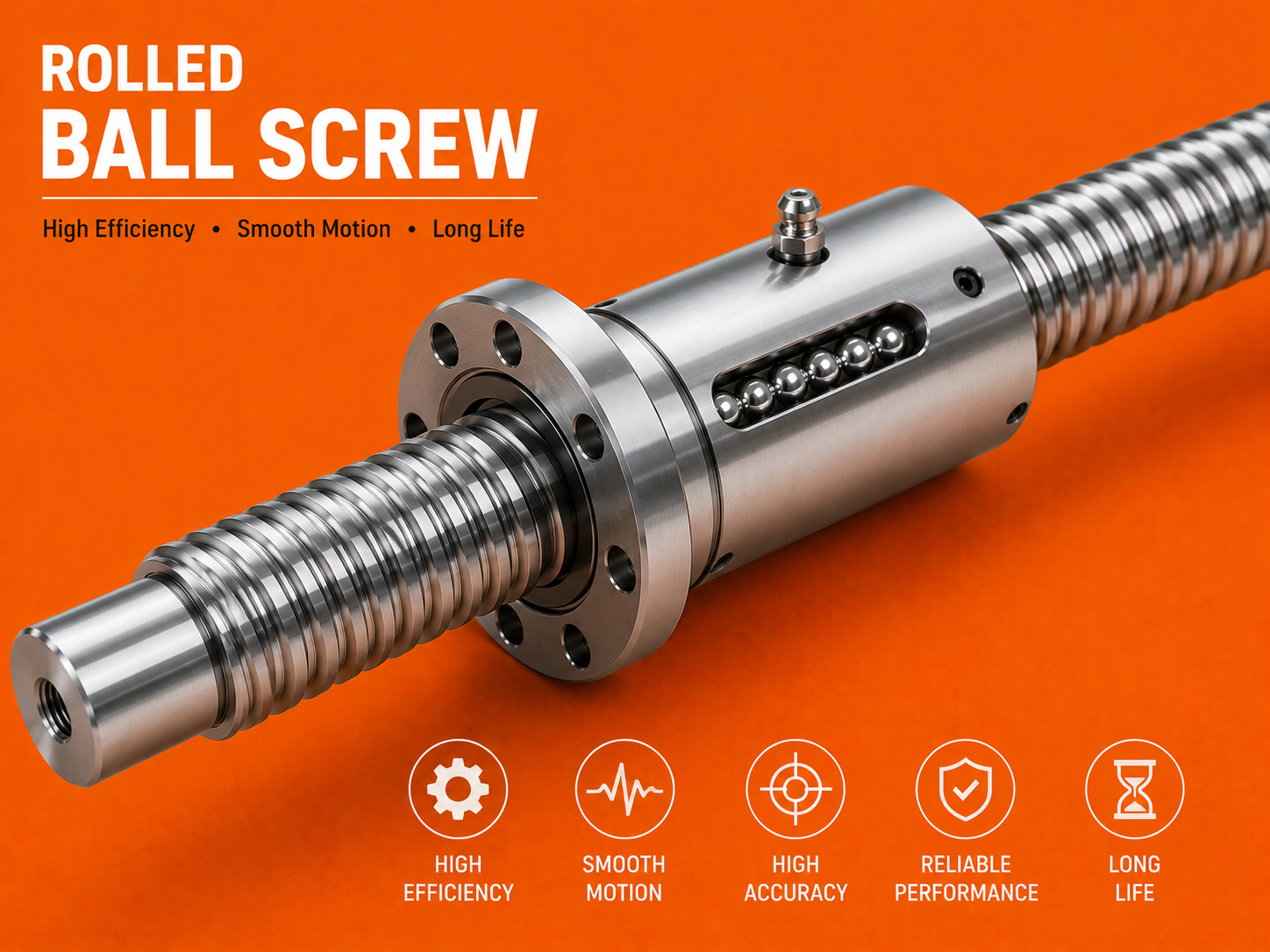 | Precision Ballscrews Balaji Engineering Works offers high-quality Rolled Ball Screws in Pune, designed for efficient linear motion with excellent performance and... View product → |
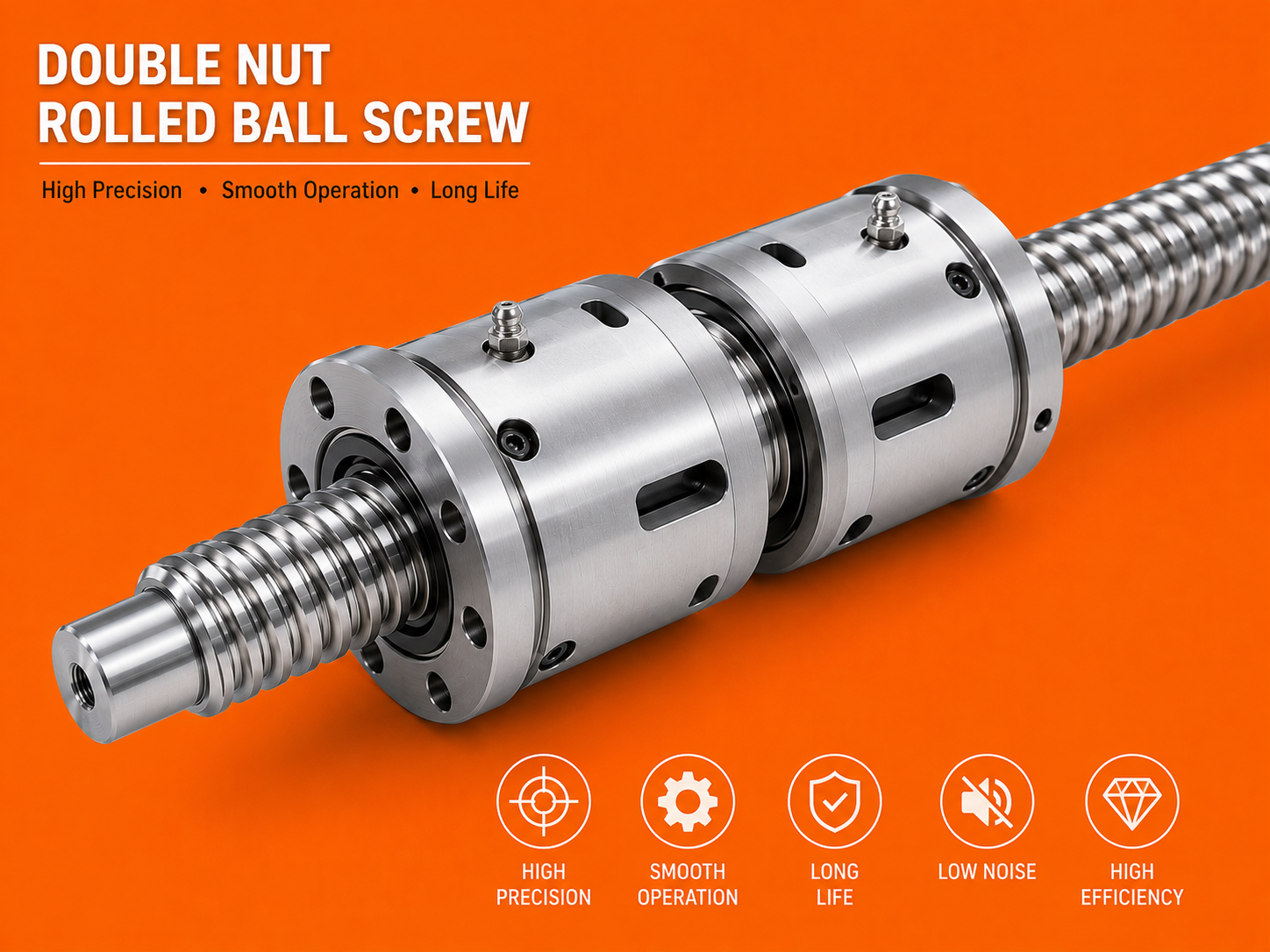 | Precision Ballscrews Balaji Engineering Works offers high-performance Double Nut Rolled Ball Screws in Pune, designed for applications requiring reduced backlash,... View product → |
How to lubricate, protect, install, and accept the replacement
Keep the replacement alive by matching lubricant to nut design, speed, load, temperature, seals, and environment. Use the manufacturer’s specified grease or oil; record its type, quantity, date, and application method. Excess grease increases churning heat, while incompatible greases can separate base oil or become stiffer.
1. Remove coolant residue, chips, old contaminated lubricant, and abrasive dust before relubricating. Fresh grease pushed over debris drives it into the recirculation path and damages raceways, balls, and return tubes.
2. Install the nut and screw on clean, aligned supports without forcing the nut over damaged threads. Confirm the lubrication port reaches the nut’s lubrication channel, then apply the specified quantity and rotate the screw slowly to distribute it.
3. Keep both wipers seated against the screw. During Rajkot monsoon storage, shield exposed threads, prevent water pooling around the nut, and control humidity and coolant contact. Use a cover or bellows for chips and splash, but never as a substitute for sound wipers or a correctly positioned lubrication port.
4. Choose stainless steel when corrosive exposure remains after guarding and sealing; use guarding, drainage, and effective seals when chips or coolant—not corrosion—cause the failure. Stainless material does not correct misalignment or contamination.
5. Accept the axis only after comparison with the pre-maintenance baseline. Check homing repeatability, bidirectional positioning error, straightness or screw runout where relevant, motor current, temperature, and cyclic torque during representative duty. A screw that feels smooth by hand can still fail under servo operation.
Frequently asked questions
How do you inspect a ball screw before returning a machine to service?
Clean the exposed screw, check the raceways and wipers, measure backlash and axial runout, and verify smooth travel across the full stroke.
When is cleaning enough, and when must you replace the ball screw assembly?
Cleaning is enough when contamination causes roughness without raceway damage. Replace the assembly when you find pitting, scoring, brinelling, damaged threads, excessive backlash, or failed preload.
What is the difference between rolled and ground ball screws?
Rolled ball screws suit cost-conscious applications with standard accuracy requirements. Ground ball screws suit higher positioning accuracy, repeatability, and demanding CNC motion.
Which ball screw dimensions must match before ordering?
Match nominal diameter, lead, overall length, effective travel, nut body dimensions, mounting holes, preload, shaft-end machining, and bearing or coupling interfaces.
How should you accept a replacement ball screw after installation?
Confirm correct lubrication, smooth travel, no abnormal noise, correct direction and limits, measured backlash, and positioning performance across the working stroke.
Related products
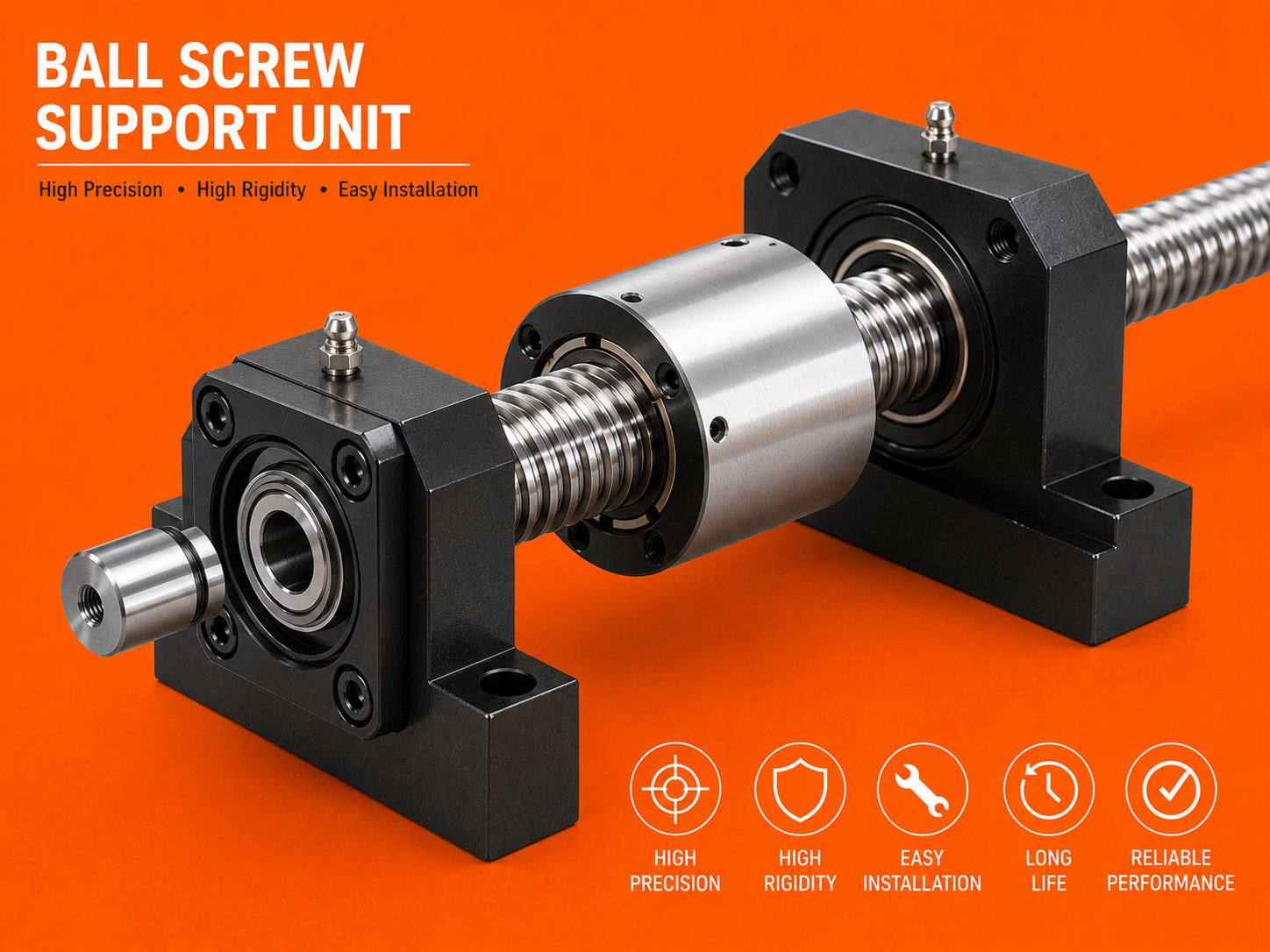 | Precision Ballscrews Balaji Engineering Works offers high-quality Ball Screw Support Units in Pune, designed to provide stable and precise support for ball screw... View product → |
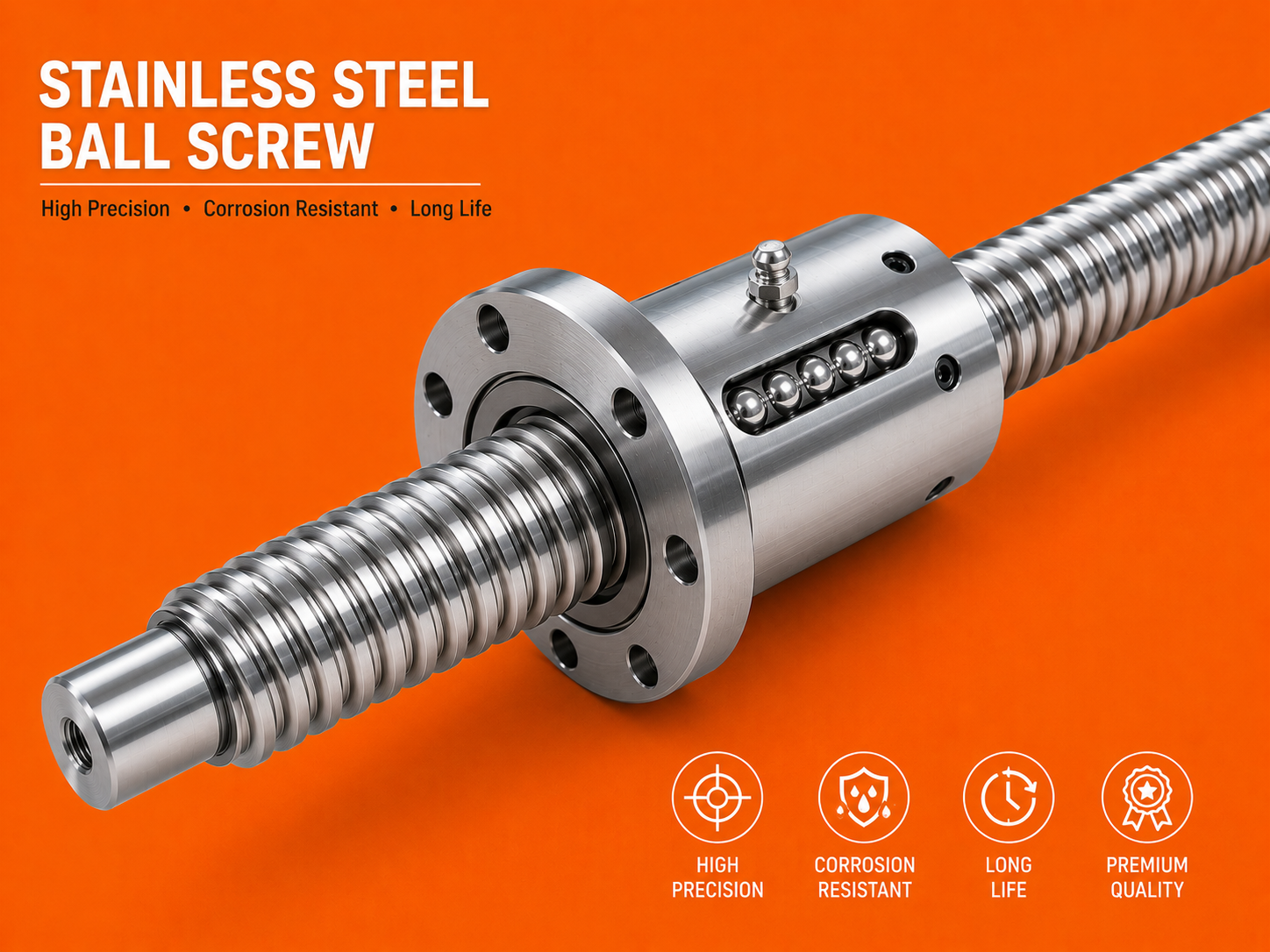 | Precision Ballscrews Balaji Engineering Works offers high-quality Stainless Steel Ball Screws in Pune, designed for precision linear motion with excellent corrosion... View product → |
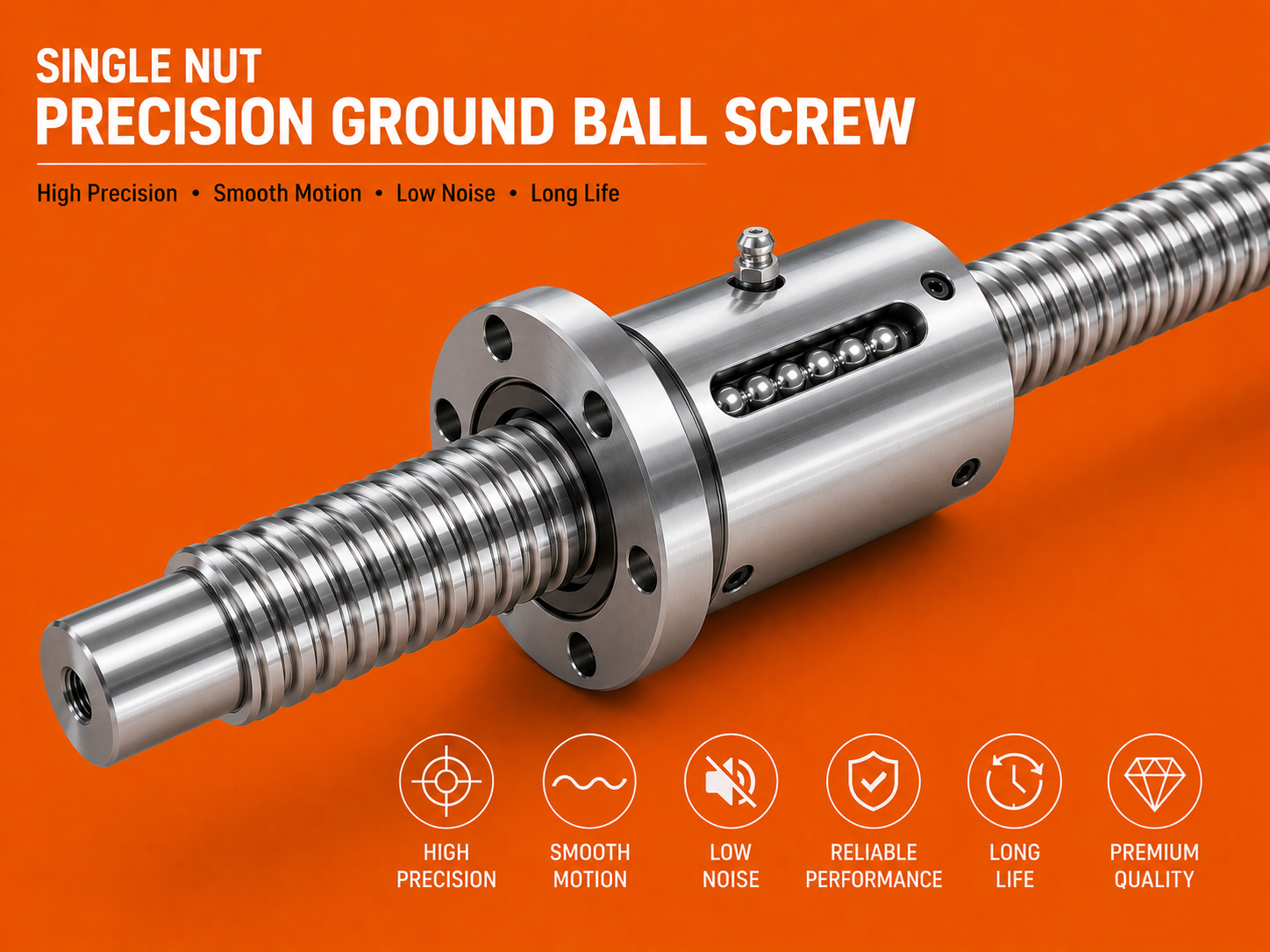 | Precision Ballscrews Single Nut Precision Ground Ball Screw Balaji Engineering Works offers high-precision Single Nut Precision Ground Ball Screws in Pune, engineered for applications requiring superior... View product → |
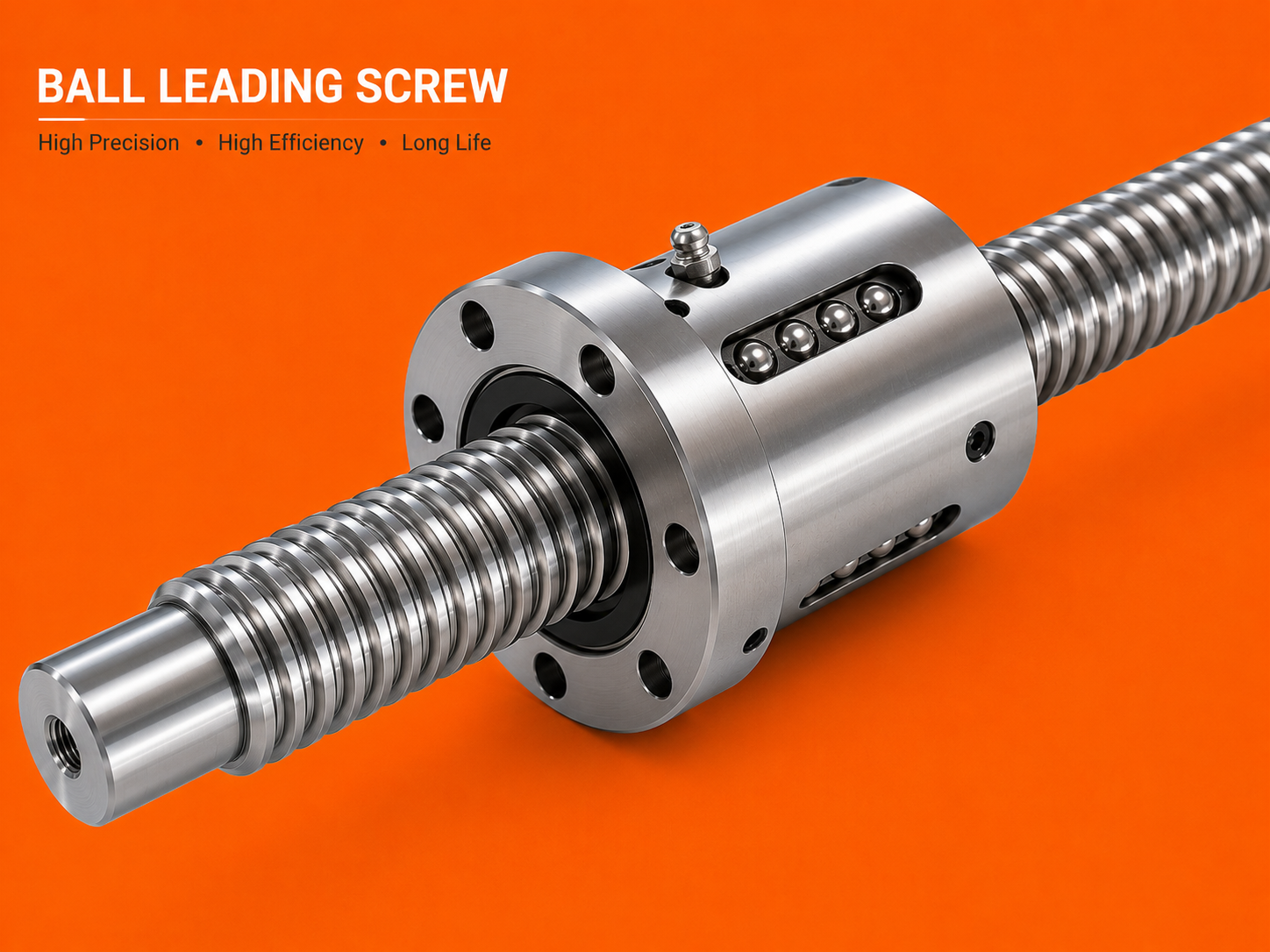 | Precision Ballscrews Balaji Engineering Works offers high-quality Ball Lead Screws in Pune, designed for precise and efficient conversion of rotary motion into linear... View product → |