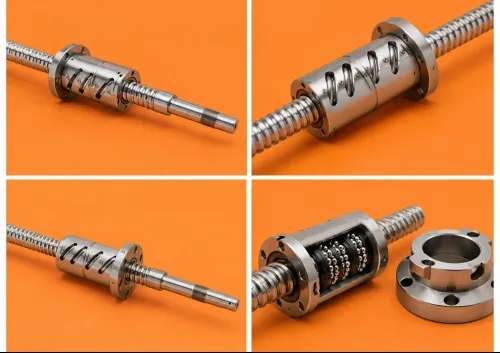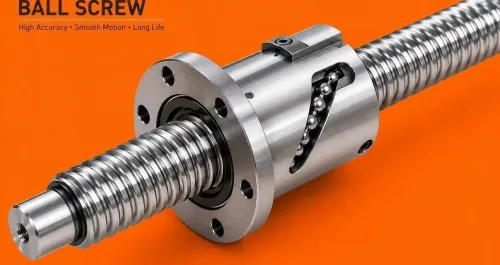

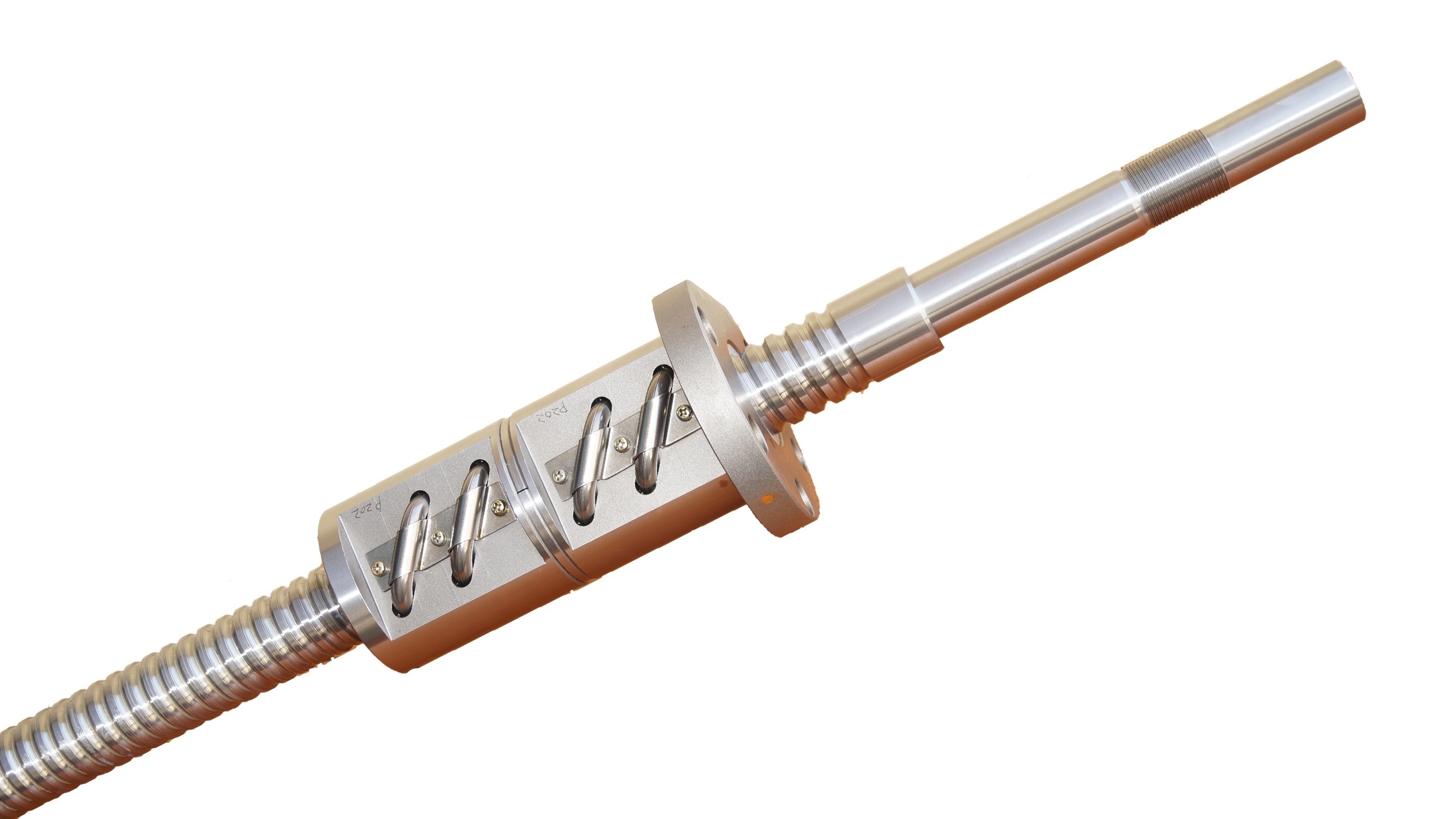
Coolant, salt air, cleaning chemicals, fingerprints and trapped moisture can attack a stainless ball screw despite its passive surface. By the end, you will have a cleaning, inspection, lubrication and storage routine, plus criteria for selecting, replacing or rejecting a screw for your machine and environment.
Key takeaways
- Vacuum chips before wiping; never blast contamination through the nut with compressed air.
- Retire the screw when pitting reaches the raceway or roughness remains after cleaning.
- Match lubrication and sealing to coolant, humidity, salt and washdown exposure.
- Specify the stainless grade, nut materials and surrounding hardware as one system.
Clean the screw without driving contamination into the nut
Start with loose chips, not lubricant. Use vacuum extraction or a controlled wipe; high-pressure compressed air can drive chips, coolant and abrasive dust past the wipers into the nut.
For stainless steel ball screw care, wipe the shaft with a clean lint-free cloth, clean water and a neutral detergent, then lift deposits from the screw valleys with a soft nylon brush.
- Keep the cloth, brush and tools free from carbon-steel particles.
- Rinse all detergent from the raceway, valleys, wiper area and nut exterior.
- Dry every surface completely; do not let cleaner evaporate on the shaft.
- Inspect each wiper for cuts, hardening or deformation. A damaged wiper admits liquid and grit into the recirculation system.
- Apply lubricant only after drying, then move the nut through a controlled stroke to distribute it without forcing residue into the return path.
Chloride-bearing coolant, salt air, acidic cleaners, fingerprints, abrasive dust, trapped moisture and mixed-metal particles all increase stainless ball screw corrosion risk. Never use chlorine bleach, hypochlorite, hydrochloric-acid descaler, steel wool, carbon-steel wire brushes or abrasive discs. These materials can initiate pitting or embed iron that produces orange staining.
A clean exterior does not prove the nut is dry; coolant or wash water can remain behind the wipers.
Recognise early corrosion and decide when cleaning is insufficient
Inspect the full travel at condition-based intervals and after coolant spills, washdown, long shutdowns or humid-air exposure. Early stainless ball screw corrosion may appear as tea staining, orange deposits, black residue, dull patches, pits or rough spots around the wipers, nut ends and screw valleys.
1. Jog or rotate the screw slowly while checking for uneven travel, noise, torque ripple, rising drive current or increased running torque. Record the affected axial position; a problem at one stroke location points to a local deposit, moisture trap or exposure pattern.
2. Stop the axis immediately if you feel roughness, binding or a sudden torque increase. Do not dismiss orange staining as cosmetic until you have checked the raceway and recirculating balls.
3. Photograph the shaft and nut, note the travel position, and inspect the nut, ball-return system, wipers and adjacent mounts. A clean exterior does not prove that coolant, wash water or abrasive slurry is absent inside the nut.
4. Use only the approved cleaning method for superficial staining, then dry the raceway and nut area completely before relubricating. Polishing can remove surface colour; it cannot restore a pitted raceway or damaged ball geometry.
5. Have the manufacturer evaluate the assembly if pitting, fretting, noise or persistent torque change remains after cleaning. Record the date, environment, photographs, observations, drive current or torque, cleaning agent and lubricant as part of stainless screw maintenance.
Lubricate, seal and store the assembly for its actual exposure
Choose grease or oil from the screw manufacturer’s load, speed, temperature and contamination guidance. Apply it through the specified lubrication point, or to the clean raceway, in the amount required for the nut. Do not fill the nut; excess grease raises drag and temperature, migrates onto sensors and can obstruct wipers.
1. Keep lubricant away from encoders, proximity sensors, electrical connectors and seal edges. Do not mix greases with different thickeners or base oils. During a change, remove as much old grease as practical and confirm compatibility with the lubricant supplier.
2. Set relubrication from stroke length, duty cycle, speed, load, temperature, contamination and grease or oil type. A generic monthly interval ignores the conditions that actually consume lubricant.
3. For storage or transport, cap exposed ends, seal the package, add desiccant, prevent condensation and keep fingerprints off the shaft. Support long screws against sagging.
4. Before a humid Bengaluru shutdown, clean and dry the assembly, then apply the manufacturer-approved storage preservative. Rotate the shaft periodically if the design permits; trapped moisture during monsoon humidity can start corrosion beneath wipers.
Before commissioning, remove any incompatible preservative, inspect for dried deposits and confirm that seals and wipers still contact the screw. This stainless screw maintenance routine is central to stainless steel ball screw care, especially where washdown, coolant or humid storage is unavoidable.
Specify the stainless grade and surrounding system, not just the word stainless
Verify the actual exposure and the complete material specification before buying or replacing the assembly. “Stainless” alone does not establish corrosion resistance, load capacity or service life.
1. Describe the environment: coolant or washdown chemistry, food or pharmaceutical cleaning agents, marine salt, chloride concentration, monsoon humidity, cutting-fluid type, enclosure design and storage duration. Your search for a ball screw manufacturer stainless steel screw for care in Bengaluru should produce this exposure brief, not just a request for “corrosion-resistant” steel.
2. Ask for the screw, balls and nut material grades. Austenitic 304 and 316 depend on a chromium-rich passive film; 316 generally resists chlorides better, but chloride pitting can still occur. Confirm the surface finish, corrosion treatment, wiper material, lubricant type, temperature range, lubrication limits and exposure restrictions.
3. If passivation is claimed, request the process and acceptance basis, such as ASTM A967/A967M. Passivation removes free iron and supports passive-film restoration; it does not replace correct alloy selection, cleaning or sealing.
4. Check the whole system. Chloride cleaners, acidic residues, fingerprints, trapped moisture and carbon-steel chips can create orange spots. Carbon-steel mounts or fasteners can transfer iron, while dissimilar-metal contact can increase galvanic corrosion. Confirm compatibility among cleaners, seals, wipers, lubricant and nearby components.
5. Before releasing the order, verify shaft diameter, lead, nut style, preload, accuracy class, mounting dimensions, stroke, load, speed, travel life and lubrication requirements. Ask Balaji Engineering Works, or any ball screw manufacturer, to state these limits in writing.
Related product
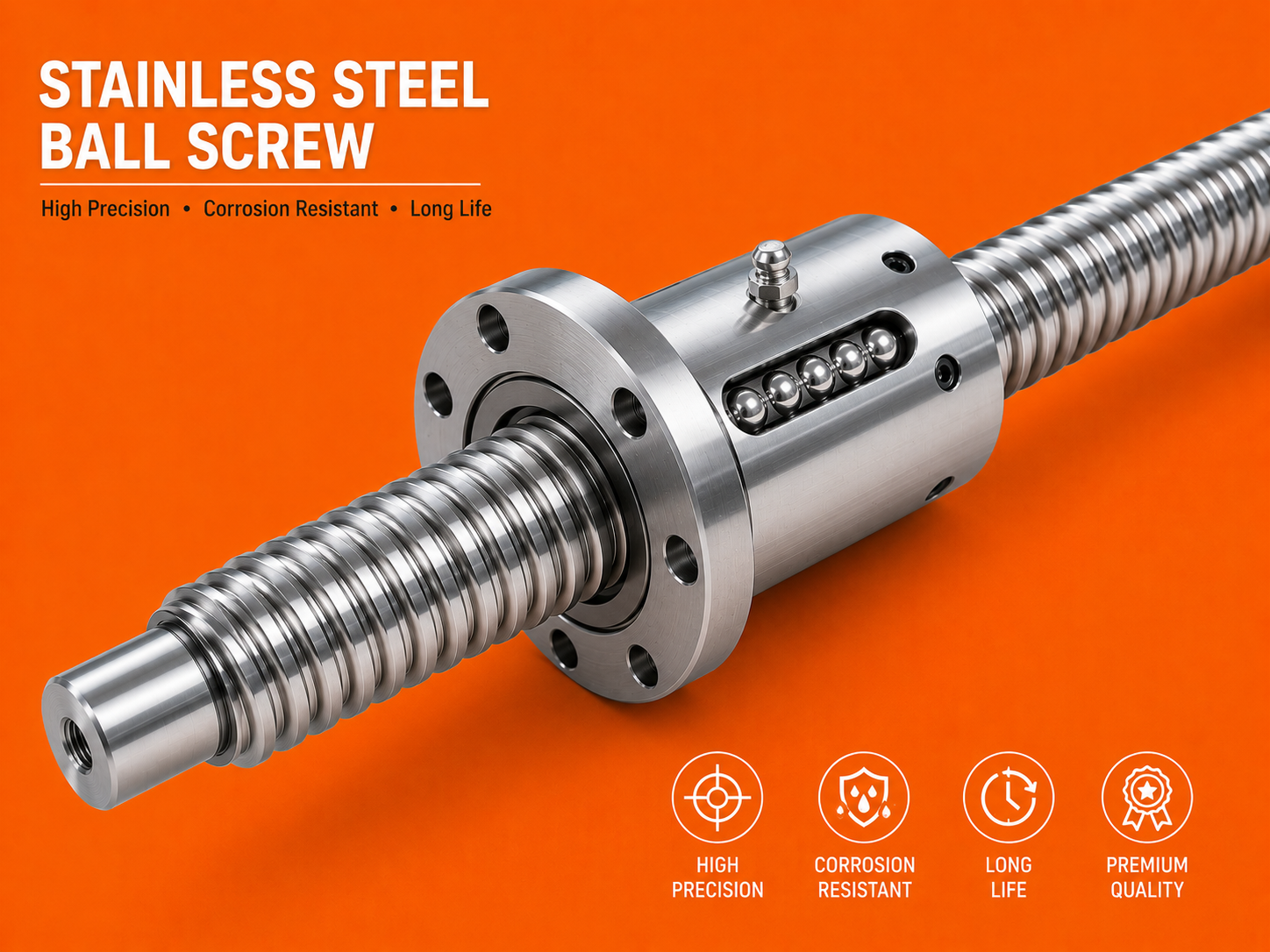 | Precision Ballscrews Balaji Engineering Works offers high-quality Stainless Steel Ball Screws in Pune, designed for precision linear motion with excellent corrosion... View product → |
Know when stainless is the wrong choice or the screw must be retired
Choose another protection strategy when abrasive dust dominates, sealing is weak, the load or speed exceeds the selected material’s limits, or the application needs greater hardness or a different surface treatment. Stainless ball screw care cannot compensate for a mechanically unsuitable grade.
| Option | Corrosion resistance | Wear and load capacity | Cost and maintenance burden |
|---|---|---|---|
| Non-stainless screw in sealed enclosure | Alloy protection is lower, but isolation can be excellent | Hardened steel often provides high load capacity and wear resistance | Enclosure costs more initially; cleaning frequency falls |
| Coated or plated screw | Treatment targets the specified exposure; damage can expose the substrate | Depends on coating thickness, adhesion and contact stress | Higher specification cost; inspect for scratches and renewal needs |
| Bellows with improved wipers | Directly blocks chips, coolant and dust better than an alloy change alone | Preserves the screw’s selected mechanical capacity | Adds space and parts; replace damaged wipers instead of adding grease |
| Stainless linear guides | Useful for guided motion, not a substitute for a ball-screw drive | Guide capacity depends on its own raceway and preload | Can simplify exposed axes but does not protect the screw nut |
Retire the screw when pitting, rising torque, torque ripple, positioning error, noise or raceway damage threatens reliability. If roughness remains, stop the axis, record the affected position, inspect the nut and return system, and obtain a manufacturer evaluation before polishing or reuse.
Use a replacement only after matching:
- Diameter, lead, nut style, preload and accuracy class
- Mounting dimensions, stroke, load, speed and lubricant
- Return-system geometry and required travel life
A stainless ball screw corrosion record distinguishes a cleanable deposit from progressive damage and sets the next inspection after exposure or duty changes. Good stainless screw maintenance starts with that evidence.
Frequently asked questions
How should you clean a stainless steel ball screw without contaminating the nut?
Remove loose chips with vacuum extraction or a controlled wipe. Avoid high-pressure compressed air, which can force chips, coolant and abrasive dust past the wipers into the nut.
When is cleaning insufficient for stainless ball screw corrosion?
Cleaning is insufficient when corrosion has created pitting, damaged the raceway, or left rough motion, abnormal torque or persistent contamination.
How do lubrication and sealing prevent stainless ball screw corrosion?
Select lubricant and seals for the actual exposure, including coolant, humidity, salt and washdown. Store the assembly clean, dry and protected from condensation.
Is stainless steel always the right choice for a ball screw?
No. Compare the exposure, load, speed, stiffness, contamination control and maintenance requirements. Retire the screw when corrosion or surface damage compromises smooth, accurate motion.