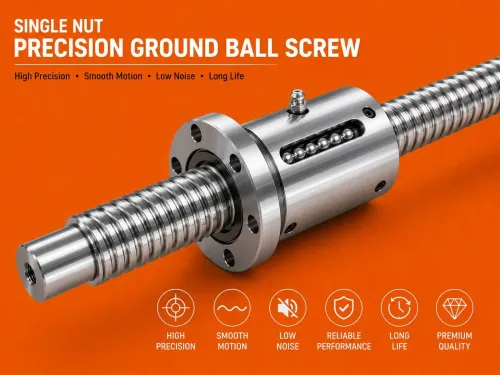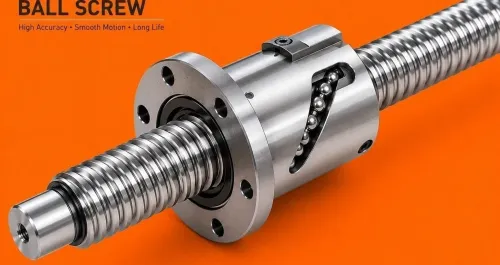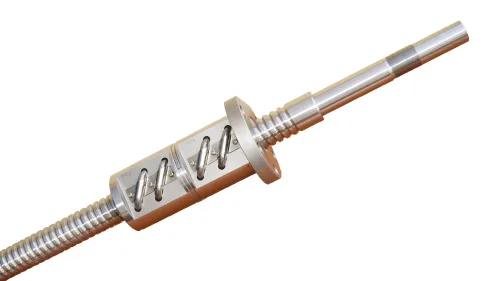

A line item such as “16 mm ball screw” does not tell you whether you are receiving a machine-ready assembly or only a threaded shaft and nut. By the end, you will know which components, measurements, documents, and commercial terms to require before accepting a rolled ball screw supply.
Key takeaways
- Define whether the quote covers a nut, screw, or matched screw-and-nut assembly.
- List diameter, lead, length, accuracy grade, preload, lubrication, and end machining.
- Compare lead, nut arrangement, and accuracy as one motion-performance decision.
- Confirm fit, acceptance checks, and application limits before placing the order.
Define the Assembly Before You Compare Prices
A quoted “16 mm ball screw” is not a complete identity. A supply can mean a replacement nut alone or a matched screw-and-nut assembly, and the parts are not interchangeable merely because diameter and lead match.
A physical assembly should state whether it contains:
- Screw shaft, with effective thread length, overall length, handedness, and specified end machining
- Ball nut, including flange or threaded body and its mounting dimensions
- Recirculating balls and return system, such as deflectors or tubes
- Seals or wipers, plus the preload or clearance condition
- Lubrication provision and any supplied grease or oil specification
| Supply type | Physical contents | Check before comparing price |
|---|---|---|
| Nut-only replacement | Ball nut, balls, return system, seals or wipers | Match shaft diameter, lead, groove geometry, ball size, recirculation design, handedness, and preload |
| Matched assembly | Screw shaft and nut as a set, with stated interfaces | Confirm end machining, nut dimensions, accuracy acceptance, and inspection documents |
| Drive package | Assembly plus supports, coupling, motor, or housing | Treat each added component as included only when itemised |
Ask any rolled ball screw manufacturer for inclusions in Indore to identify these items line by line. Bearing blocks, locknuts, bearings, couplings, mounting hardware, and installation labour are separate unless the quotation explicitly includes them.
Separate Included Items from Optional Work
A quoted price covers only the lines marked included. Ask the supplier to label every other line optional, excluded, or subject to confirmation; otherwise machining, freight, or inspection can appear as a surprise charge after approval.
Require the quotation to identify:
- Assembly: screw shaft, ball nut, recirculating balls, seals or wipers, return system, preload or clearance, lubrication provision, and any end machining.
- Technical identity: nominal diameter, lead, effective thread length, overall shaft length, nut style, mounting dimensions, handedness, accuracy class, and end-machining drawing.
- Performance data: dynamic and static load ratings, rated-life basis, maximum speed or DN value, axial load, radial-load limits, duty cycle, and mounting orientation.
- Commercial lines: product price, machining, inspection documents, packing, freight, insurance, taxes, and delivery lead time.
- Dispatch condition: corrosion protection, impact protection, and whether the shaft ships assembled, lubricated, capped, or otherwise preserved.
Treat bearing blocks, locknuts, bearings, couplings, housings, mounting hardware, lubrication, and installation labour as separate charges unless the quotation names them. Balaji Engineering Works should be asked to show these boundaries clearly on any rolled ball screw quote in Indore.
A long shaft is not accepted safely by counting packages. Inspect straightness, end protection, dents, corrosion, and the seal condition before signing delivery. If the quote says “16 mm ball screw” without the listed identity, it does not establish interchangeability; a replacement nut must also match groove geometry, ball size, recirculation design, and preload arrangement.
Related products
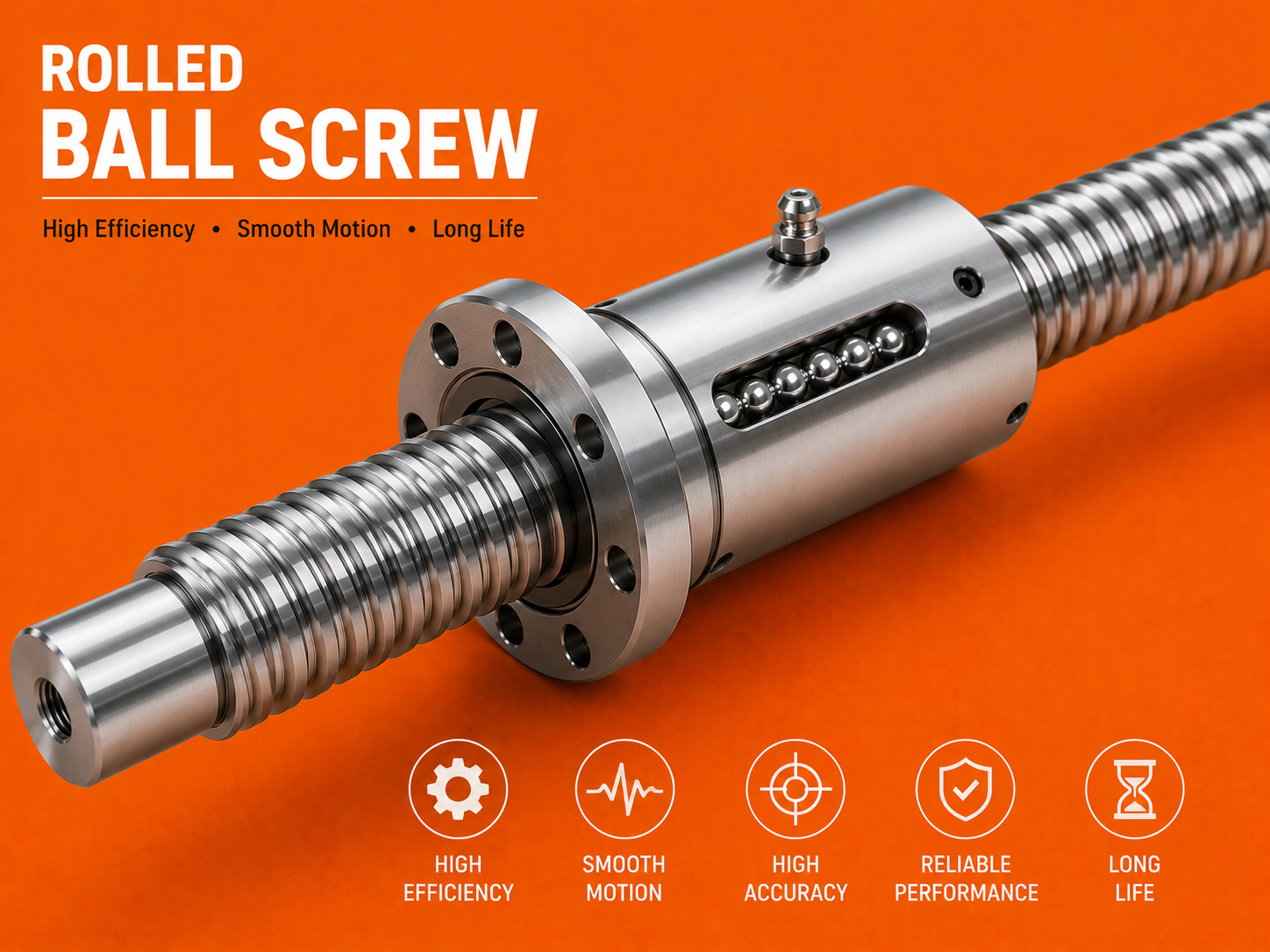 | Precision Ballscrews Balaji Engineering Works offers high-quality Rolled Ball Screws in Pune, designed for efficient linear motion with excellent performance and... View product → |
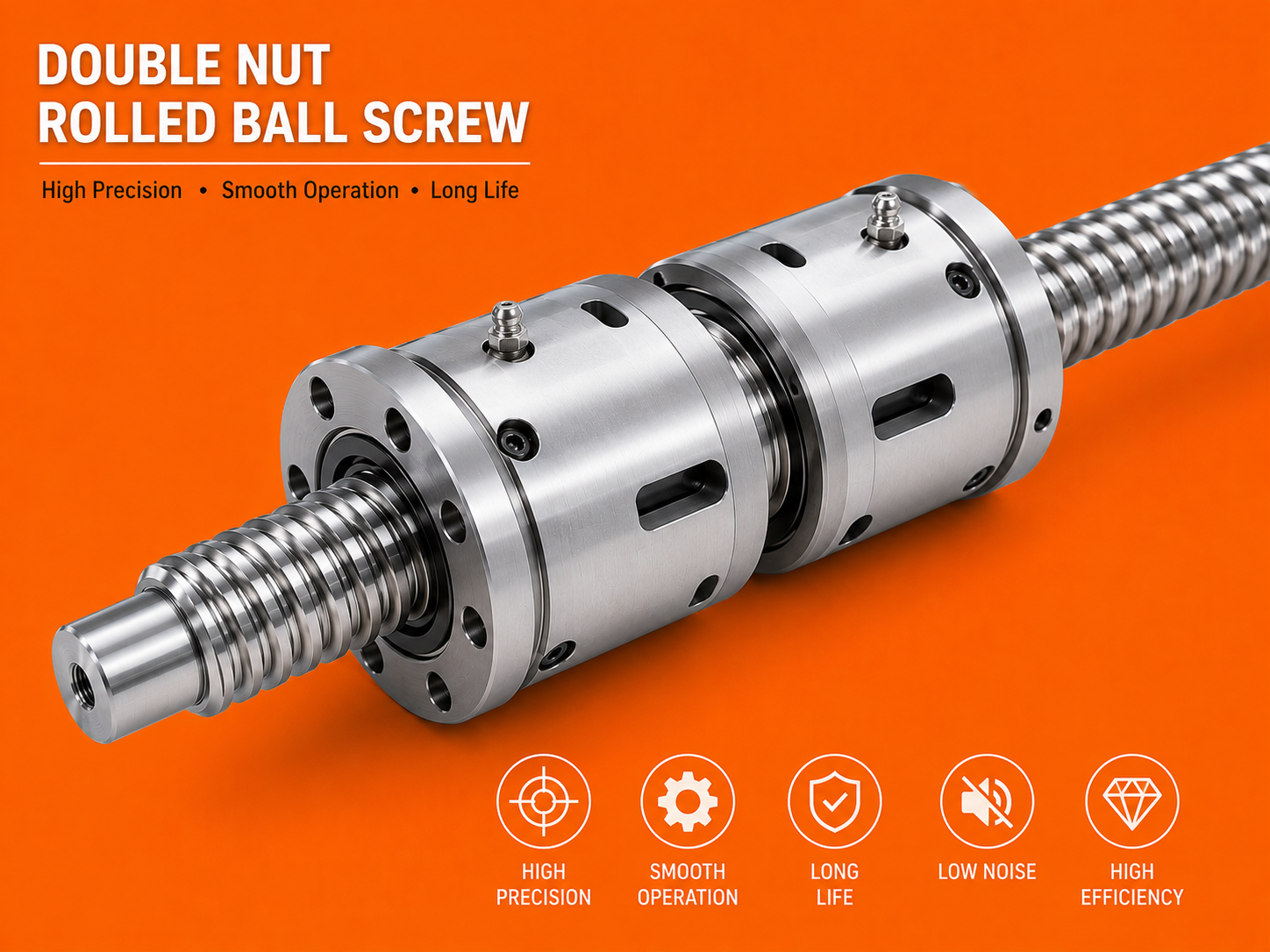 | Precision Ballscrews Balaji Engineering Works offers high-performance Double Nut Rolled Ball Screws in Pune, designed for applications requiring reduced backlash,... View product → |
Put the Required Specifications on the Purchase Order
A part described only as “16 mm ball screw” is not interchangeable. A quote for rolled ball screw specifications in indore must identify the shaft, nut, accuracy, and installation geometry precisely.
Put these details on the purchase order:
- Nominal shaft diameter, lead, handedness, effective thread length, overall shaft length, and required axis travel
- Nut style, single- or double-nut arrangement, nut mounting dimensions, bolt pattern, and mounting orientation
- Preload method and value or class, or the permitted axial clearance; state backlash separately from lead accuracy
- Accuracy class, preferably with the ISO 3408 acceptance condition and measurement length
- Axial load, maximum speed, duty cycle, expected life, lubrication method, and end-fixity arrangement
- End-machining drawing showing journals, shoulders, threads, keyways, bearing seats, and tolerances
Nut-only and matched-assembly orders are not equivalent:
| Supply type | What the supplier must match | Main risk if omitted |
|---|---|---|
| Nut-only replacement | Shaft diameter, lead, groove geometry, ball size, return system, handedness, seals, and preload arrangement | A same-size, same-lead nut can run incorrectly or fail to preload |
| Matched nut-and-shaft assembly | Nut, shaft, balls, preload, accuracy, and end machining as one identified assembly | Separate components may produce the wrong fit or lost motion |
Ask the quotation to state whether it includes the shaft, recirculating balls, seals or wipers, lubrication provision, end machining, inspection documents, and packaging. Bearing blocks, couplings, motors, housings, and installation remain separate unless listed by part number.
Choose Lead, Nut Arrangement, and Accuracy Together
Choose the lead from speed and motor torque, then choose accuracy and preload from positioning and stiffness demands. A larger lead moves farther per revolution and supports faster travel; a smaller lead gives greater mechanical advantage and finer commanded movement but requires more revolutions.
| Machine duty | Lead and accuracy choice | Preload and nut arrangement |
|---|---|---|
| Rapid traverse with modest positioning demand | Use a larger lead and the rolled accuracy class that meets the axis tolerance | Single nut with clearance limits friction and torque |
| Positioning or interpolation axis | Select lead from resolution, speed, and motor capacity; specify lead-accuracy class separately | A preloaded single nut reduces play; use a double nut when higher rigidity and reversing-load control justify the added drag |
| High-load reversing axis | Confirm axial load, acceleration, and duty cycle before fixing the lead | Preload improves rigidity but raises friction, heat, drive torque, and contamination sensitivity |
Accuracy class is not backlash. Lead accuracy describes accumulated travel error over the useful length; preload or axial clearance describes lost motion at the nut. State both on the quotation, because preload cannot correct lead error and a high accuracy class cannot remove clearance.
Ask a rolled ball screw manufacturer in Indore to state the preload method and value or class, plus dynamic and static load ratings, rated-life basis, maximum speed or DN limit, and mounting orientation. The quote must identify the shaft diameter, lead, effective thread length, nut style, mounting dimensions, handedness, and end-machining drawing.
A generic certificate does not replace measurements of lead error, axial play, nut torque, and journal runout.
Verify Compatibility, Acceptance, and Application Limits
A rolled ball screw nut supply in Indore is interchangeable only when the nut matches the shaft, not merely the stated diameter and lead. Confirm the nominal diameter, lead, groove geometry, ball size, recirculation system, handedness, and preload or clearance condition.
A nut-only replacement must be matched to the existing shaft; otherwise order a matched nut-and-shaft assembly.
Request these acceptance details before dispatch:
- End-machining drawing with overall shaft length, effective thread length, travel length, mounting dimensions, and end-fixity arrangement
- Nut style, flange dimensions, mounting-hole pattern, seals or wipers, return system, and lubrication provision
- Accuracy class, axial play or backlash, preload, inspection method, and measured results
- Dynamic and static load ratings, rated-life calculation basis, maximum permissible speed or DN value, and stated axial-load limit
- Packaging identification showing part number, batch or inspection number, and assembly orientation
Compare the supplied figures with ISO 3408 terminology, designation, acceptance conditions, axial static rigidity, load ratings, and service-life data. “Precision” is not an acceptance grade, and life cannot be inferred from diameter and lead alone: load spectrum, acceleration, speed, lubrication, and contamination decide it.
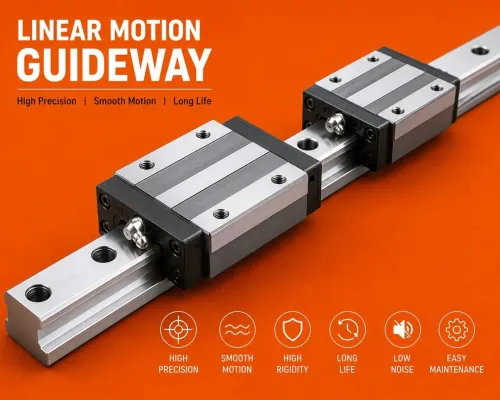
Confirm the axis installation separately. Align the screw with the guideways, verify support-bearing and coupling alignment, shield it from chips, and prevent radial load on the nut.
Reject the technology for an axis that uses the nut as a guide or applies significant side force; use proper linear guides and reassess whether a belt, rack, or linear motor better suits an unusually long, high-speed stroke.
Frequently asked questions
What should you define before comparing rolled ball screw prices?
State whether you need a replacement nut, screw, or matched screw-and-nut assembly, then specify the interface and application.
Which items should you separate from the base ball screw supply?
Separate the screw, nut, return system, lubrication, end machining, inspection documents, installation, and other optional work.
What specifications belong on a rolled ball screw purchase order?
Include nominal diameter, lead, screw length, nut type, preload, accuracy grade, mounting dimensions, end machining, lubrication, and inspection requirements.
How do you verify a rolled ball screw before acceptance?
Check the drawing, mounting dimensions, lead and accuracy measurements, runout, preload, backlash, surface condition, and application limits against the order.