


A guideway purchase can fail before installation if the rail, blocks, preload, accuracy, sealing and load calculations are treated as separate choices. By the end, you will have a supplier-ready specification, a method for checking guideway life and rigidity, and a practical process for comparing quotations and inspecting the delivered parts.
Key takeaways
- Choose rail architecture from travel, load, speed and overturning moments.
- Specify rating life, preload, accuracy class and operating conditions together.
- Protect long rails and gantry systems from chips, dust and coolant.
- Audit drawings, inspection records, traceability and alignment support before acceptance.
Choose the guideway architecture before comparing suppliers
A profile-rail system is the usual choice for CNC axes, machining centres and automation stages that need high stiffness, repeatability and resistance to overturning moments. Choose the architecture from the machine’s travel, moving mass, speed, acceleration and required accuracy—not from a “25 mm rail” label.
| Option | Best fit | Main trade-off |
|---|---|---|
| Profile rail with matched blocks | Short or long precision axes, high loads and moments | Costs more and demands accurate mounting |
| Supported round shaft with open bearings | Long travel, moderate loads and forgiving contamination conditions | Lower stiffness and precision than profile rails |
| Linear bushing on supported shaft | Light-duty automation and economical guided motion | Limited moment capacity; shaft deflection can affect accuracy |
| Complete guideway assembly | A matched rail, blocks, seals and accessories supplied as one set | Less flexibility when replacing individual components |
| Rail with separate blocks | Custom layouts, multiple carriages or replacement control | You must verify compatibility, preload and accuracy codes |
For linear motion guideways in pune, ask for the exact series and size, rail length, block style and quantity, accuracy class, preload code, seals, wipers, lubrication ports and mounting orientation.
Specify joined rails for travel beyond one rail length, and do not force a parallel rail into alignment with bolts; that creates lateral preload and running resistance.
Treat guideway accuracy as a component property, not proof of axis accuracy. Verify the assembled axis through positioning and repeatability testing under ISO 230-2 where applicable.
Build the specification around loads, life and operating conditions
Give the supplier a load case, not “25 mm linear guide.” State payload, moving mass, centre-of-gravity offset, travel, duty cycle, speed, acceleration, shock, and expected service life. Include radial, reverse or uplift loads and moments about all three axes; rail spacing and block spacing determine moment capacity in a two-rail axis.
- Exact series and size, rail width, rail length, and the number and style of blocks.
- Static load rating, dynamic load rating, moment capacity, and required stiffness.
- Preload, accuracy class, running parallelism, and mounting orientation.
- Permissible speed and acceleration, including peak values rather than averages.
- Travel distance, cycle frequency, load direction during each part of the cycle, and the target L10 life.
- Mounting-bolt size and grade, reference-shoulder dimensions, end seals, wipers, lubrication ports, lubricant type, and other accessories.
- Coolant, abrasive dust, chips, humidity, temperature range, washdown exposure, and corrosion risks.
Ask the supplier to calculate equivalent load and life for the actual load spectrum, not just quote a catalogue rating. A high moment from an offset payload can overload one block while the average vertical load looks safe.
For a linear guide rail in Pune, provide the machine’s rail spacing and block spacing so the selection reflects stiffness and overturning resistance; forcing misaligned parallel rails into place creates lateral preload, tight spots, excess drive force, and shortened life.
Set preload, accuracy and alignment requirements together
Choose the lowest preload that meets your stiffness and positioning-error budget. Excess preload raises friction, motor torque, heat and sensitivity to rail misalignment; a high accuracy class cannot compensate for a poorly installed rail.
Set these requirements with the supplier before ordering:
- Define the required accuracy class from the machine’s allowable positioning and straightness error, not from a preference for the highest grade.
- Request the manufacturer’s actual preload code or force range. “Light,” “medium” and “heavy” are not comparable labels across brands.
- State the rail mounting orientation, block arrangement and running parallelism requirement.
- Confirm the supplier’s height and parallelism tolerances, then check them across the full travel before fully tightening the blocks.
- Specify the exact series, size, rail length, block count, sealing arrangement and lubrication option on the purchase order.
- For a vertical axis, coordinate guideway selection with the brake or counterbalance; static load capacity does not prevent damage from an uncontrolled descent.
| Preload choice | Use it when | Main trade-off |
|---|---|---|
| Light | Drive force and smooth running matter more than maximum rigidity | More clearance and lower stiffness |
| Medium | The machine needs a balanced stiffness, accuracy and torque requirement | Requires controlled rail alignment |
| Heavy | Deflection under cutting or process loads is the dominant error source | Highest friction, heat and installation sensitivity |
If blocks bind during the alignment check, do not force the second rail into position with bolts. Correct the rail seating or parallelism first. Record the final accuracy and preload codes for future replacement.
Plan long rails, gantry arrangements and contamination protection
For a long axis, specify joined rails as one matched system, not as interchangeable lengths. Require the supplier to identify every joint location, matching marks, end-to-end orientation and rail-pair information. Arbitrary joining can create a height step or straightness break that produces carriage vibration and positioning error.
Put these details on the purchase drawing:
- Exact guideway series and size, rail length, joint locations, number of blocks, block spacing and mounting orientation.
- For two-rail or gantry layouts, rail spacing, block spacing, parallelism tolerance and the reference rail. Include radial, reverse, uplift and moment loads during acceleration and cutting.
- Required accuracy class, preload, running parallelism, dynamic and static ratings, permissible speed, lubrication ports and mounting-bolt specification.
- Joint matching marks, installation sequence and inspection method for rail height, pitch and yaw after assembly.
Match the sealing package to the contamination, not just the nominal load. Coolant and fine abrasive dust call for double seals, end seals, scrapers and wipers; heavy chips may also require bellows or external covers. These protections raise running friction, so confirm drive-force and lubrication limits.
Ask for the lubrication method and relubrication access before selecting maximum sealing.
Clean shoulder surfaces and reference faces during installation. Remove paint, burrs and chips, then tighten bolts in the specified sequence; poor squareness or uneven torque can create tight spots even with straight rails. Verify the assembled gantry for smooth travel across every joint.
Audit the Pune supplier before accepting the guideways
Do not accept a box marked only “25 mm linear guide.” Require the exact series and size, rail length, block count and style, accuracy class, preload code, seals, lubrication option, mounting orientation, and drawing revision. Ask for the manufacturer’s inspection report, lubrication specification, installation instructions, and declared load, speed, acceleration and stiffness data.
1. Verify traceability before installation. The rail and every block should link to an exact batch or lot, with matching marks for joined rails, joint locations, end-to-end orientation and pairing instructions. Record the serial or lot numbers, preload code, accuracy grade and packaging condition.
2. Check the supplied measurements against the drawing. Inspect rail length, hole pitch, block dimensions, mounting surfaces, running parallelism and height variation; request dimensional records when the purchase specification requires them. A generic certificate naming only the product category is not enough.
3. Align parallel rails across full travel before fully tightening the blocks. Do not pull a second rail into position with bolts: lateral preload raises running resistance and shortens life. Confirm smooth hand travel, lubrication access, seal and wiper fit, and absence of damage after mounting.
4. Test the finished axis, not just the guideway. Measure positioning accuracy and repeatability under ISO 230-2 where applicable, then record running resistance, backlash, vibration and drive load at operating speed and acceleration. Preload labels such as light or heavy are not interchangeable, so obtain the supplier’s actual preload range.
Use this evidence request with Balaji Engineering Works or any linear motion systems manufacturer in Pune; it makes replacement and failure analysis far easier.
Related products
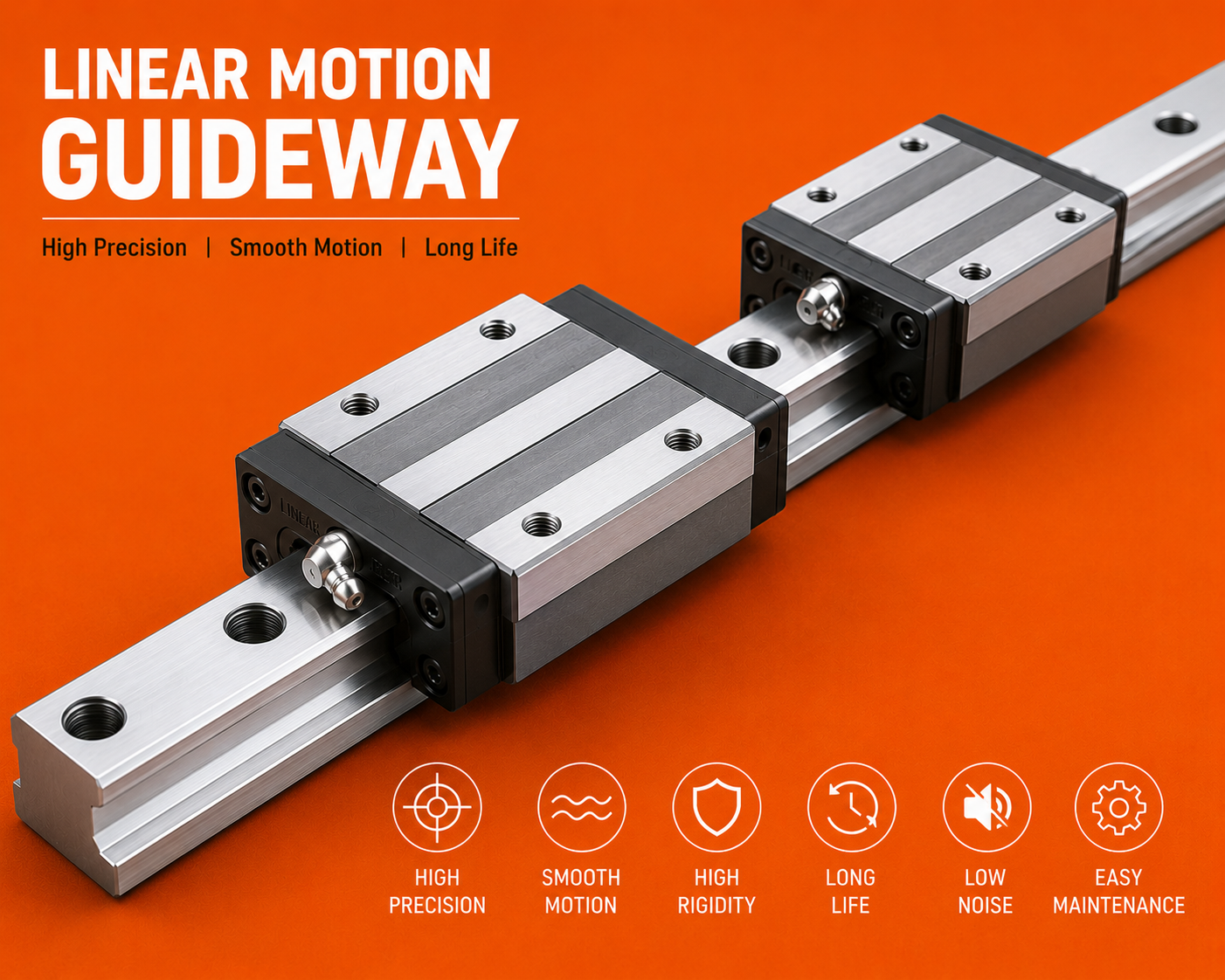 | Linear Motion Guideways Balaji Engineering Works offers high-performance Linear Motion Guideways in Pune, designed to ensure smooth, precise, and efficient linear movement... View product → |
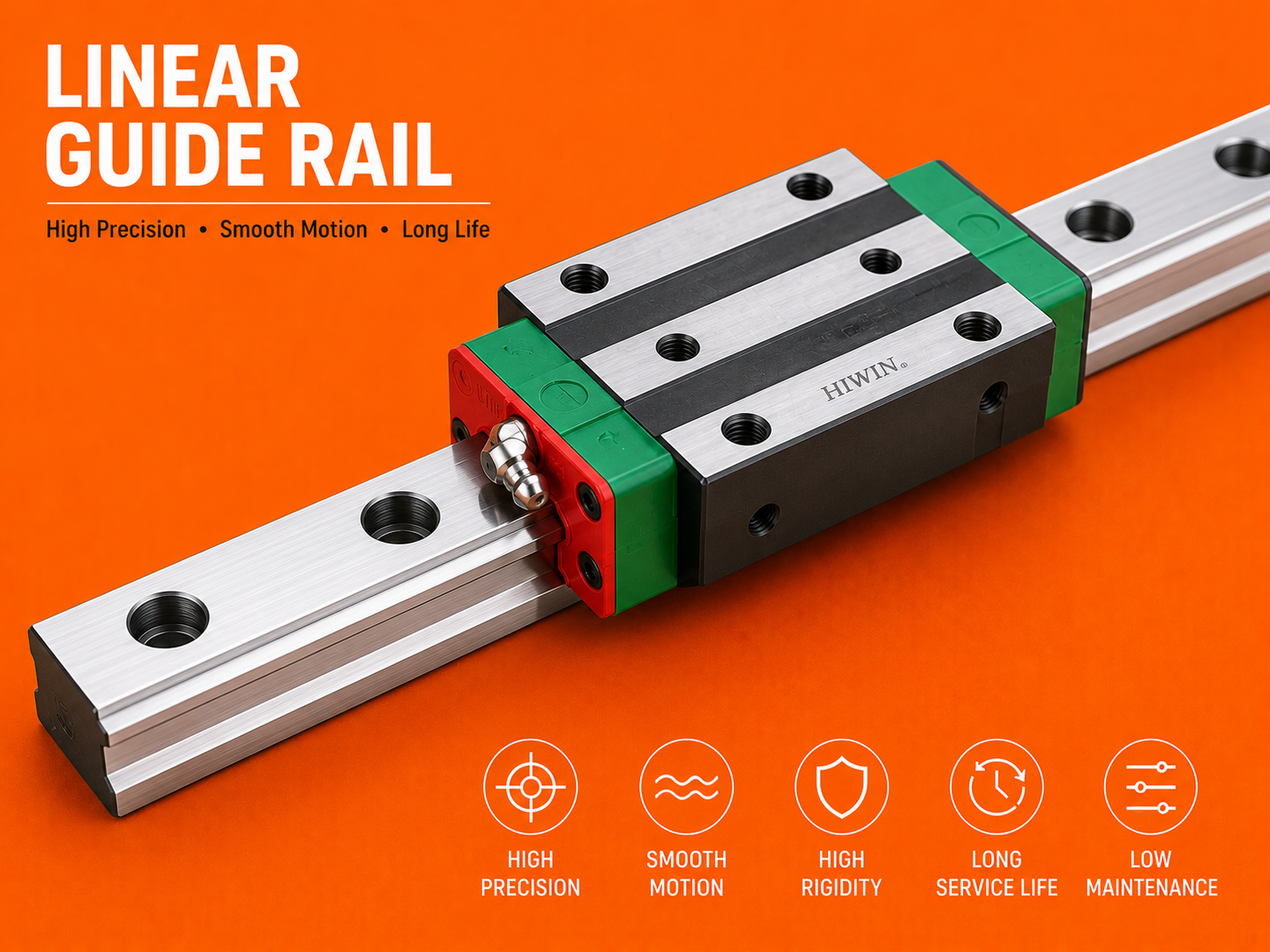 | Linear Motion Guideways Balaji Engineering Works is a trusted supplier of Linear Guide Rails in Pune, designed to provide accurate, smooth, and stable linear motion for... View product → |
Frequently asked questions
How do you choose a linear guideway architecture?
Select the rail and carriage arrangement from travel length, moving mass, speed, acceleration, accuracy and overturning moments rather than rail width alone.
What should a guideway specification include?
State loads, duty cycle, target life, speed, acceleration, environment, lubrication, preload, accuracy class and alignment limits.
How should long rails and gantry guideways be planned?
Define rail joining, parallelism, mounting references, carriage spacing and protection against chips, dust and coolant before ordering.
How can you audit a Pune supplier of linear guideways?
Review drawings, material and batch traceability, inspection records, accuracy measurements, packing, installation guidance and after-sales alignment support.
Related products
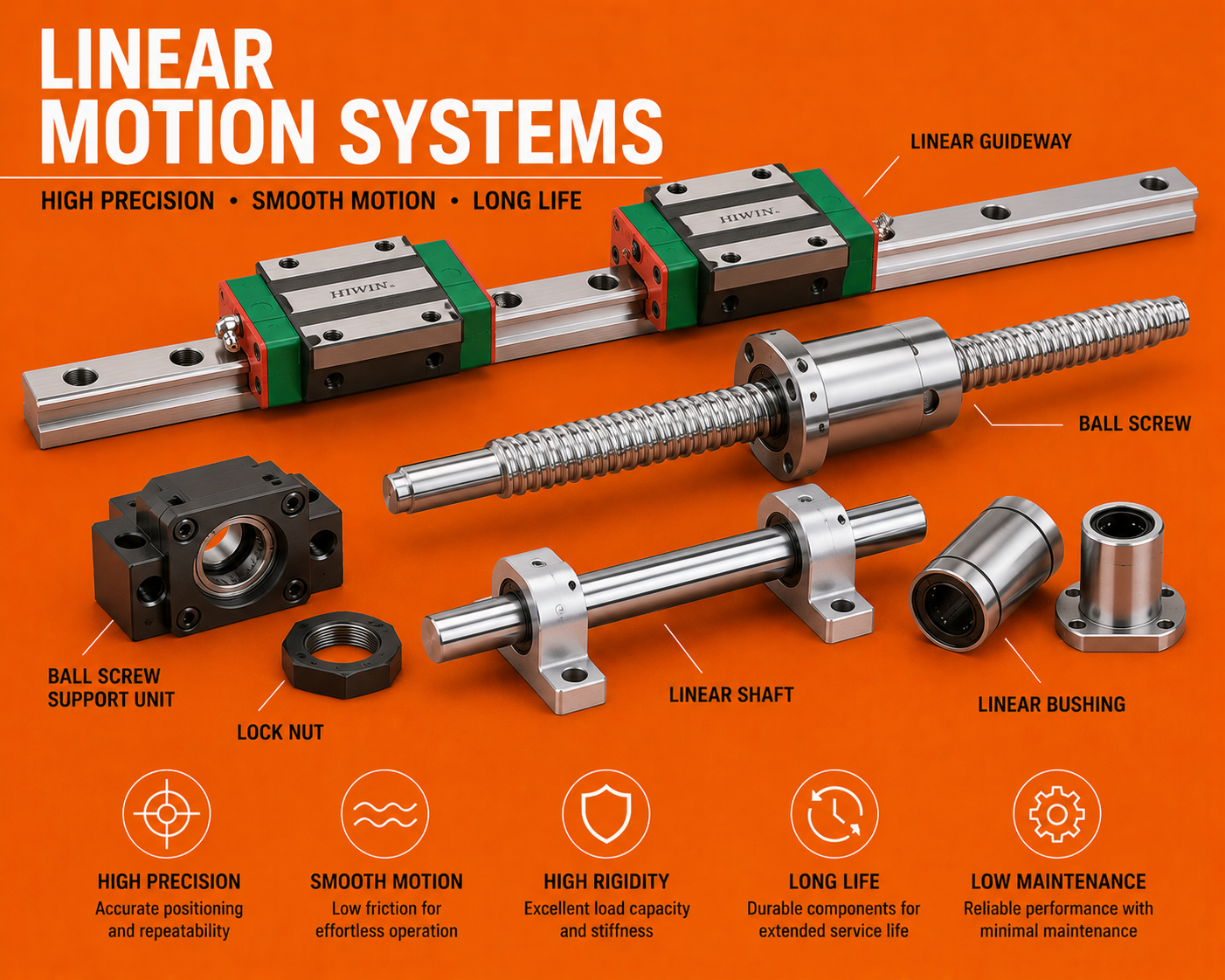 | Linear Motion Product Overview Balaji Engineering Works offers advanced Linear Motion Systems designed to deliver smooth, accurate, and efficient linear movement... View product → |
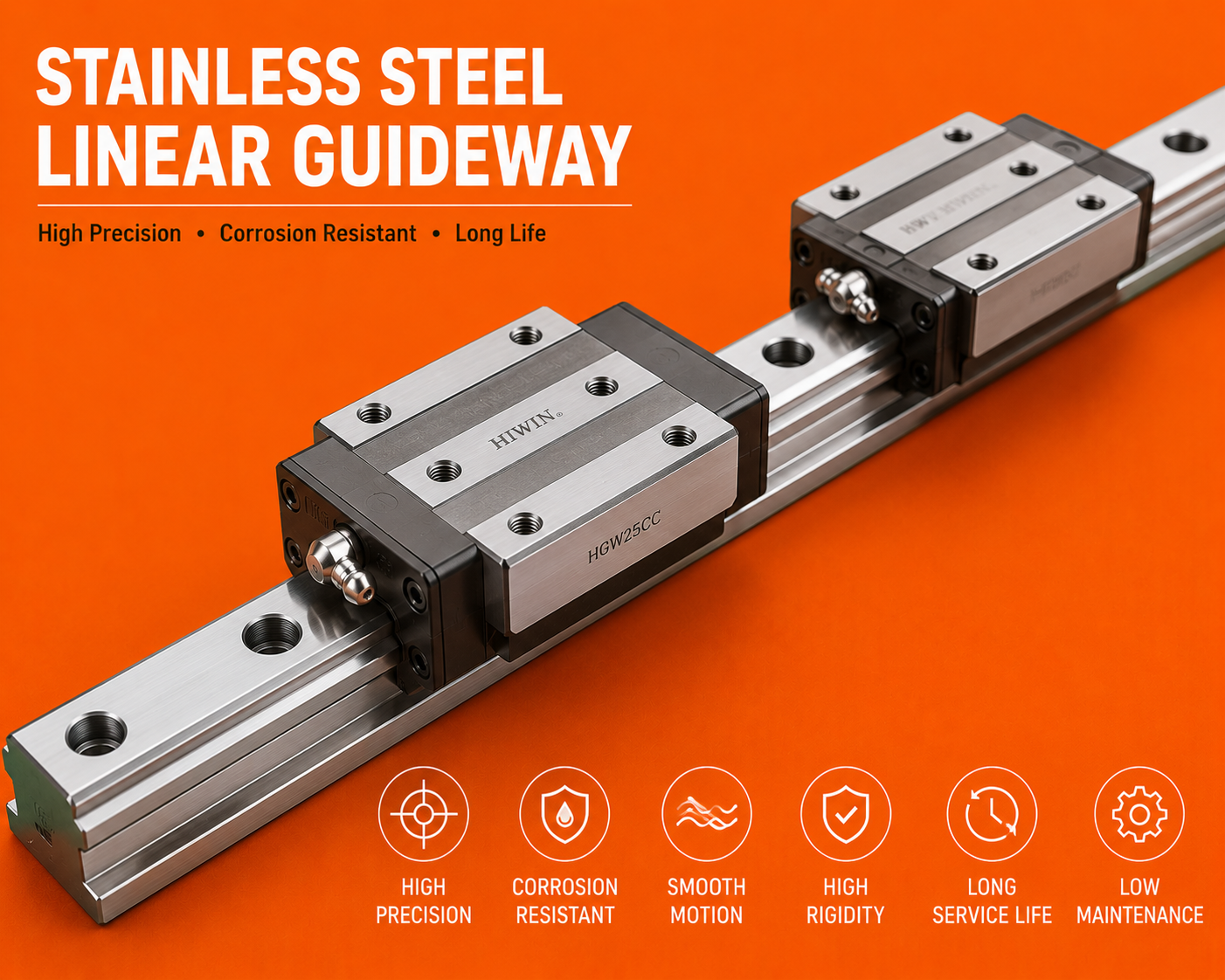 | Linear Motion Guideways Stainless Steel Linear Guideway Balaji Engineering Works offers premium quality Stainless Steel Linear Guideways in Pune, designed for smooth, precise, and corrosion-resistant... View product → |