
A ball screw can develop gritty travel, torque spikes, vibration and positioning errors before the shaft looks visibly dirty. By tracing the contamination source, comparing the motion pattern with other faults and following a controlled inspection and cleaning sequence, you can decide whether the assembly needs maintenance, wiper replacement, repair or replacement.
Key takeaways
- Inspect wipers, lubricant, raceways and return paths for embedded debris.
- Separate contamination from preload loss, misalignment, bearing wear and drive faults.
- Clean with lint-free materials and approved solvent; never force contaminated balls through returns.
- Replace damaged wipers before new chips and coolant reach the raceway.
How small particles create rough ball-screw motion
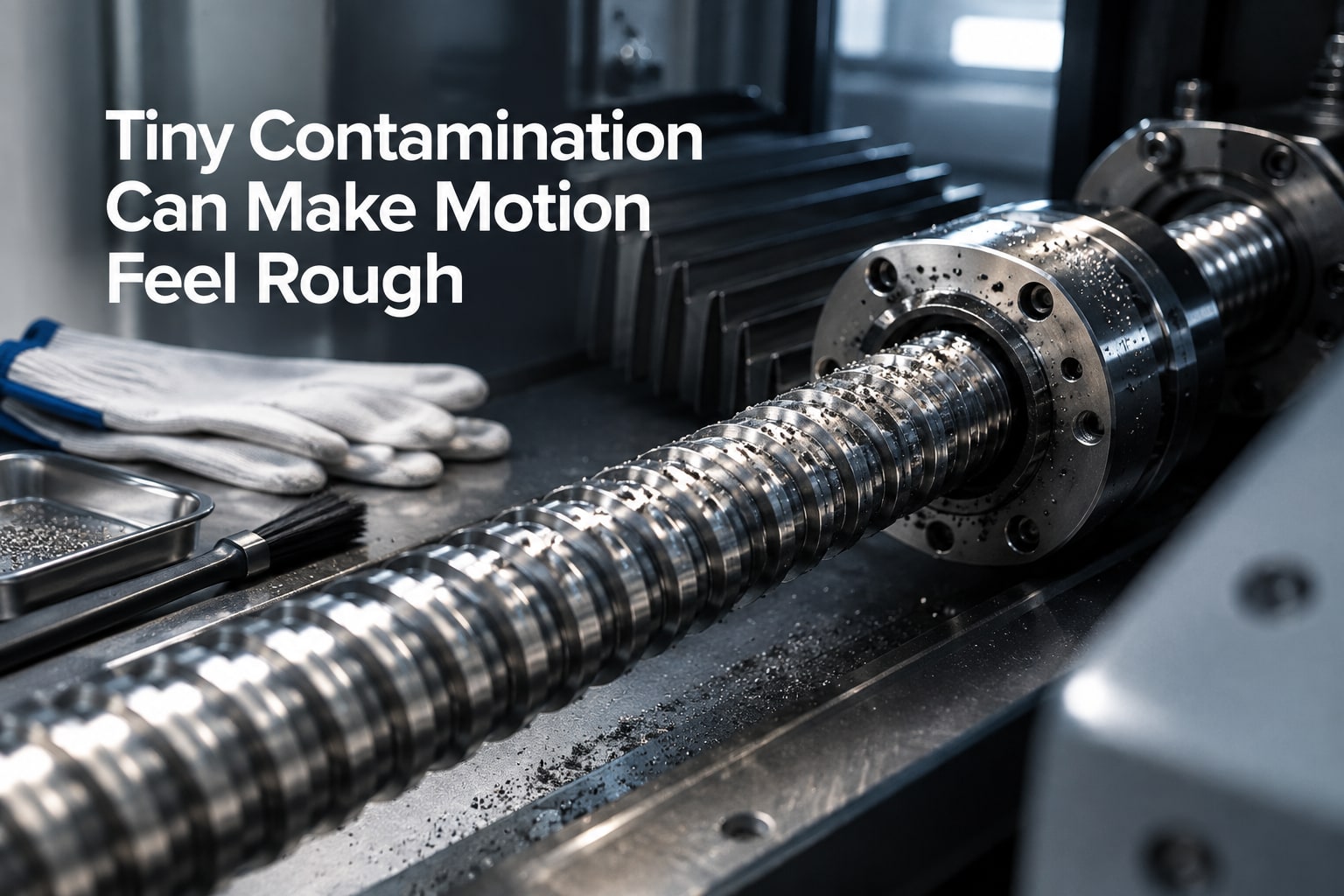
Industrial ball screw rough motion starts when chips, grinding dust, cast-iron fines, coolant residue, hardened grease or rust particles pass a damaged wiper. Hard particles become embedded in lubricant and act as three-body abrasives between the balls and raceway. They score the raceway, raise rolling resistance and disturb smooth ball recirculation.
A preloaded HIWIN ball screw reacts sharply because debris adds resistance to an already tight contact. The result is local torque spikes, vibration and stick-slip; continued travel enlarges raceway damage, increases backlash and creates positioning error. A screw can develop these symptoms before it looks visibly dirty.
| Physical condition | What happens inside the screw | Machine symptom |
|---|---|---|
| Contaminated lubricant | Abrasive particles circulate through the nut and mark the raceway | Rough travel, vibration and changing drive torque |
| Debris at the return path | Balls recirculate unevenly or briefly obstruct | Repeating knocks, torque spikes or a rough section at one position |
| Damaged or hardened wiper | New chips and dust enter the nut | Roughness worsens after machining or coolant exposure |
| Misalignment or guide contamination | Side load pushes the nut against one raceway | High torque and wear that can resemble contamination |
Record where along the stroke the roughness occurs and compare it with drive torque. Do not add fresh grease over suspect grease; that traps abrasive material inside the nut. Check guideways, couplings and servo tuning before condemning the screw, because each can produce industrial ball screw rough motion without contaminated lubricant.
Which symptoms separate contamination from other faults
A contaminated HIWIN ball screw usually produces random, short-duration torque spikes, vibration, or gritty motion that changes as loose particles move through the nut. A damaged wiper adds a visible ingress path, with chips, torn elastomer, or a gap at the nut entry; clean lubricant does not rule out embedded abrasive particles.
Compare the symptom pattern before blaming contamination:
| Cause | Torque or motion pattern | Confirming clues |
|---|---|---|
| Contamination or damaged wiper | Random spikes, intermittent roughness, position-dependent vibration | Dirty or hardened lubricant, particles, scored raceway, torn or missing wiper |
| Excessive preload | High torque across most of the travel | Correct alignment but torque remains consistently elevated; check the preload specification |
| Insufficient or wrong lubricant | Rising friction, noise, heat, then rough running | Dry raceway, separated grease, incorrect viscosity, or lubricant starvation |
| Misalignment or side load | High torque that repeats through travel | Mounting error between screw, nut and linear guides; coupling loosening can worsen it |
| Support-bearing damage | Roughness concentrated near one end or bearing position | Bearing noise, play, heat, or failed rotation test with the screw isolated |
| Coupling misalignment | Periodic vibration tied to motor rotation | Flexible coupling shows angular offset, radial runout, or loose hubs |
| Thermal growth | Position drift after warm-up, not random gritty spots | Error follows temperature and stabilises after cooling |
| Nut wear | Backlash and repeatability loss with generally smooth travel | Measured play exceeds the machine specification; raceways show uniform wear |
Record motor current or drive torque against screw position. Position-correlated peaks point to a local defect; random spikes favour debris. The phrase hiwin ball screw contamination in pune identifies neither the cause nor a supply channel, so retain the part number, preload, lubricant history and photographs.
How to inspect and clean the assembly without worsening damage
Do not run the servo or drive the nut across visible chips. Isolate the machine first, then use this sequence:
1. Stop the machine, apply lockout, and isolate electrical and stored mechanical energy. Clean the area around the screw so loose chips cannot fall into the nut during inspection.
2. Record where roughness occurs along the travel. At low speed, measure drive torque or servo load without crossing visible debris; a fixed position points toward local damage, while a travel-wide increase also warrants checks of preload and alignment.
3. Inspect both nut wipers for cuts, distortion, hardened grease, trapped chips and gaps against the screw. Replace a damaged wiper before moving the nut through contamination.
4. Illuminate the screw shaft at a shallow angle. Look for embedded particles, scored raceways, rust, coolant film and hardened lubricant. Inspect guideways, support bearings and the coupling for contamination or misalignment before blaming the screw.
5. Wipe the exposed screw with a clean, lint-free cloth and a cleaner approved for the HIWIN assembly. Work away from the nut, capture loosened debris, and never aim compressed air at the nut or wipers.
6. Remove contaminated grease from accessible surfaces and replenish it only with the specified lubricant. Do not add fresh grease over abrasive, hardened grease, inject solvent into the nut, or force the nut across chips.
7. If debris is inside the nut, torque remains abnormal, or raceways are scored, stop cleaning and send the assembly for manufacturer-approved disassembly or replacement. Cover the cleaned screw against lint, moisture and corrosion until that decision is made.
When to clean, repair or replace the ball screw
Use the inspection findings to choose the least invasive remedy that restores measured performance:
- Clean and continue using the screw when the wipers are intact, the raceways show no scoring or pitting, torque returns to normal, and position error disappears after contamination removal.
- Repair it when a wiper, seal, end support, or lubrication passage is damaged but the screw and nut still meet the required torque, backlash, and accuracy limits after service.
- Replace the screw and nut when raceways are scored, balls are damaged, torque remains uneven, backlash exceeds the machine tolerance, or roughness occurs at the same position after cleaning and alignment checks.
Before replacement, isolate guideway contamination, coupling misalignment, support-bearing damage and servo-tuning errors. Replacing a sound screw will not cure those faults.
Give the supplier the original part number, nominal diameter, lead, travel length, nut style, preload, accuracy class, end machining drawing, allowable runout and the machine’s measured backlash and torque.
Require ISO 3408 terminology and acceptance conditions, plus the measurement method, instrument, temperature and measurement points behind every accuracy claim; “precision” or “C5 quality” alone is incomplete. Also request material and heat-treatment details, serialised inspection records, and confirmation of wiper compatibility and lubrication.
Whether you contact a ball screw manufacturer in Pune or a precision ballscrew manufacturer in Pune, send photographs, operating history, lubricant type, enclosure condition and a position-referenced motion record. Balaji Engineering Works should receive that evidence before matching a replacement.
Related product
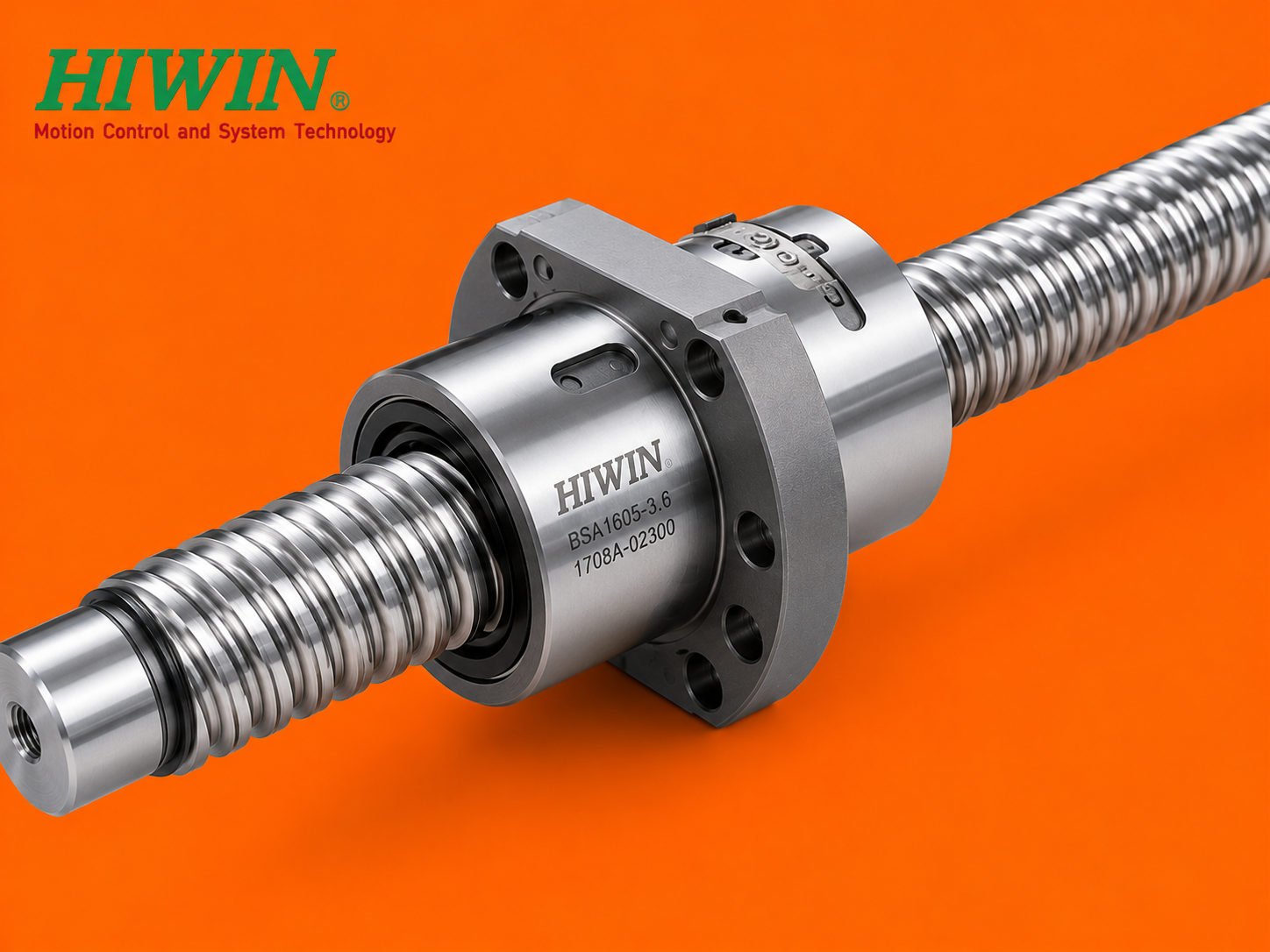 | Precision Ballscrews Balaji Engineering Works offers high-quality HIWIN Ball Screws in Pune, known for their exceptional precision, smooth operation, and long service... View product → |
How to prevent contamination from returning
Prevent repeat rough motion with a sealed chip barrier, intact wipers, specified lubricant and trend monitoring—not by adding grease after every symptom.
| Control | Correct control | Failure it prevents |
|---|---|---|
| Enclosure | Fit bellows or a telescopic screw cover, and guard the nut from chips, grinding dust and coolant spray. | Direct debris entry and coolant residue on the raceway |
| Wiper | Inspect both nut-entry wipers for cuts, hardening, gaps or missing sections; replace damaged wipers. | The open path that carries chips into the nut |
| Lubricant | Use the grease or oil, quantity and interval specified for the HIWIN screw. Clean or purge contaminated lubricant before replenishing it. | Abrasive particles being redistributed inside the nut |
| Monitoring | Trend motor current, drive torque, vibration and positioning repeatability at fixed travel positions. | Gradual contamination, rising friction or recurring local roughness |
| Maintenance | Keep the enclosure closed, remove chips before they reach the screw, and inspect covers and wipers at every scheduled service. | Repeat ingress after a successful cleaning |
Never direct compressed air at an exposed nut; it can drive chips past the wipers. After cleaning, shield the screw from lint, solvent residue and corrosion.
If torque rises while the screw remains clean, inspect guideways, coupling alignment, nut mounting and servo tuning before replacing the assembly. Record the screw part number, preload, lubricant, enclosure condition, wiper photographs and position-referenced torque results for a defensible follow-up.
Frequently asked questions
How does contamination make a ball screw move roughly?
Chips, grinding dust, cast-iron fines, coolant residue, hardened grease and rust can enter through a damaged wiper. Hard particles become embedded in lubricant, score the raceway and interfere with smooth ball recirculation.
Which symptoms point to ball-screw contamination?
Rough or gritty travel, localized tight spots, abnormal noise, rising motor load and debris in the lubricant point toward contamination. Check preload, alignment, support bearings and the drive system before blaming the screw alone.
How should you inspect and clean a contaminated ball screw?
Stop the machine, isolate power, inspect the wipers and raceways, remove loose debris without pushing it into the nut, and use lint-free cleaning materials. Do not force the nut across visibly contaminated or damaged sections.
When should you clean, repair or replace a ball screw?
Clean when debris has not scored the raceways or damaged the return system. Repair when wipers, seals or other serviceable parts are damaged. Replace the assembly when raceways are scored, recirculation is damaged or rough motion remains after cleaning.
How can you prevent ball-screw contamination from returning?
Replace damaged wipers, maintain the correct lubricant, remove chips before they reach the screw, protect the assembly from coolant spray and inspect seals, covers and lubrication intervals during scheduled maintenance.