
A ball screw suits a material-handling axis when the machine needs controlled lifting, indexing, clamping, or transfer rather than ordinary continuous conveyor movement. You will be able to map the right applications, size the screw against real loads and speeds, protect it from Pune factory conditions, and compare suppliers using inspection evidence instead of diameter and price alone.
Key takeaways
- Use ball screws for controlled positioning, lifting, clamping, and transfer—not ordinary conveyor transport.
- Calculate lead, axial load, speed, buckling risk, and required travel life before selecting a screw.
- Reject ball screws when contamination, shock loading, or continuous high-speed travel exceeds their protection limits.
- Specify diameter, lead, accuracy class, preload, nut type, ends, lubrication, and inspection documents.
Where Ball Screws Fit in Pune Material-Handling Machines
Ball screws suit controlled linear motion, not ordinary continuous conveyor transport. In industrial ball screw material handling machinery in Pune, they are used where a motor must position, lift, clamp, or transfer a payload with repeatable travel.
A precision ball screw material handling axis still needs to be judged by shock loads, contamination, duty cycle, and braking—not catalogue accuracy alone.
| Axis | Typical use | Main design concern |
|---|---|---|
| Palletising or pick-and-place | Vertical lift and horizontal transfer | Shock loading, braking, and guide stiffness |
| Transfer system | Shuttle movement between stations | Acceleration, repeatability, and protection from debris |
| Lift table | Controlled raising and lowering | Buckling, static load, and a separate guide column |
| Conveyor diverter | Short positioning or pushing stroke | Impact loads and contamination |
| Automated storage equipment | Carriage or retrieval positioning | Long-stroke critical speed and thermal growth |
| Packaging machine | Film, sealing, cutting, or indexing adjustment | Lead accuracy, preload, and servo response |
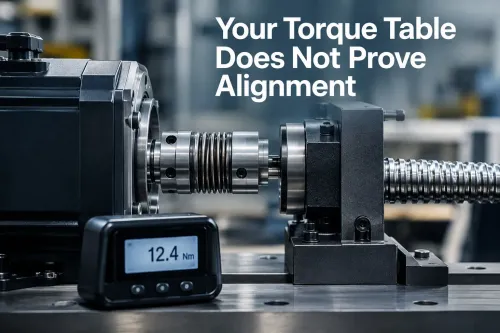
The motor turns the screw through a correctly sized coupling. Fixed and floating support units locate the screw while allowing thermal expansion; the nut attaches to the moving carriage, and linear guides carry side loads and overturning moments. Do not use the screw as the payload guide.
A safe axis also needs an encoder, servo drive, limits, guarding, lubrication, and a brake for vertical loads. Check dynamic rating using L10 = (Ca/Fa)³ million revolutions, then check static rating for shock, buckling for compression, and critical speed for long screws.
Bellows, wipers, or telescopic covers keep dust, chips, weld spatter, and packaging debris out of the nut.
How to Size Lead, Load Capacity, Speed, and Life
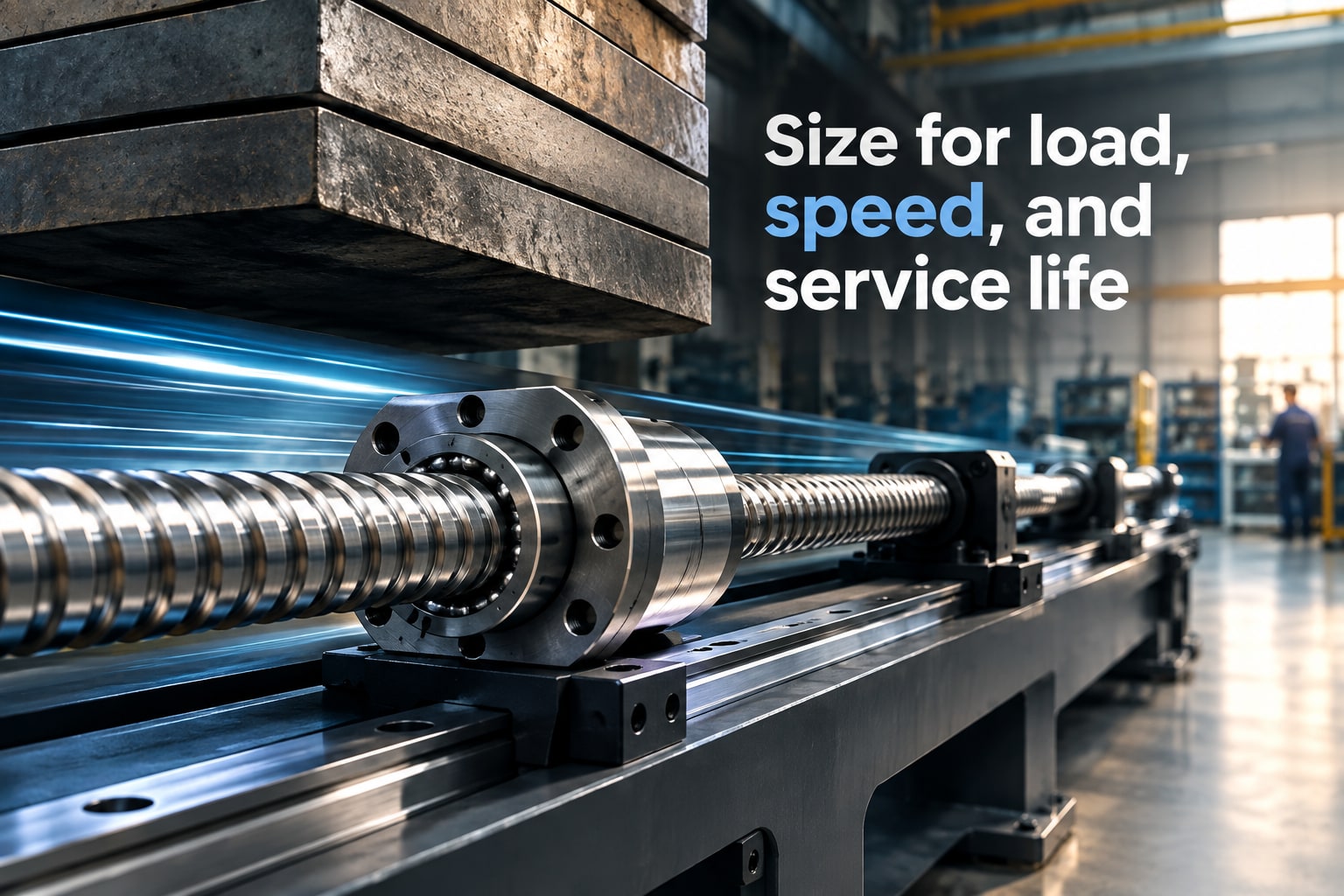
Start with the worst moving condition: payload, acceleration, orientation and shock together determine axial load; do not size from payload alone. Record effective stroke, travel speed, cycles per hour, idle time, positioning accuracy, repeatability, temperature and mounting arrangement.
1. Calculate peak axial force from payload, guide friction, acceleration and incline. Add the force from emergency stops or transferred loads. Compare this value with the static load rating, then check permissible buckling load for a screw working in compression.
2. Choose lead from the required speed and motor speed: travel speed equals lead multiplied by revolutions per minute. A smaller lead improves mechanical resolution and thrust but raises motor rpm; a larger lead reduces rpm but demands more torque and can reduce positioning resolution.
3. Check dynamic capacity using L10 = (Ca/Fa)^3 million revolutions, where Ca is the dynamic load rating and Fa is the equivalent axial load. Convert the result into hours from screw rpm and duty cycle, then include shock, frequent reversals and peak acceleration in the calculation.
4. Check critical speed from nominal diameter, unsupported length, fixed and floating end supports, and natural frequency. A long screw can fail this check before load or motor torque becomes limiting.
5. Specify lead accuracy, preload, nut stiffness, encoder location and thermal growth for the accuracy target. ISO 3408 terminology helps compare screws, but it does not guarantee complete-axis accuracy.
Give the supplier the fixed-end arrangement, floating-end arrangement, mounting orientation, lubrication method and contamination controls. That application sheet lets you compare an industrial ball screw in Pune on calculated performance rather than diameter and length alone.
Choosing the Screw Type—and Recognising a Poor Fit
Choose a ground ball screw for high positioning accuracy, repeatability, stiffness, and controlled thermal performance; choose a rolled screw when cost, availability, and moderate accuracy matter more than micron-level lead control. Both require proper alignment with the linear guides, because a misaligned nut absorbs radial loads and wears early.
| Option | Choose it when | Poor fit or trade-off |
|---|---|---|
| Ground ball screw | Pick-and-place, indexing, packaging, or precision lift axes need tight lead accuracy and low backlash. | Higher cost; excessive preload adds torque, heat, and raceway damage. |
| Rolled ball screw | Pallet transfer, general positioning, and high-duty axes need efficient motion at a practical cost. | Lead accuracy and repeatability are lower than a ground screw. |
| Single nut | The load and positioning target allow some backlash, or a preloaded single nut meets the stiffness requirement. | Backlash grows with wear and can spoil clamp or index accuracy. |
| Double nut | You need adjustable preload, higher stiffness, or minimal backlash under reversing loads. | More friction, heat, length, and purchase cost; do not specify maximum preload by default. |
| Lead screw | The axis runs slowly, needs self-locking, and accepts lower efficiency and more wear. | Poor choice for fast, long-stroke, high-duty motion. |
| Rack, belt, or chain | The machine needs long travel or continuous conveyor transport rather than precise point-to-point positioning. | Elastic stretch, backlash, sag, or maintenance can reduce accuracy. |
| Pneumatic cylinder | You need simple end-to-end movement with force compliance, not exact intermediate positioning. | Air compressibility makes stable positioning difficult. |
| Linear motor | Very high acceleration, clean operation, and direct-drive precision justify the premium. | Cost, heat management, and contamination protection increase design complexity. |
A vertical ball-screw lift also needs a motor brake or counterbalance; screw friction is not a safety brake. Ask a precision ballscrew manufacturer to match preload and screw type to the actual duty cycle, not catalog accuracy alone.
Installation, Protection, Lubrication, and Fault Diagnosis
Misalignment between the screw, support units, nut mount, and linear guide creates side load. Set the fixed end axially and let the floating end accommodate thermal growth; forcing both ends rigid can produce heat, noise, and premature raceway damage.
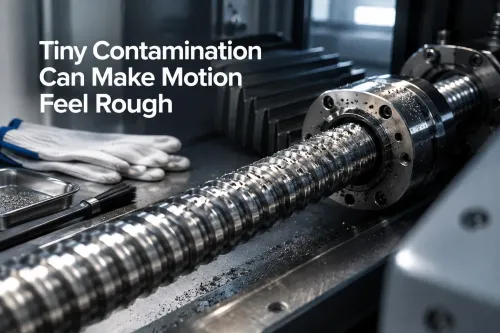
Protect exposed axes with bellows, telescopic covers, or a fully guarded screw. Wipers and seals reduce ingress but cannot stop abrasive dust, weld spatter, or packaging debris from reaching the nut. Remove contaminated lubricant instead of circulating it through the raceways.
Match the lubricant to speed, load, temperature, seals, and the grease already inside the nut. Too little lubricant accelerates wear; too much grease causes churning, temperature rise, and motor overload. Record relubrication intervals and inspect the screw during planned shutdowns.
Specify preload for the required positioning stiffness, not for maximum tightness. Excessive preload raises running torque, heat, and motor power while shortening ball and raceway life. Check mounting bolts, coupling alignment, wipers, covers, and end supports at each maintenance interval.
Use these symptoms as diagnostic clues:
- Rising noise or vibration indicates misalignment, damaged raceways, contamination, or inadequate lubrication.
- Motor-current rise points to excessive preload, grease drag, bearing failure, or a binding guide.
- Uneven travel suggests contamination, screw damage, guide misalignment, or a distorted nut mount.
- Backlash indicates insufficient preload, nut wear, loose mounting, or a failed coupling connection.
- Repeated overheating requires checking preload, lubricant quantity, duty cycle, and guarding before increasing motor capacity.
What to Specify and Verify Before Buying in Pune
Compare a ball screw manufacturer in Pune with a distributor on evidence, not the label: “manufacturer” does not prove local production. Send both the same application sheet and require a signed drawing showing nominal diameter, lead, effective stroke, accuracy grade, preload, nut type, end-support arrangement, mounting orientation, lubrication method, and critical-speed limit.
For a vertical lift, require the brake or counterbalance detail; screw friction is not load retention.
| Check | Manufacturer | Distributor |
|---|---|---|
| Drawing and calculation | Provides load, buckling, critical-speed, life and thermal calculations | Obtains the original maker’s calculations and identifies who accepts design responsibility |
| Quality record | Supplies material certificate, inspection report, lead-accuracy result, preload value, runout and batch traceability | Supplies the original records, not only a delivery note |
| Application test | Runs your stroke, speed, acceleration and duty-cycle test, with noise and temperature readings | Arranges the test or names the facility and test conditions |
| Replacement fit | Confirms nut, ball size, preload and mounting compatibility for a replacement | Provides the original part number and interchange statement |
| Support | Commits to alignment advice, lubrication interval, failure analysis and response time | Commits to the same service in writing, including escalation to the maker |
Price the lifecycle, not the invoice: include coupling and supports, installation alignment, lubrication, guarding, inspection labour, spare nuts, freight, downtime and the cost of a failed vertical load. Ask Balaji Engineering Works for these same records before comparing its quotation with a distributor’s.
Reject a quote that gives only diameter and length, omits batch traceability, or promises “equivalent” replacement without preload and accuracy data. Run an acceptance test before payment and record positioning error, repeatability, current, vibration and temperature.
Related products
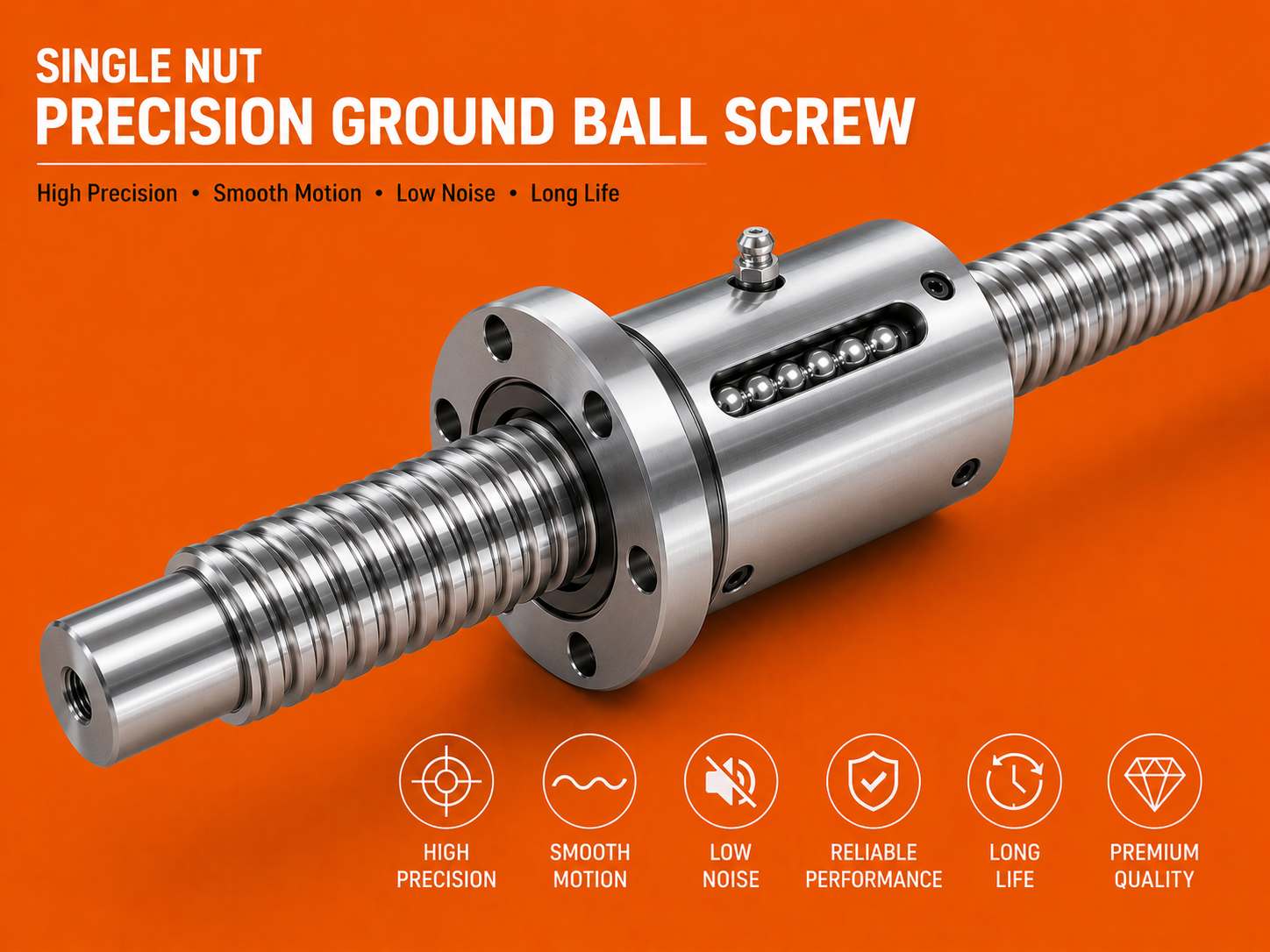 | Precision Ballscrews Single Nut Precision Ground Ball Screw Balaji Engineering Works offers high-precision Single Nut Precision Ground Ball Screws in Pune, engineered for applications requiring superior... View product → |
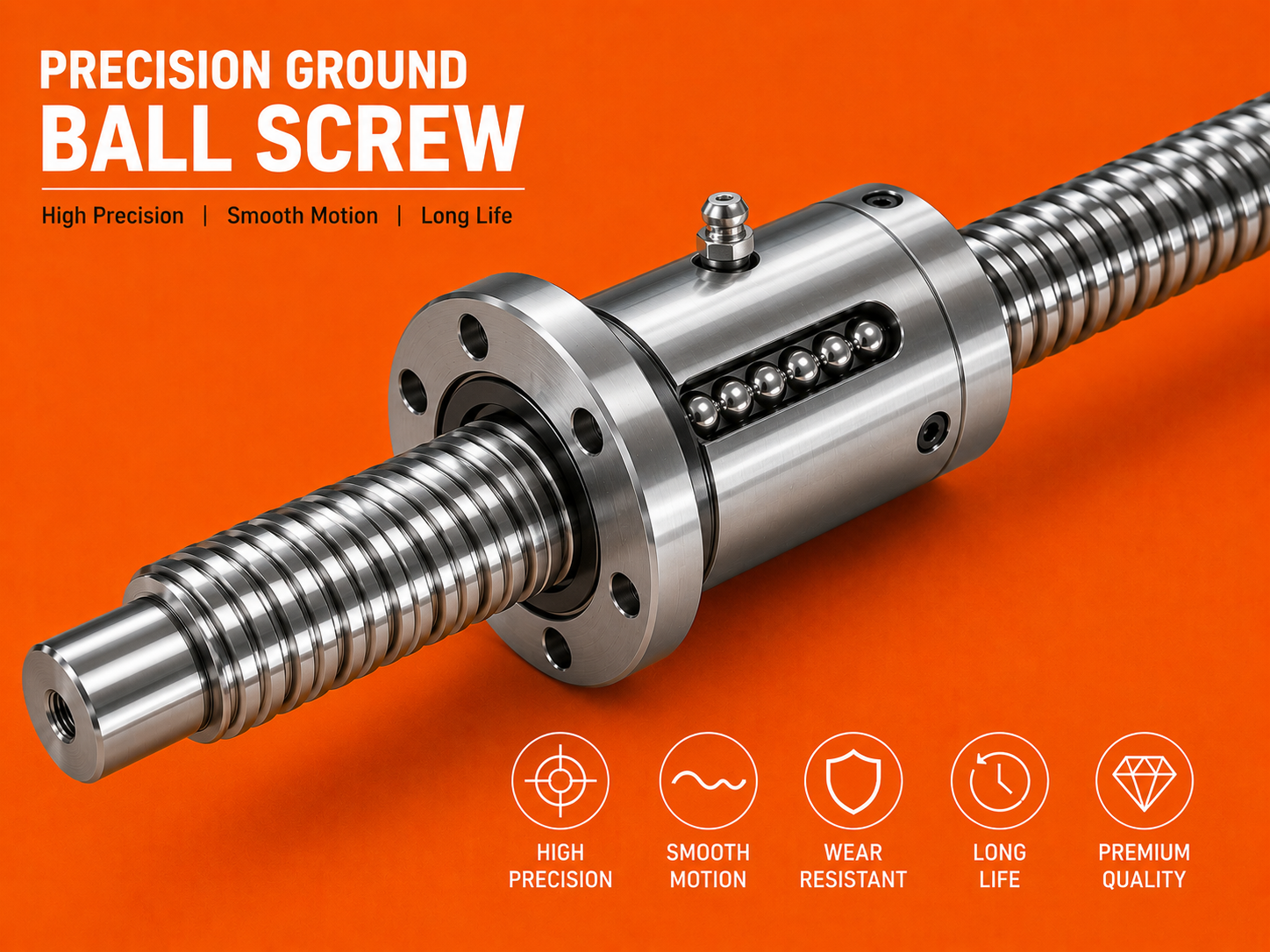 | Precision Ballscrews Balaji Engineering Works is a trusted manufacturer and supplier of Precision Ground Ball Screws in Pune, designed for applications that demand... View product → |
Frequently asked questions
Where do ball screws fit in material-handling machinery?
Use them for repeatable linear positioning, vertical lifting, clamping, indexing, and transfer axes. Choose conveyor drives for ordinary continuous transport.
How do you size a ball screw for material handling?
Calculate axial load, required speed, lead, critical speed, buckling risk, duty cycle, and rated life. Include payload, carriage mass, acceleration, and external process forces.
When is a ball screw a poor choice?
Select another drive when the axis faces abrasive contamination, severe impact loads, poor protection, or continuous travel beyond the screw’s speed and lubrication limits.
What should you specify before buying a ball screw in Pune?
State diameter, lead, travel, accuracy class, preload, nut configuration, shaft-end details, lubrication, seals, operating conditions, and required inspection documents.
Related products
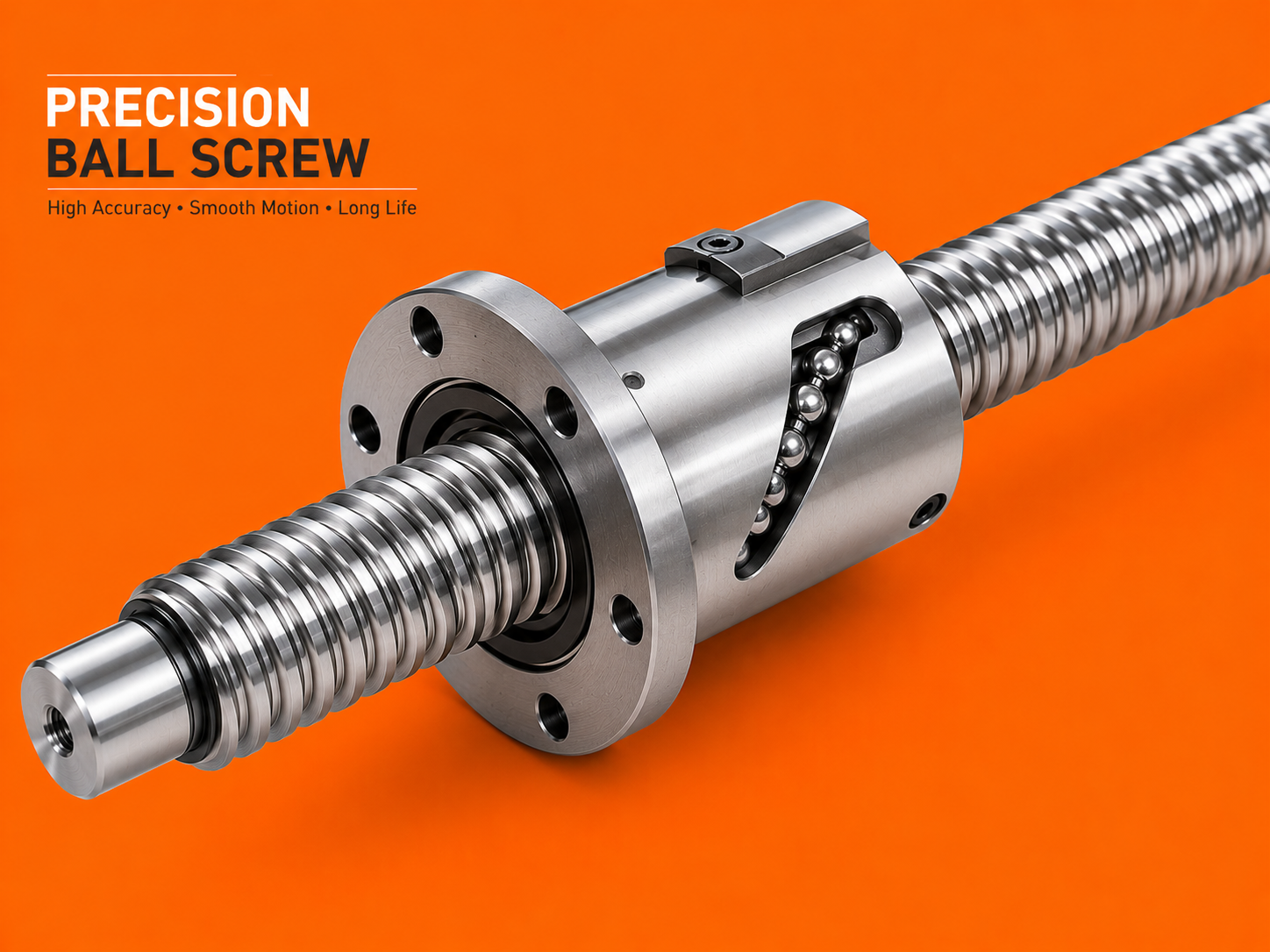 | Precision Ballscrews Balaji Engineering Works is a trusted manufacturer and supplier of Precision Ball Screws in Pune, designed for high-accuracy linear motion and... View product → |
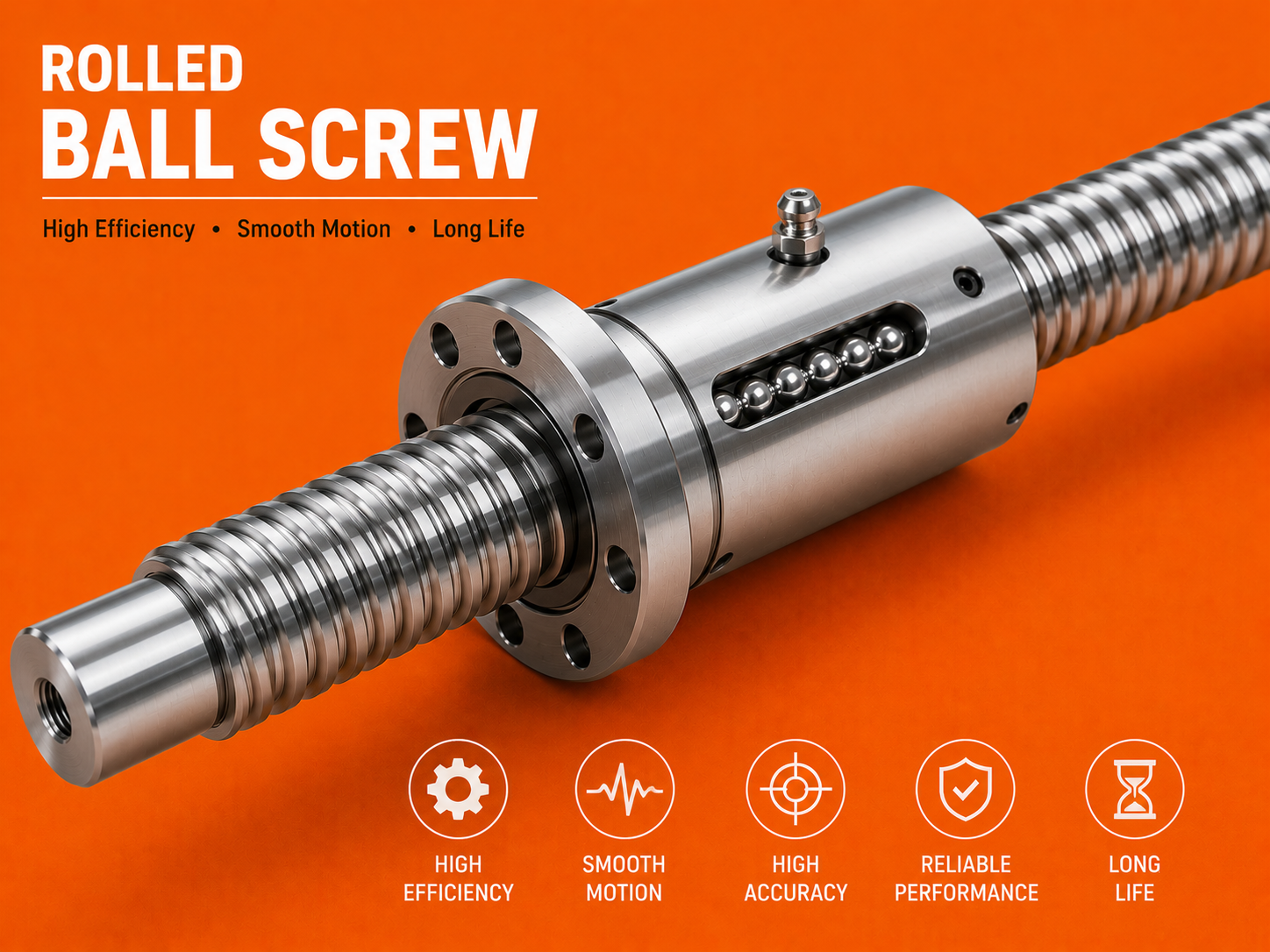 | Precision Ballscrews Balaji Engineering Works offers high-quality Rolled Ball Screws in Pune, designed for efficient linear motion with excellent performance and... View product → |
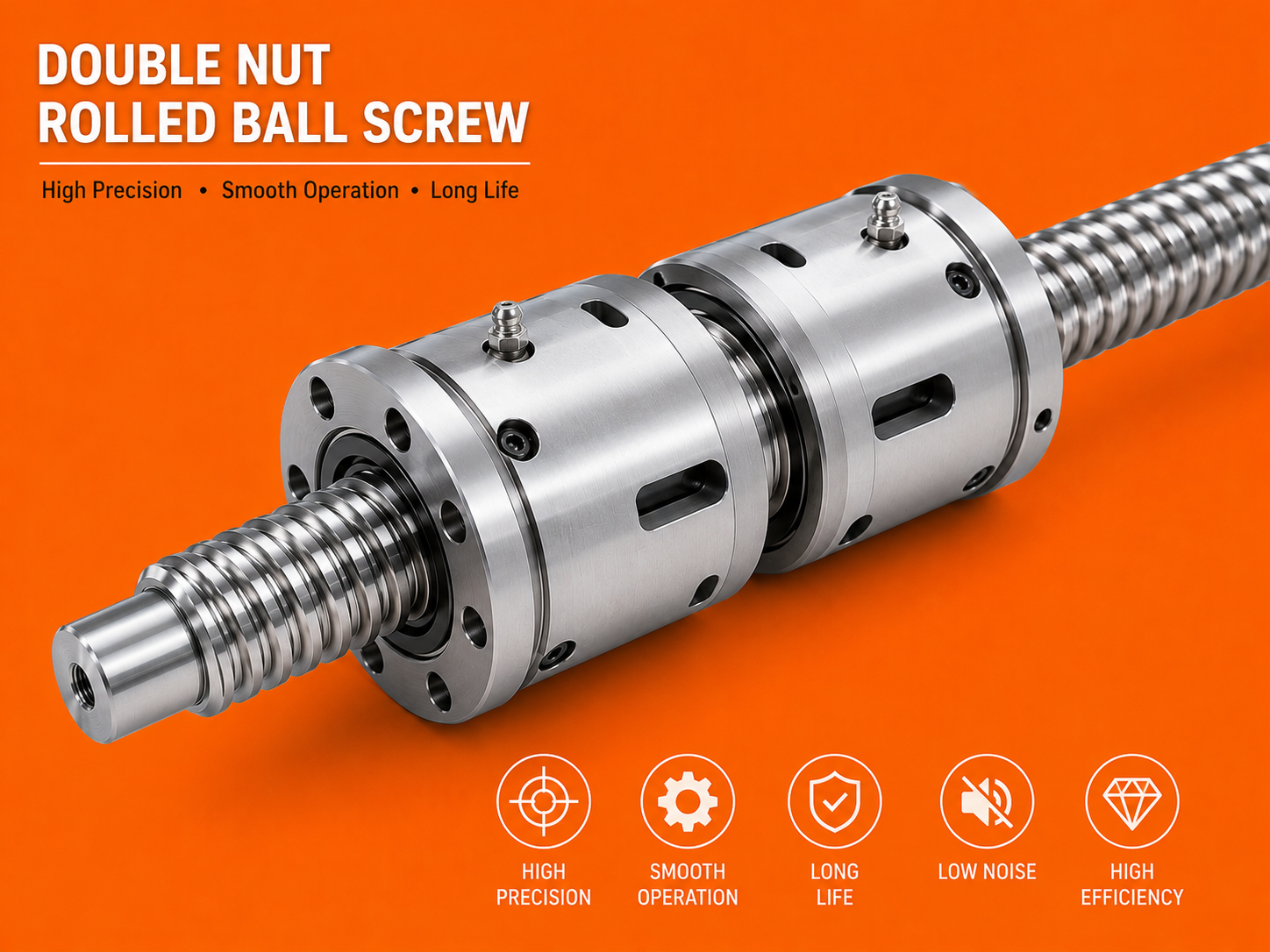 | Precision Ballscrews Balaji Engineering Works offers high-performance Double Nut Rolled Ball Screws in Pune, designed for applications requiring reduced backlash,... View product → |
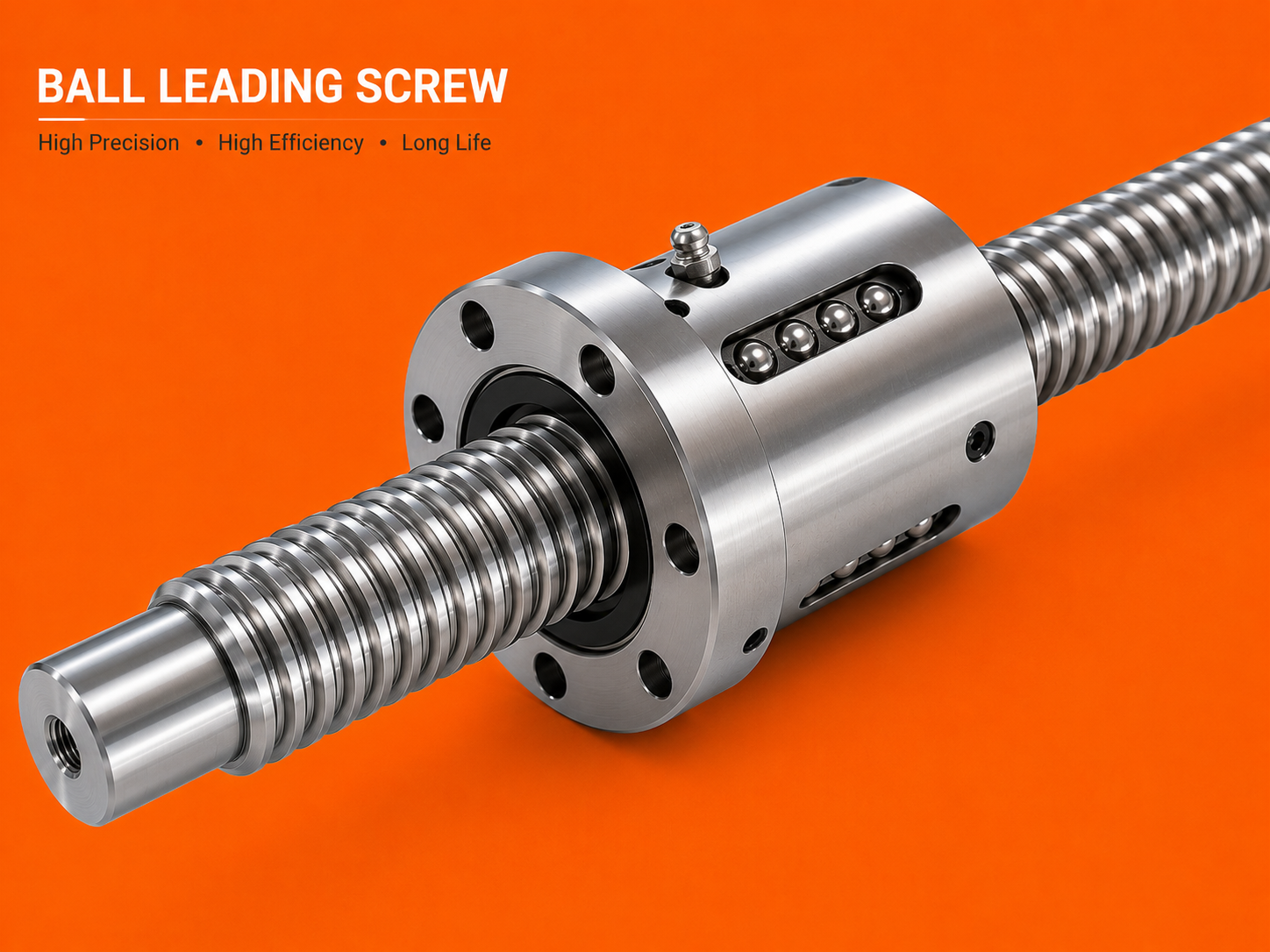 | Precision Ballscrews Balaji Engineering Works offers high-quality Ball Lead Screws in Pune, designed for precise and efficient conversion of rotary motion into linear... View product → |