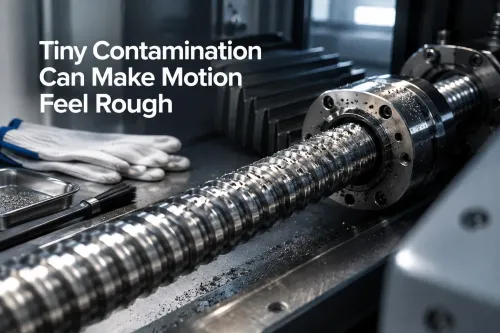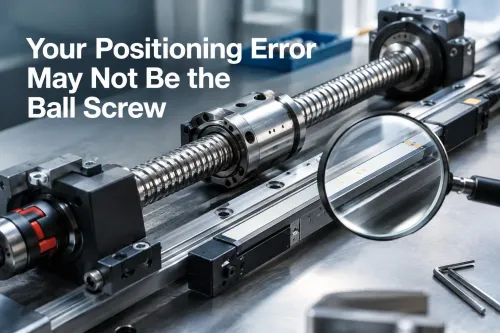

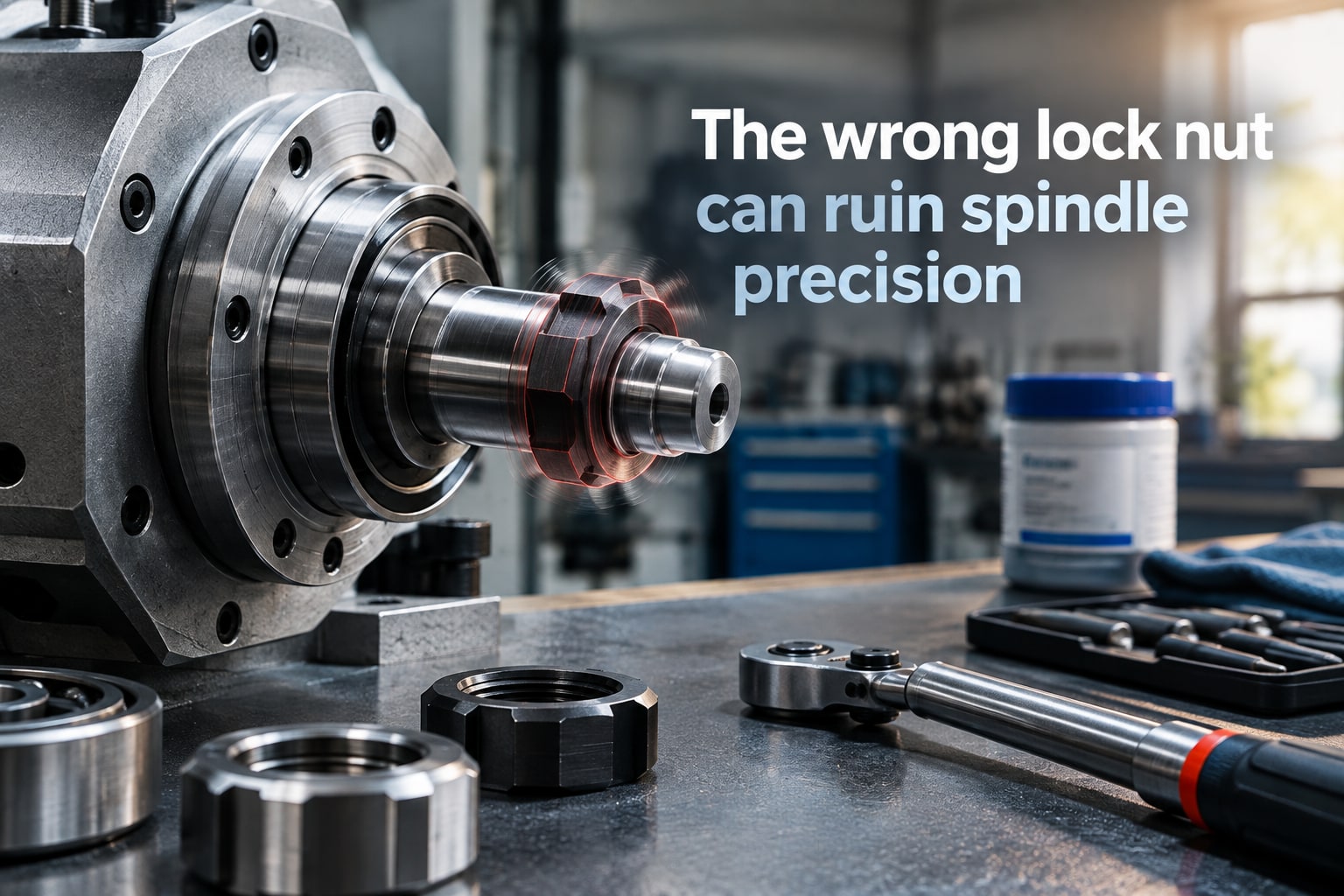
A precision lock nut can appear fully tightened while the bearing preload, shaft position, or locking function is already wrong. By following a defined selection, installation, inspection, and replacement process, you can prevent thread damage, excess friction, axial play, and repeat loss of preload in equipment exposed to vibration, coolant, humidity, and thermal cycling.
Key takeaways
- Match thread, pitch, direction, nut type, and bearing arrangement before fitting.
- Use the specified tightening method and protect threads, faces, and locking features.
- Inspect for fretting, looseness, thread damage, and preload changes during maintenance.
- Qualify replacements by drawings, material, tolerances, inspection records, and supplier capability.
How do you identify the correct precision lock nut before fitting it?
Match the replacement to the complete assembly specification, not the outside diameter alone. Confirm the shaft thread diameter, pitch, direction, tolerance or class, nut type, face geometry, locking mechanism, and shaft or bearing arrangement.
A metric fine-thread nut with the same nominal diameter but a different pitch can start on the shaft, damage its thread, and place the bearing at the wrong axial position.
Before fitting, verify:
- Whether locking uses a washer, tab, radial set screw, clamping element, prevailing torque, or thread deformation; each system has different removal and reuse rules.
- Whether the nut face, bearing shoulder, and shaft arrangement match the equipment drawing.
- Whether a wrench can reach the nut without contacting seals, sensors, or adjacent components.
- Whether coolant exposure, wash-down access, reversing motion, and thermal cycling change the selection for precision lock nut care in Pune.
Do not substitute by appearance alone:
| Option | What differs | Why substitution fails |
|---|---|---|
| Standard hex nut | General-purpose face and locking | Wrong face accuracy and load path |
| Jam nut | Thin profile | Limited adjustment and lower seating control |
| Castellated nut | Cotter-pin locking | Requires a drilled shaft and different adjustment |
| Prevailing-torque nut | Deformed or polymer locking | Reuse and removal rules differ |
| Threadlocker | Adhesive locking | Changes service temperature and adjustment |
| Shaft clamping collar | Clamps around the shaft | Does not provide the same threaded axial position |
Confirm the equipment maker’s tightening procedure before ordering.
How should you install and tighten the nut without damaging the assembly?
A precision lock nut should turn smoothly onto a clean, undamaged thread and seat squarely without force. Use this installation sequence:
1. Clean the shaft and nut threads with a lint-free cloth and the equipment maker’s approved cleaning method. Remove oil, coolant, and dirt without filing, scraping, or otherwise removing material.
2. Inspect the first and last usable threads, the nut face, bearing shoulder, and locking feature. Remove burrs from the shaft shoulder. Never force the nut across a damaged lead thread; transferred metal can invalidate later torque or preload checks.
3. Seat the bearing, ballscrew, spindle, or gearbox components in the sequence specified by the equipment maker. Tighten with a calibrated torque wrench or the stated preload-setting method.
4. Use the exact torque or preload specification for that nut, thread, lubricant, washer condition, and assembly. A catalogue torque is not universal because friction changes the achieved clamp load. Do not use an impact wrench or tighten by feel.
5. Verify the result using the specified axial play, running torque, spindle or screw runout, and operating temperature. Support the shaft or screw exactly as the equipment maker directs during runout checks.
Engage the washer tab, set screw, or other locking feature only after positioning and tightening are complete. The lock must not compensate for insufficient tightening, a damaged thread, or a damaged shoulder.
What maintenance routine suits precision lock nuts in Pune conditions?
Set the inspection interval by machine duty, not calendar time alone. For precision lock nut maintenance in Pune, inspect during scheduled service and shorten the interval for high-cycle reversing motion, vibration, coolant exposure, wash-down cleaning, or frequent thermal changes.
- Record the part number, thread designation and tolerance, locking style, installation date, lubricant, tightening method, measured runout or preload where applicable, and reason for replacement.
- Check the nut and shaft for fretting marks, reddish or dark staining, thread galling, burrs, looseness, and witness marks that have moved.
- After moisture or wash-down exposure, wipe exposed threads and nut faces dry. Apply a rust preventive compatible with the nut, bearing, seal, and lubricant.
- Inspect after prolonged shutdowns. Water trapped in a fine thread can alter clamp load and make removal destructive.
- Keep dirt out of the joint. Contaminated threads change friction, so a torque reading no longer reliably indicates achieved preload.
Recheck runout with the shaft or screw supported exactly as the equipment maker specifies. Inspect the shoulder and nut face before measuring; a burr, dirt under the face, or incorrect seating can create axial or radial error even when the thread fits correctly.
Rising backlash, position error, spindle noise, or lost repeatability warrants an earlier inspection.
Which symptoms show that a precision lock nut needs correction or replacement?
Axial play, rising operating temperature, new vibration, spindle noise, backlash, position error, and repeatability loss all warrant a preload and seating check. These faults can appear before the nut visibly moves, especially on reversing CNC axes and frequently cycled spindles.
| Symptom or evidence | What it suggests | Action |
|---|---|---|
| Axial play or backlash | Lost preload, poor seating, or shoulder damage | Recheck preload, seating, and runout |
| Rising temperature or spindle noise | Excessive bearing load or incorrect preload | Stop and investigate before continued operation |
| Vibration, position error, or repeatability loss | Micro-motion or runout | Inspect the joint and measure runout |
| Shifted witness mark | The nut has moved | Correct the cause and replace the locking part if damaged |
| Fretting marks or reddish staining | Micro-motion between contacting surfaces | Clean, inspect, and correct the seating fault |
| Brinelling | Excessive bearing load or impact | Inspect the bearing and nut before reuse |
| Thread galling | Damaged or contaminated mating threads | Remove the nut; clean and inspect both threads |
Stop the machine when preload repeatedly disappears after correct tightening. Do not assume the locking feature has solved the problem.
Replace the nut if it has:
- Deformed threads, damaged faces, or a distorted locking feature
- A prevailing-torque design that has already been used
- A locking washer already bent into position
Reject the assembly if dirt lies beneath the nut face or the nut locks against a damaged shoulder. Do not mix threadlocker with a washer or deformable lock without checking chemical compatibility, service temperature, migration, and removal requirements. Avoid adhesive when you need adjustment soon after installation.
How should you specify and qualify a replacement from a Pune supplier?
Specify the replacement from the assembly drawing, not from the old nut’s outside diameter. “Precision lock nut, 25 mm” is not a controlled replacement specification.
- State the application: ball screw, bearing spindle, linear guide, gearbox, or power-transmission shaft.
- Provide the drawing number and revision, thread diameter and pitch, thread direction, and thread tolerance or class.
- Identify the locking style, such as washer, radial set screw, clamping element, prevailing torque, or thread deformation.
- State the material or hardness, face geometry, and allowable axial or radial runout.
- Record the lubricant and the tightening method, including the specified torque or preload procedure.
When comparing a precision lock nut manufacturer in Pune or precision lock nut supplier in Pune, request a dimensional inspection report or certificate of conformity. It must identify the thread size and class, applicable drawing revision, material or hardness, and face or runout results where specified.
Qualify samples by trial-fitting the nut on the actual shaft or assembly. Complete the required post-installation runout or preload check with the shaft or screw supported as the equipment maker specifies; visual inspection cannot reveal every seating error.
Balaji Engineering Works can be considered for a supplier discussion tied to the actual motion or power-transmission application.
Keep the approved part number, inspection results, installation date, lubricant, tightening method, and measured runout or preload in the maintenance record.
Related product
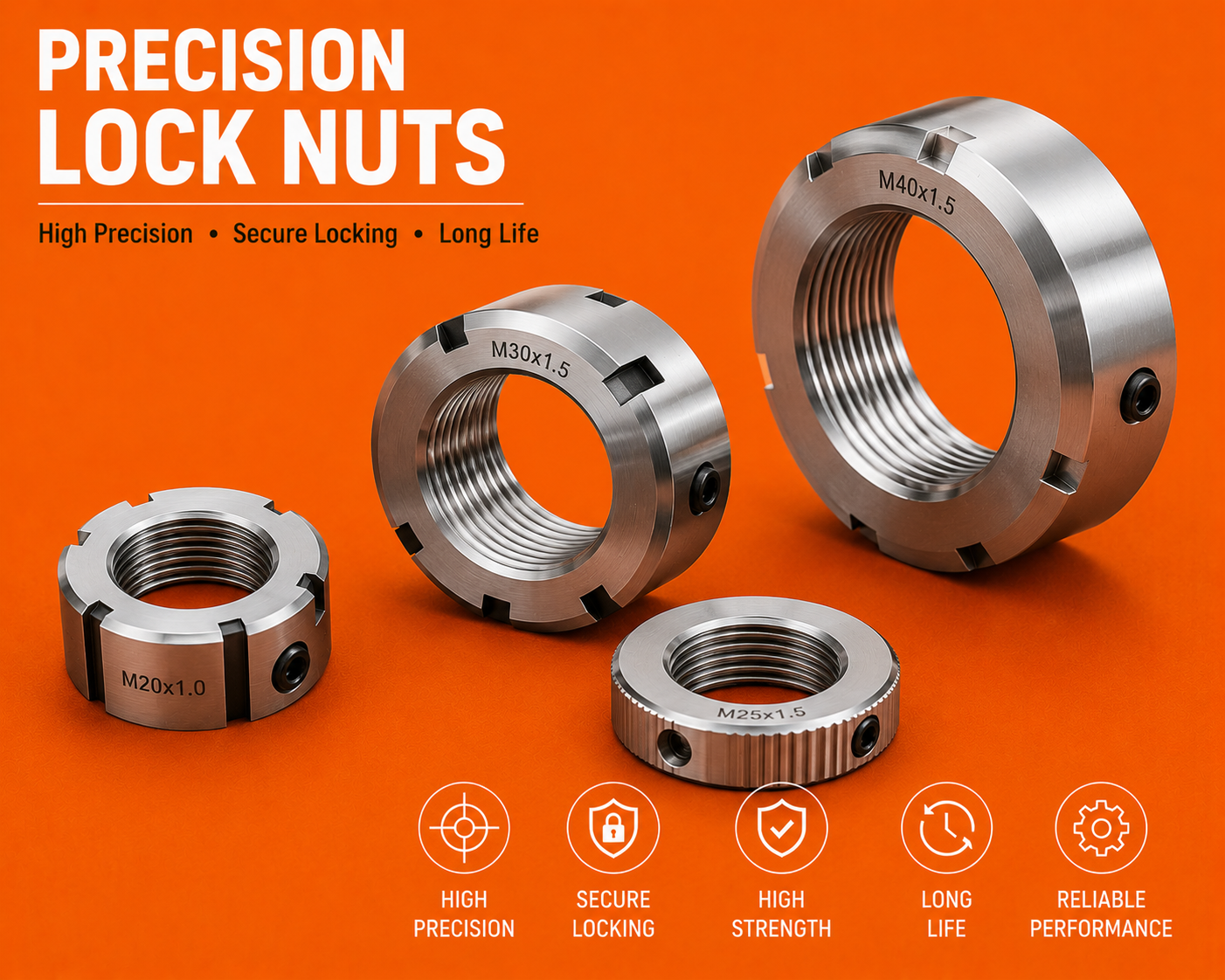 | Precision Lock Nuts Balaji Engineering Works is a leading supplier of Precision Lock Nuts, designed to provide secure locking and prevent loosening under high vibration... View product → |
Frequently asked questions
How do you identify the correct precision lock nut before fitting it?
Match the shaft thread diameter, pitch, direction, tolerance or class, nut type, face geometry, locking mechanism, and shaft or bearing arrangement. Do not select a nut by outside diameter alone.
How should you install and tighten a precision lock nut without damaging the assembly?
Clean and inspect the threads and mating faces, seat the nut squarely, use the specified spanner or hook wrench, and apply the manufacturer’s tightening method. Avoid impact tools and uncontrolled force.
What maintenance routine suits precision lock nuts in Pune conditions?
Inspect the nut, shaft threads, locking feature, and bearing seating during planned shutdowns. Remove contamination, check for corrosion or fretting, verify preload where specified, and record findings.
Which symptoms show that a precision lock nut needs correction or replacement?
Correct the assembly when you find loosening, runout, altered preload, fretting marks, damaged threads, burrs, corrosion, or a deformed locking feature. Replace parts that cannot hold the specified fit or lock.
How should you specify and qualify a replacement from a Pune supplier?
Send the complete assembly specification, drawing or sample, thread details, nut type, material, tolerances, locking method, and application conditions. Request dimensional inspection results, material details, and traceability before approval.