
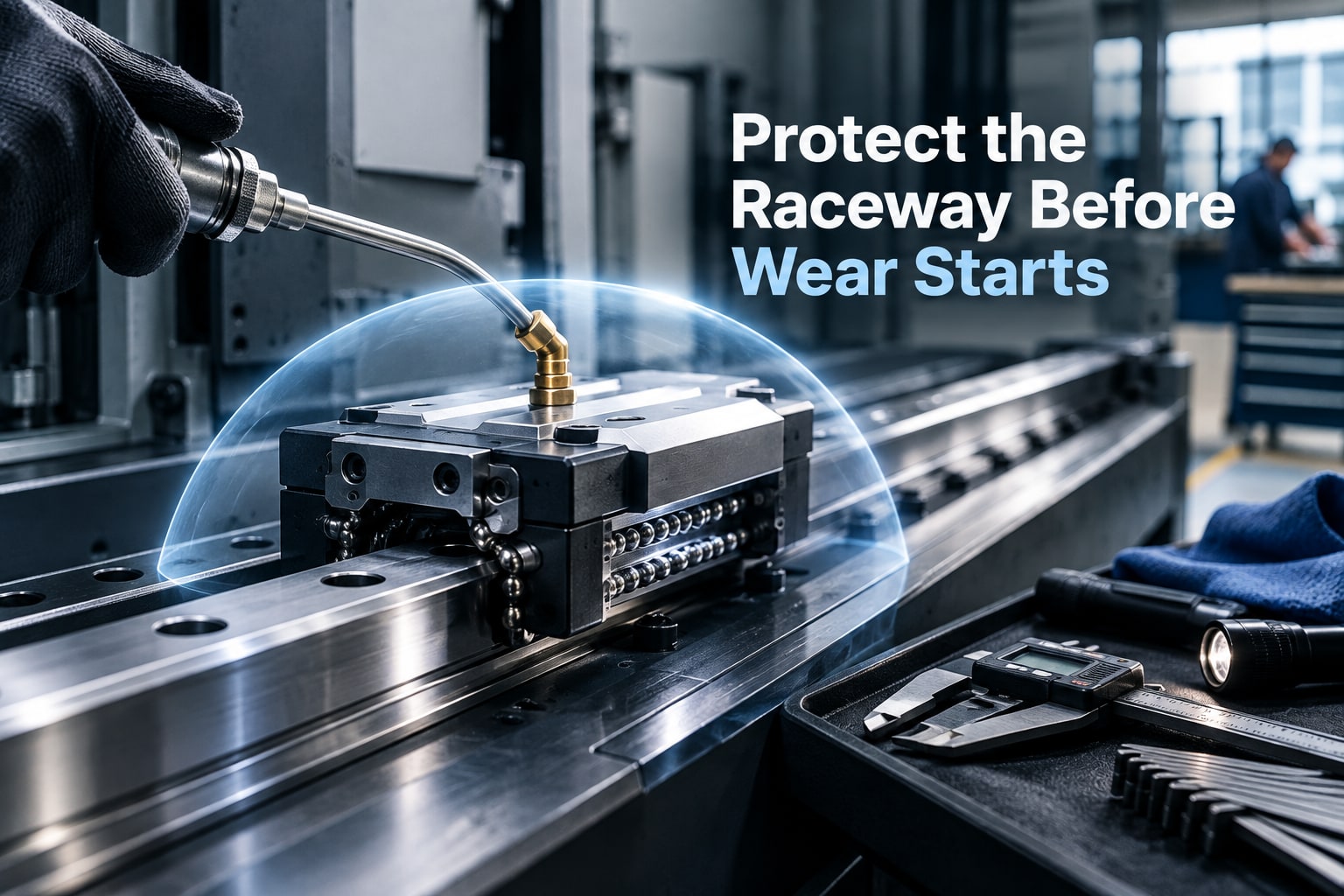
A guideway exposed to grinding dust, coolant, monsoon moisture or a misaligned rail can lose accuracy long before it stops moving. By following a contamination-safe cleaning routine, matching lubrication to the maker’s specification, checking installation and measuring performance after service, you can separate routine care from a guideway that needs replacement.
Key takeaways
- Isolate the axis before cleaning or moving the carriage.
- Wipe contamination away from the raceway; do not force dirt inside.
- Match lubricant to the guideway specification, travel and exposure.
- Measure backlash, noise, vibration and positioning after maintenance.
Build a Cleaning Routine That Does Not Push Dirt Into the Raceway
Good linear motion guideways care in Pune starts with stopping and isolating the axis, not blowing dust away while the machine is live. Move the carriage only when the machine maker’s procedure permits it.
1. Brush or vacuum loose chips and grinding dust from the rail, carriage top, end caps and surrounding ledges. Do not direct compressed air at seals, rolling tracks or carriage openings; it drives abrasive particles into the carriage.
2. Clean the rail before moving the carriage through a contaminated area. Wipe coolant residue with a lint-free cloth lightly dampened with the approved cleaner. Remove dried lubricant with a compatible solvent, never by scraping across the raceway.
3. Inspect and wipe the seal line, including wipers and end seals. They reduce ingress but do not make linear motion guideways contamination-proof.
4. Install bellows, telescopic covers or shields where chips and welding spatter reach an exposed rail. Use positive-air protection when the machine design supports it.
5. During Pune’s monsoon, dry standing water around seal lines, bolt heads and counterbores immediately. Water-miscible coolant, washdown water, fine grinding dust and welding spatter require shorter inspection intervals than ordinary shop dust.
Record contamination findings and seal condition after each cleaning. If the rail repeatedly becomes dirty, improve its cover or shielding instead of treating wiping as the permanent solution.
Relubricate by Specification, Travel and Operating Exposure
Lubricate linear motion guideways by travelled distance and elapsed time, not by calendar time alone. Use the grease or oil named in the guideway or bearing maker’s manual, including its viscosity, NLGI grade, operating-temperature range and application method. Lithium or NLGI 2 labels do not prove compatibility; different thickeners, base oils and additives can react.
| Exposure | Starting interval | Required response |
|---|---|---|
| Clean, enclosed cell | About 100 km or 3–6 months, whichever comes first | Confirm against the manual |
| High speed or high duty cycle | Shorter than the starting interval | Use the maker’s duty-cycle guidance |
| Coolant wash-off or grinding dust | Shorter interval | Check seals and grease condition more frequently |
| Vertical travel | Shorter interval | Confirm lubrication and the separate holding system |
- If the previous lubricant is unknown, purge the old grease as far as the maker permits before adding the specified product.
- Inject it through the carriage lubrication port or stated point; do not apply it to an arbitrary rail surface.
- Move the carriage through its full travel at low speed to distribute the lubricant.
- Stop at the specified quantity. Overfilling raises running torque and temperature.
Record the lubricant name, batch, quantity, date, travelled distance and machine temperature. Coolant dilution, abrasive grinding dust and monsoon moisture justify shorter intervals. Lubrication does not replace an independent brake, counterbalance or fall-arrest mechanism on a vertical axis.
Inspect the Rail, Carriage and Mounting Before Calling It Wear
Cleaning will not restore accuracy when the rail or carriage has pitting, brinelling, deep scoring, rust staining, metallic debris, damaged end caps, or hardened, torn, or lifted seals. With the machine isolated, move the carriage only as the maker permits and check for uneven resistance, a repeating rough spot, rocking, rust-coloured grease, or abnormal noise.
- Replace the component if roughness remains after correct cleaning and lubrication.
- Do not polish a damaged raceway; it changes the profile and hides the failure.
- Treat cracked end components and damaged seals as replacement faults, not wiping tasks.
The practical rule for linear motion guideways care in Pune is to inspect the installation as well as the rolling surfaces.
Remove chips, burrs, paint, raised metal, and distortion from the mounting surface; confirm the reference rail bears against the machine datum shoulder, then tighten fasteners in the maker’s sequence, commonly from the centre toward the ends. Measure parallelism from that datum. Do not force a second rail into alignment through the carriage.
| Check | Fault indication | Consequence |
|---|---|---|
| Preload class | Does not match the assembly record | Excess friction or clearance |
| Parallelism | Drive torque rises along the travel | Heat, noise, and raceway damage |
| Axis alignment | Rail disagrees with ballscrew or driven axis | Binding and uneven load |
Excess preload raises friction, heat, and drive force; insufficient or incorrect preload reduces stiffness and creates clearance. Record part numbers, preload class, alignment readings, temperature, and observed torque before approving the guideway.
Prove Performance After Maintenance With Measurements
A lower motor current alone does not prove recovery. Compare the same measurements before and after service, with the axis at the same temperature, speed and load.
For linear motion guide rail care in Pune, create a baseline record containing:
- Rail and block part numbers, preload class, lubricant and batch, and installation date.
- Rail alignment or parallelism readings, travelled distance, temperature and observed drive torque.
- Carriage resistance at several travel points, including the location that previously felt rough.
- Vibration, running noise, backlash from a dial indicator or approved machine accuracy test, and repeatability from both travel directions.
| Measurement | Restored result | Warning sign |
|---|---|---|
| Current or torque | Returns near baseline | Rises with unchanged programmed motion |
| Temperature | Matches the earlier operating range | Increases during the same cycle |
| Vibration or noise | Smooth, without repeating pulses | Periodic sound at ball-pitch intervals |
| Backlash or repeatability | Meets the machine builder’s accuracy specification | Direction-dependent position error |
A rising current points to contamination, raceway damage, preload error or misalignment; it does not automatically mean the motor is undersized. If periodic noise remains, inspect the rail, rolling tracks, seals and mounting again.
Use the guideway maker’s limits and the machine builder’s accuracy specification for pass or fail decisions. Treat nominal life only as screening: ball guides use L10 = 50 × (C/P)^3 km, while roller guides use a 10/3 exponent. Neither calculation captures coolant, dust, shock, poor lubrication or misalignment.
Choose Protection and Replacement Support for Pune Conditions
Protection choice depends on what reaches the raceway. Use bellows or telescopic covers for chips and coolant, shields for welding spatter, and intact wipers and end seals at every carriage. During shutdowns, cover exposed raceways; in monsoon humidity, wipe rails, seal lines, counterbores and bolt heads dry.
Apply only the manufacturer-approved corrosion-protection oil for idle periods. A thin rust film is a service fault: rolling contact can turn it into abrasive particles.
| Contamination source | Protection to specify | Failure if omitted |
|---|---|---|
| Chips and coolant | Bellows or telescopic covers | Debris is carried beneath the wiper |
| Welding spatter | Fixed shields | Spatter damages seals and raceways |
| Grinding dust | Covers plus frequent seal inspection | Abrasive particles increase wear |
| Humidity or washdown water | Drying routine and approved protection oil | Rust forms at tracks, bolts and counterbores |
For linear guide rail care in Pune, compare every replacement against the installed configuration, not merely its length or bearing size. Ask the supplier to confirm:
- Exact rail or block part number
- Accuracy class and preload class
- Seal arrangement, dimensions and lubrication-port position
- Installation date, alignment readings and lubricant batch for your records
Supplier selection affects maintenance reliability when you need traceability, configuration matching or local technical clarification. A linear motion systems manufacturer in Pune such as Balaji Engineering Works can help identify a compatible replacement when you provide the existing specification; do not accept a nominally similar block as interchangeable.
Replace the guideway when damage persists or measured performance remains outside the maker’s limits. Routine wiping and relubrication are appropriate only when the raceway, seals, mounting and test results remain sound.
Related products
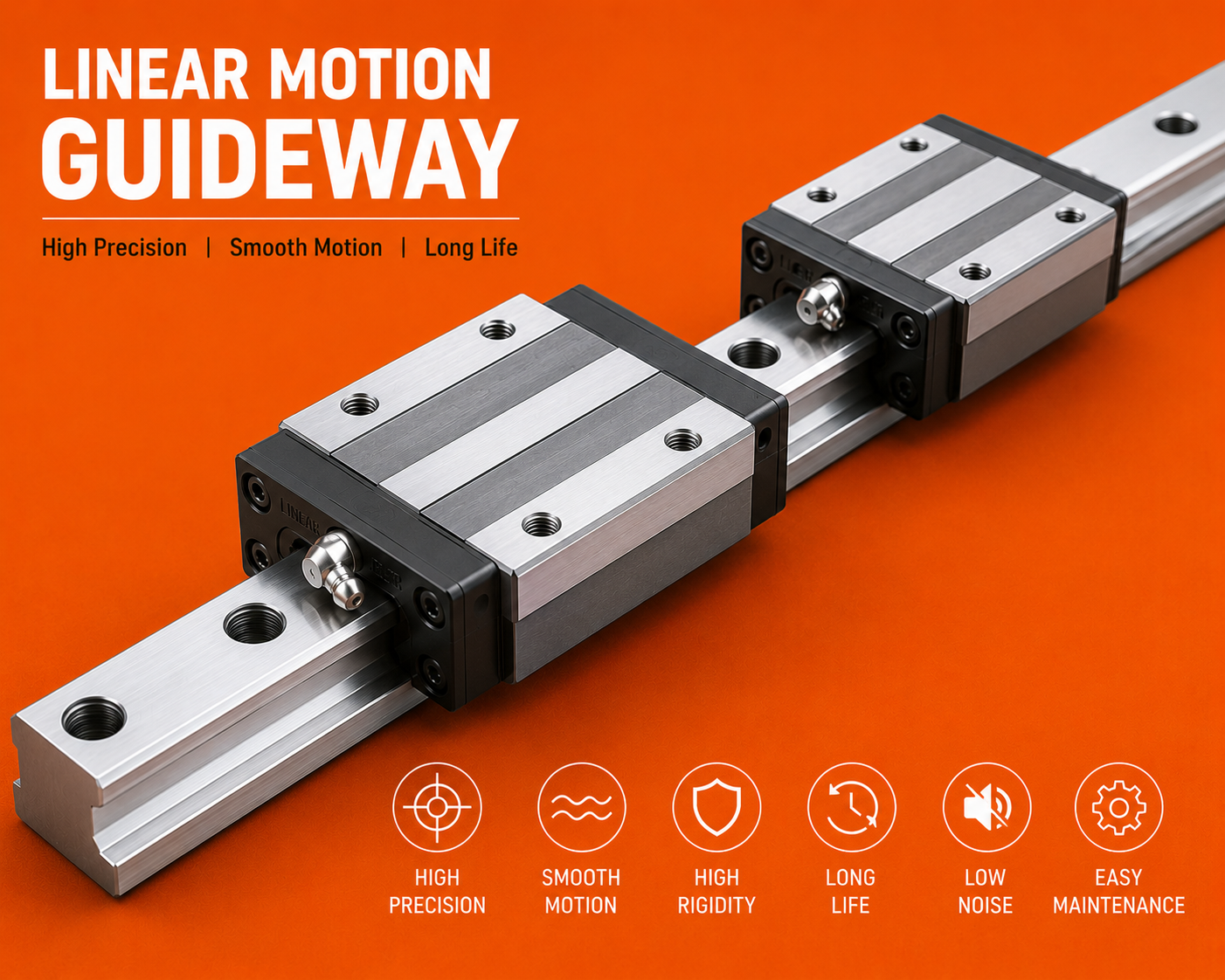 | Linear Motion Guideways Balaji Engineering Works offers high-performance Linear Motion Guideways in Pune, designed to ensure smooth, precise, and efficient linear movement... View product → |
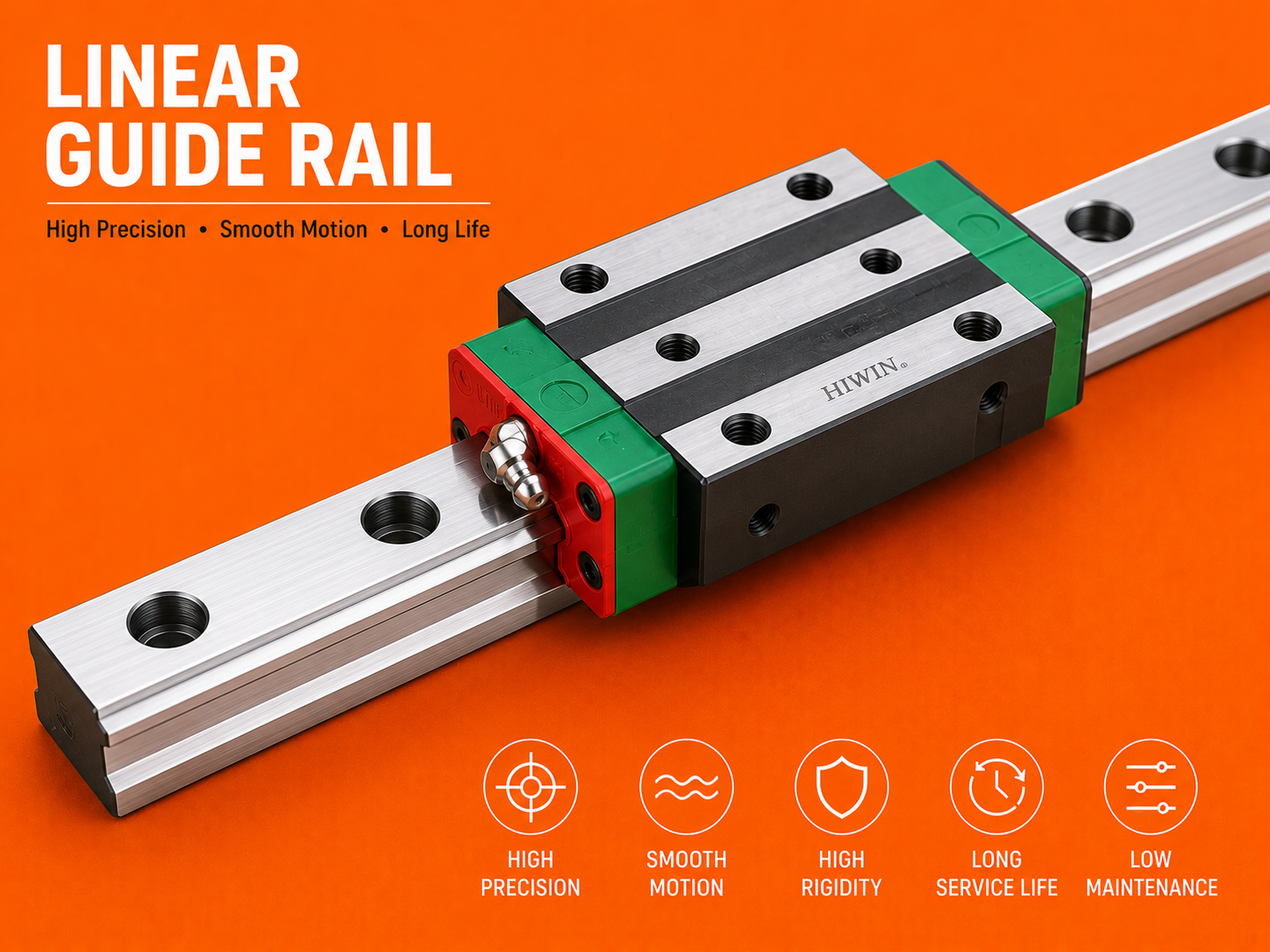 | Linear Motion Guideways Balaji Engineering Works is a trusted supplier of Linear Guide Rails in Pune, designed to provide accurate, smooth, and stable linear motion for... View product → |
Frequently asked questions
How do you clean linear motion guideways without damaging the raceway?
Isolate the machine, follow the maker’s movement procedure, and wipe contamination away with a clean lint-free cloth. Do not blast debris into the raceway with compressed air.
When should you relubricate linear motion guideways?
Set the interval from the manufacturer’s lubricant specification, carriage travel and operating exposure. Shorten the interval when dust, coolant, moisture or high duty increases contamination or lubricant loss.
How can you tell whether a linear guide rail needs replacement?
Inspect the rail, carriage, mounting surfaces, fasteners and contamination path first. Confirm suspected wear with measurements rather than treating noise or rough travel alone as proof.
What should you measure after linear guideway maintenance?
Check travel smoothness, positioning accuracy, repeatability, backlash, noise and vibration against the machine’s baseline or acceptance values.
Related products
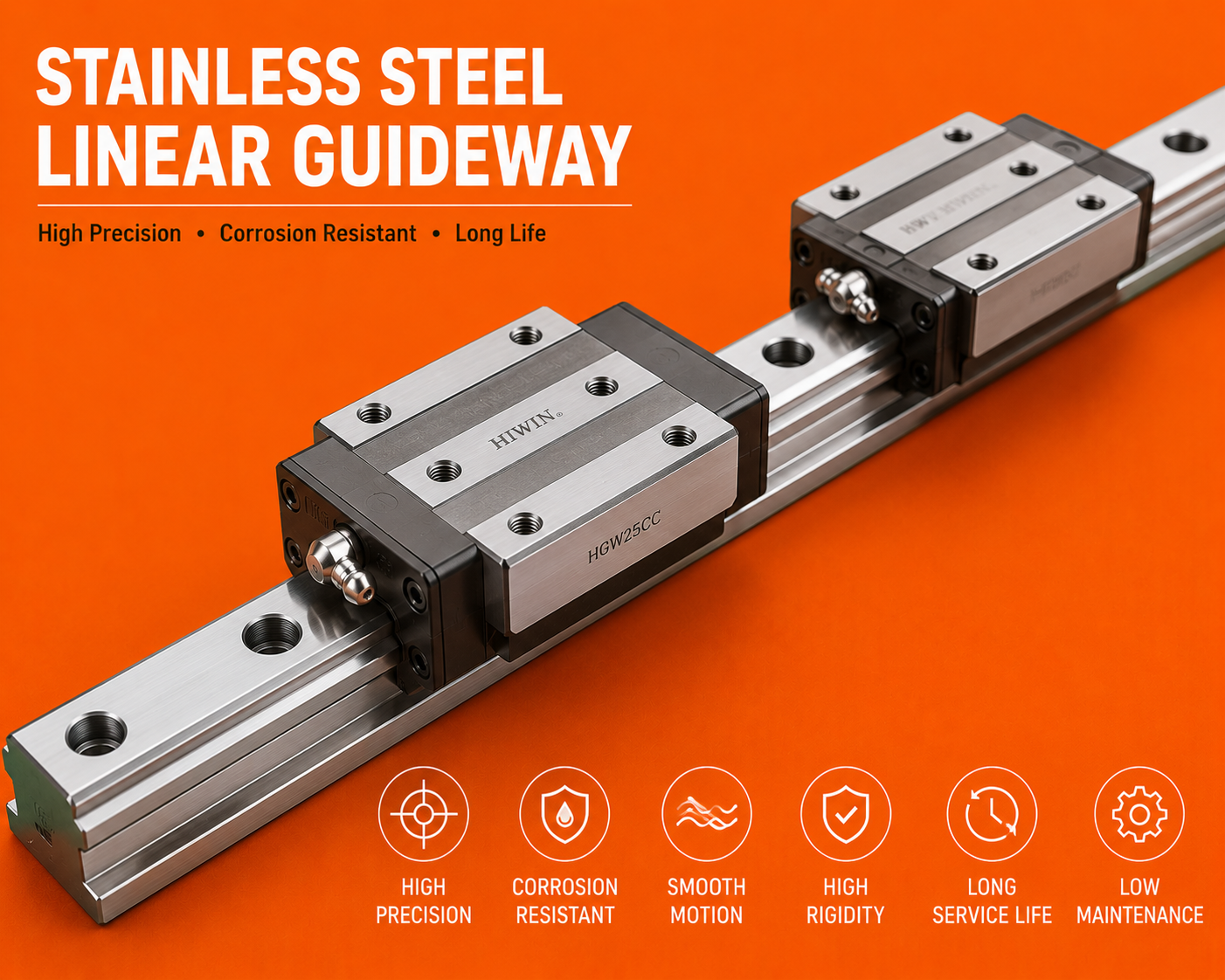 | Linear Motion Guideways Stainless Steel Linear Guideway Balaji Engineering Works offers premium quality Stainless Steel Linear Guideways in Pune, designed for smooth, precise, and corrosion-resistant... View product → |
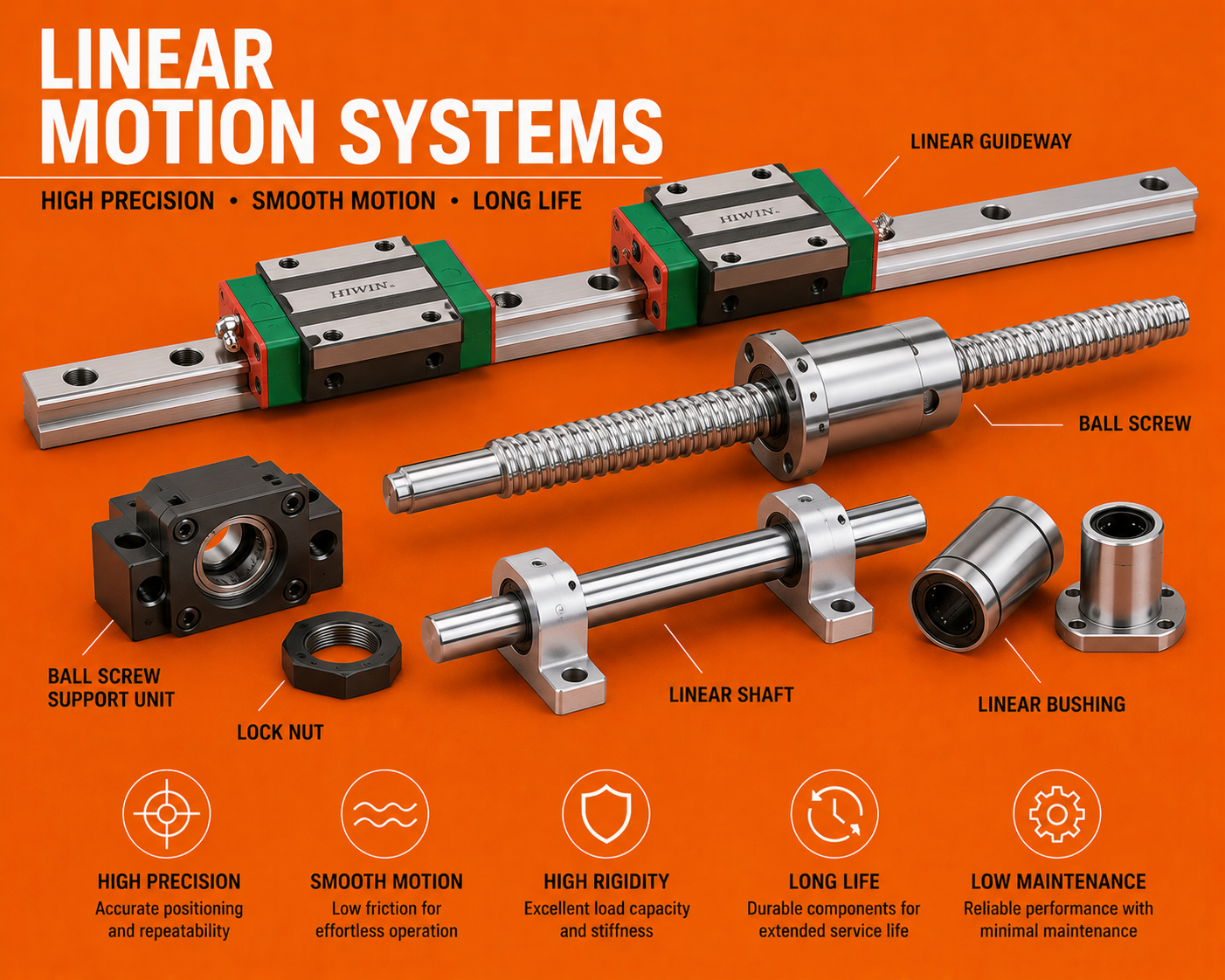 | Linear Motion Product Overview Balaji Engineering Works offers advanced Linear Motion Systems designed to deliver smooth, accurate, and efficient linear movement... View product → |