
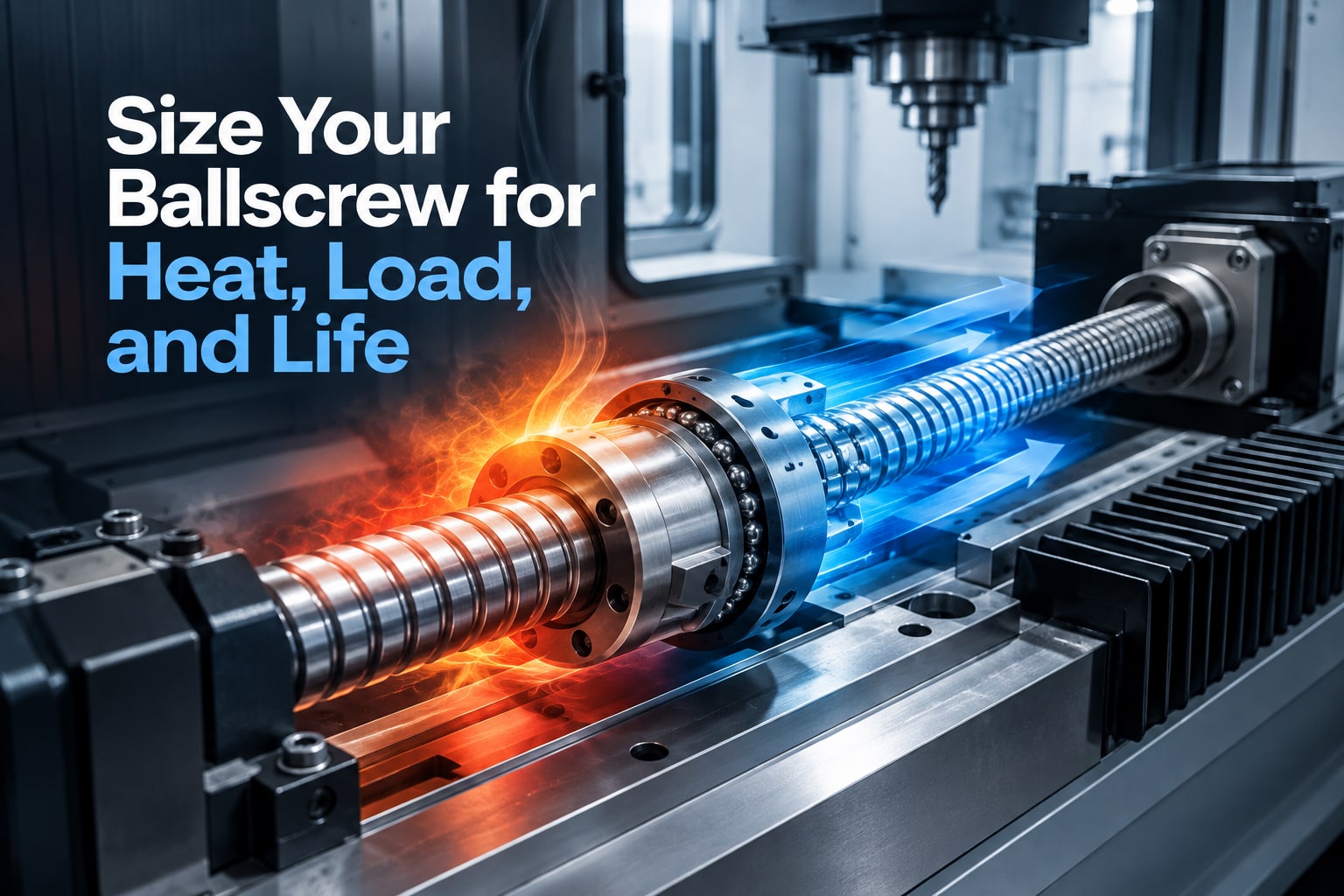
A ballscrew must match the axis load, speed, travel, accuracy, contamination level, and duty cycle before it is installed in a Pune production line. By the end, you will be able to map the screw into each machine axis, compare ground and rolled designs, size the assembly, and define supplier acceptance checks.
Key takeaways
- Match ballscrew diameter and lead to thrust, speed, travel, and required service life.
- Choose accuracy class and preload from positioning, repeatability, stiffness, and friction needs.
- Protect the nut and screw from chips, coolant, dust, heat, and vertical-axis backdrive.
- Verify drawings, test data, lubrication details, and inspection records before purchase.
Where Ballscrews Fit in Pune Automated Manufacturing Lines
Ballscrews drive the controlled linear axes in CNC machining centres, turning centres, grinding machines, transfer lines, robotic loading systems, assembly stations, inspection equipment, and servo-driven positioning modules. They convert motor rotation into repeatable thrust, making them useful where a machine must move a tool, workpiece, gripper, fixture, or measuring probe to a defined position.
| Application | Axis movement | Components that make it work |
|---|---|---|
| CNC machining and turning centres | Tool or table feed along X, Y, Z, or cross-slide axes | Servo motor, coupling, preloaded nut, bearing-supported screw, linear guideways, encoder, lubrication, and CNC controller |
| Grinding machines | Fine wheel or workpiece positioning | Ground ballscrew, low-backlash nut, linear guides, feedback encoder, coolant protection, lubrication, and motion controller |
| Transfer lines and assembly stations | Fixture, pallet, slide, or press movement between operations | Rolled or ground screw, servo motor, coupling, support bearings, nut housing, guide rails, sensors, and PLC |
| Robotic loading and inspection equipment | Gripper, probe, camera, or gauge positioning | Ballscrew axis, servo drive, linear guides, encoder, end-of-travel sensors, lubrication, and robot or inspection controller |
A complete axis is only as stiff and accurate as its surrounding parts. Misaligned guides overload the nut; a flexible coupling introduces positioning error; poor lubrication accelerates wear. The screw also needs a diameter, lead, travel length, support arrangement, and speed rating checked against axial load, buckling, and critical speed—not a nominal rpm alone.
In industrial ball screw automation, temperature matters on long or continuously cycled axes. Nut preload, recirculating-ball friction, and motor heat can shift position, so warm-up routines, temperature measurement, pitch-error compensation, or managed screw support may be necessary.
A precision ballscrew manufacturer automated manufacturing lines in Pune search identifies suppliers, not proof of manufacturing, preload matching, or repair capability.
How to Size a Ballscrew for Load, Speed, Travel, and Life
1. Define the axis envelope: payload, fixture, cutting force, friction, vertical weight, travel, cycle time and duty cycle. Add acceleration force, F = mass × acceleration, to the worst axial load; let the linear guides carry moment loads rather than the ballscrew.
2. Choose lead from required linear speed and motor speed: lead = travel per revolution, so a larger lead raises speed but reduces mechanical advantage and available thrust. Check motor torque, encoder resolution and positioning accuracy together; a fine lead is not useful if the motor cannot reach the required speed.
3. Select diameter from three checks, not load rating alone. Verify static and dynamic load capacity, shaft stiffness and buckling under compression. Then calculate critical speed using the unsupported length, screw diameter and end-support arrangement; a nominal rpm without those details is not an axis rating.
4. Set screw length as travel plus nut length, overrun and bearing-seat allowances. Use fixed-fixed or fixed-supported supports where speed and stiffness demand them, and keep the unsupported span short; a long, slender screw can whip before reaching the motor’s rated rpm.
5. Select the nut’s dynamic rating Ca so the calculated life meets the duty requirement: L10 = (Ca/Fm)^3 million revolutions, where Fm is equivalent axial load. Include shock and duty-cycle effects rather than using only the average load.
6. Check heat at continuous speed. Preload, recirculating-ball friction and motor heat can grow the screw and shift position, so specify warm-up, temperature measurement, pitch-error compensation or thermal management for long high precision ball screw applications. These checks distinguish industrial ball screw automation from catalogue matching.
Choosing Accuracy Class, Nut Type, and Preload
Choose the screw, nut, and preload as one accuracy decision: use ground screws for demanding positioning, rolled screws for transport axes, and increase preload only when stiffness and backlash control justify the added torque and heat.
| Option | What it means | When it applies |
|---|---|---|
| Ground screw | Thread is ground for tighter lead accuracy and lower variation | CNC, grinding, inspection, and other high precision ball screw applications |
| Rolled screw | Thread is formed by rolling; cost and delivery are usually lower | Transfer axes, loaders, and general factory automation |
| Single nut | One nut with lower friction, cost, and running torque | Moderate loads where measured backlash is acceptable |
| Double nut | Two nuts preload against each other for higher stiffness | Reversing loads, interpolation, and low-backlash positioning |
| Light preload | Removes clearance with limited friction and heat | High-speed duty where stiffness demands are modest |
| Heavy preload | Raises rigidity but increases torque, heat, and wear | Short, stiff axes requiring strong force response |
Select an ISO 3408-3 accuracy class from the axis requirement, not the product title. C0 to C3 suit the tightest positioning work; C5 often fits machining, while C7 or C10 can suit transport duty. Ask a precision ballscrew manufacturer in Pune for measured travel deviation, running torque, preload, runout, and inspection conditions.
Accuracy class is not repeatability. Backlash, bearing seats, thermal growth, encoder resolution, servo tuning, and guide alignment can dominate the assembled axis. Request positioning and repeatability results after warm-up, especially on a long, continuously cycled screw.
Managing Heat, Contamination, Lubrication, and Vertical-Axis Risk
Thermal growth sets the accuracy limit on a long axis running through multiple shifts. Recirculating-ball friction, nut preload, and motor heat raise screw temperature and shift the commanded position. Add a warm-up cycle, measure screw or nut temperature, and apply pitch-error compensation when production cannot tolerate that drift.
Alignment matters just as much. Set the bearing supports square to the machine axis, prevent coupling misalignment, and check runout after assembly. A bent screw or side-loaded nut creates heat and uneven wear before it creates an obvious positioning fault.
Use the maintenance routine below for industrial ball screw automation:
- Run the planned warm-up before tight-tolerance work, then record position at a known reference.
- Keep chips and coolant away from the nut; replace damaged wipers before contamination reaches the raceways.
- Use the lubricant grade and quantity specified for the nut, and do not mix incompatible greases or switch between grease and oil without cleaning the assembly.
- Check running torque, backlash, temperature trend, and abnormal noise at a defined shift interval.
- Confirm that the lubrication line delivers lubricant to the nut rather than merely filling its reservoir.
A vertical axis needs a motor holding brake or counterbalance sized for the suspended load. Do not rely on screw friction to prevent a drop during power loss; backdriving can damage the nut and create a safety event.
These controls matter most in high precision ball screw applications, where thermal compensation and contamination control protect accuracy better than choosing a tighter catalog class alone.
What to Verify Before Buying a Ballscrew for a Pune Line
A search for a ball screw manufacturer in Pune or “precision ballscrew manufacturer automated manufacturing lines in Pune” proves location, not manufacturing capability. Ask whether the supplier grinds or rolls the thread, assembles the nut, matches preload, and supports reloading or repair after installation.
Before approving a precision ballscrew manufacturer in Pune, request:
- A process statement identifying in-house grinding or rolling, nut assembly, preload matching, and final inspection.
- A serialised certificate stating the ISO 3408-3 accuracy class, measured travel deviation, lead error, runout, preload or running torque, and inspection temperature.
- End-support details: bearing arrangement, seat tolerances, locknut specification, lubrication, and the installed screw length.
- An assembled-axis report covering positioning accuracy, bidirectional repeatability, backlash, axis straightness, and thermal drift after warm-up at your intended speed and load.
- The measuring method, instrument calibration date, test travel, sampling points, and acceptance limits—not only a catalogue C-class rating.
| Evidence | What to request | Reject when |
|---|---|---|
| Manufacturing capability | Process route and repair or reloading capability | The supplier cannot identify who grinds, rolls, or assembles the unit |
| Screw-and-nut inspection | Serial-linked travel, torque, runout, temperature, and support data | You receive only a generic accuracy certificate |
| Assembled-axis validation | Loaded, servo-driven accuracy and repeatability test after warm-up | Results cover the screw on a bench but not your axis |
Whether you evaluate Balaji Engineering Works or another supplier, place these documents and assembled-test limits in the purchase order. That prevents a compliant screw certificate from hiding errors caused by bearings, mounting, servo tuning, encoder resolution, or thermal growth.
Related products
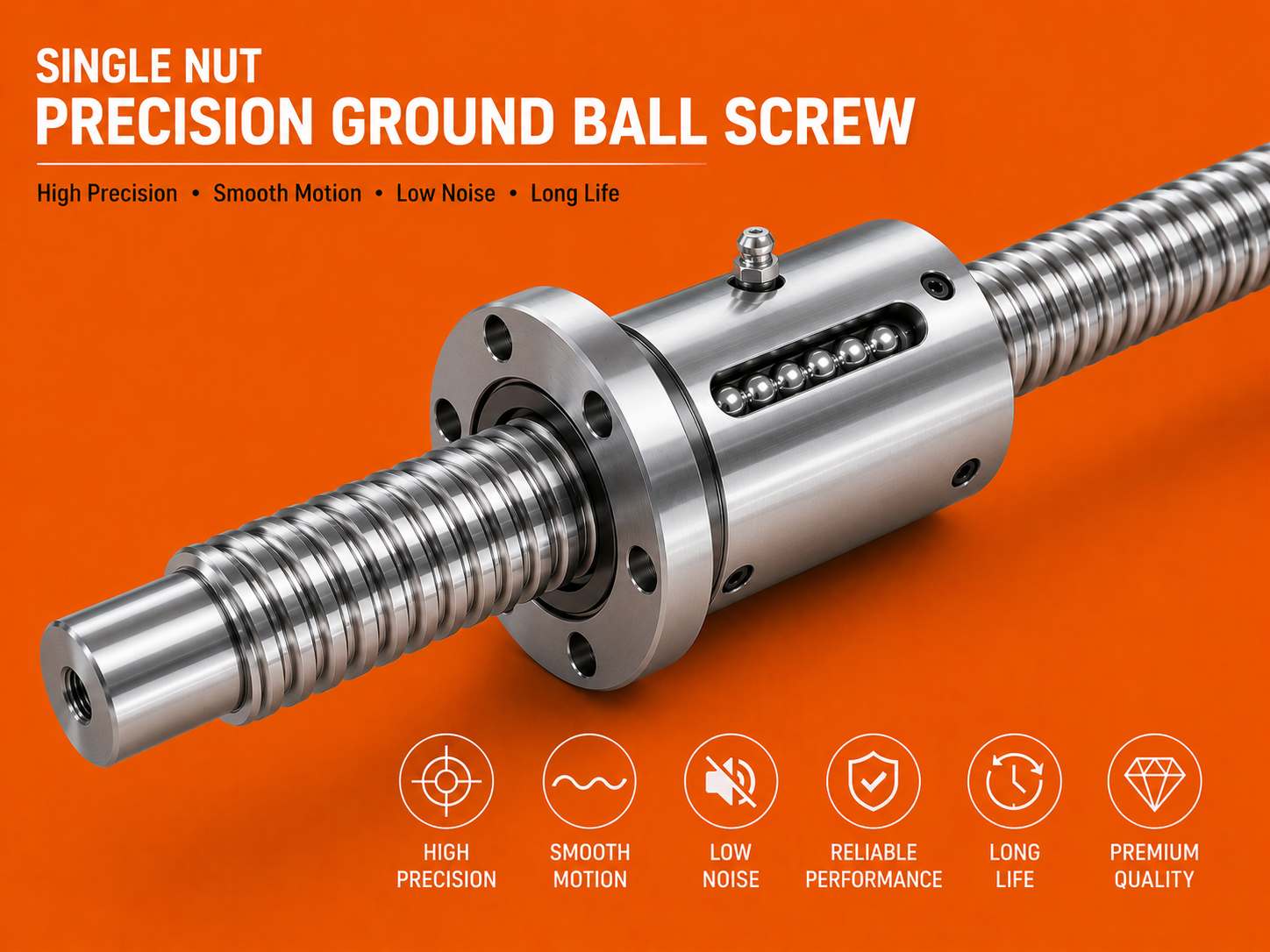 | Precision Ballscrews Single Nut Precision Ground Ball Screw Balaji Engineering Works offers high-precision Single Nut Precision Ground Ball Screws in Pune, engineered for applications requiring superior... View product → |
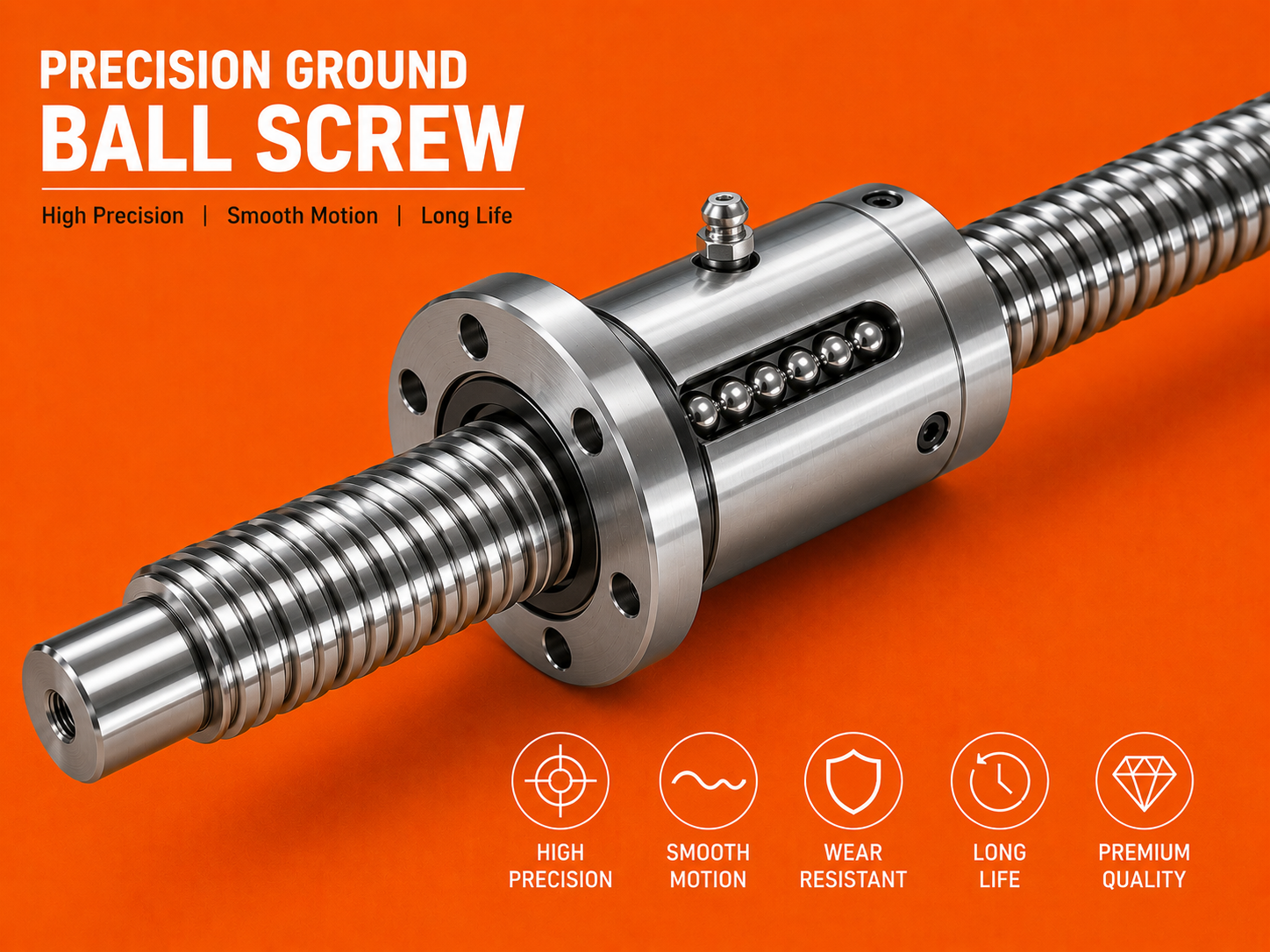 | Precision Ballscrews Balaji Engineering Works is a trusted manufacturer and supplier of Precision Ground Ball Screws in Pune, designed for applications that demand... View product → |
Frequently asked questions
Where are ballscrews used in Pune automated manufacturing lines?
Ballscrews suit controlled linear axes in CNC machines, grinding equipment, transfer lines, robotic loading systems, assembly stations, inspection equipment, and servo positioning modules.
How do you size a ballscrew for an automated manufacturing line?
Calculate axial thrust from the load and acceleration, then check screw diameter, lead, critical speed, travel length, duty cycle, operating speed, and required fatigue life.
How do accuracy class, nut type, and preload affect ballscrew selection?
Accuracy class controls lead deviation, nut type affects mounting and maintenance, and preload increases stiffness and reduces backlash while adding friction, heat, and torque.
How do you protect a ballscrew in a factory environment?
Use suitable seals, covers, wipers, and lubrication; control chip and coolant entry; check thermal growth; and add a brake or counterbalance to manage vertical-axis backdrive risk.
What should you verify before buying a precision ballscrew in Pune?
Confirm the drawing, diameter, lead, travel, accuracy class, preload, nut configuration, end machining, lubrication specification, inspection results, batch traceability, and supplier support.
Related products
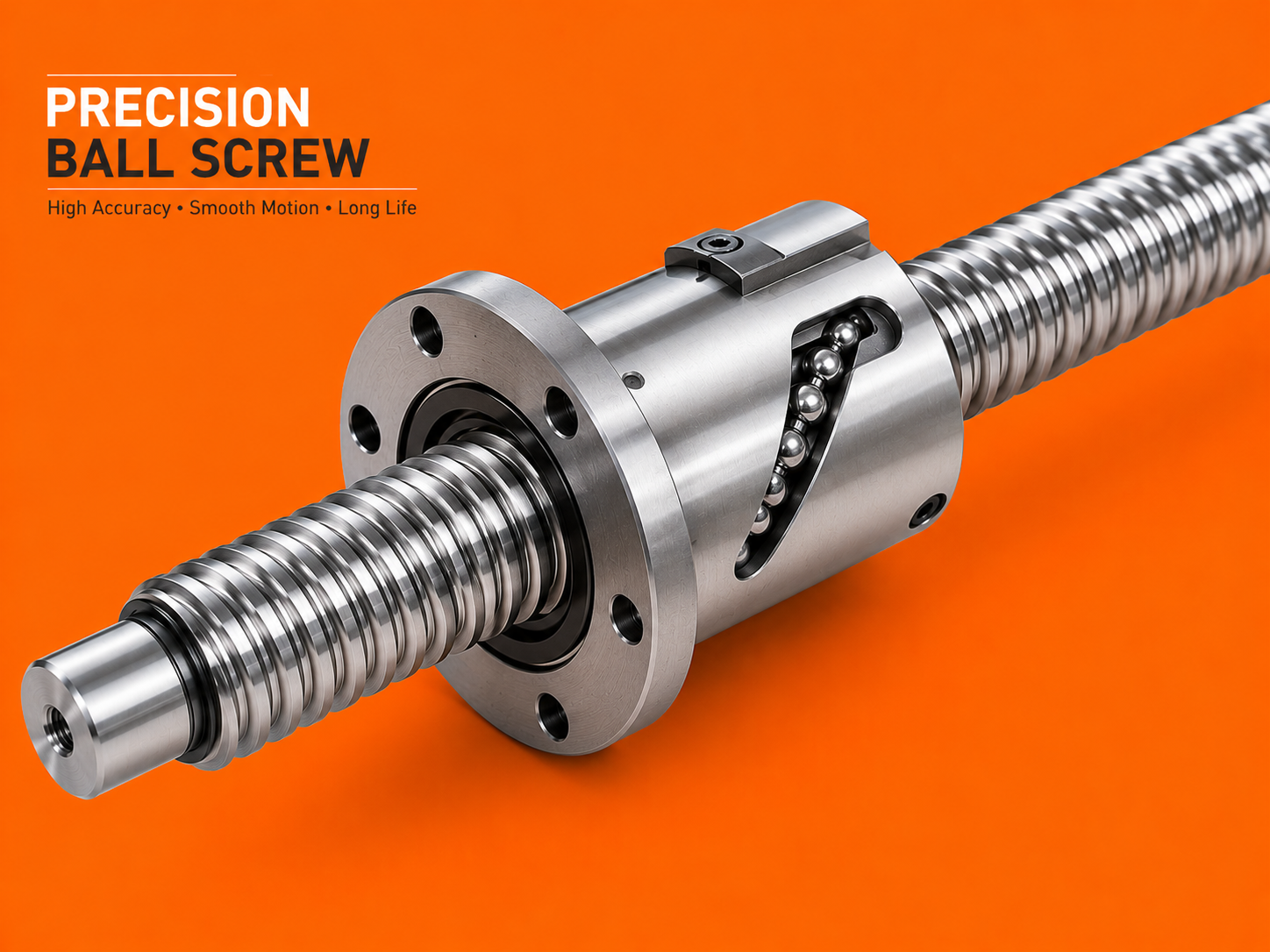 | Precision Ballscrews Balaji Engineering Works is a trusted manufacturer and supplier of Precision Ball Screws in Pune, designed for high-accuracy linear motion and... View product → |
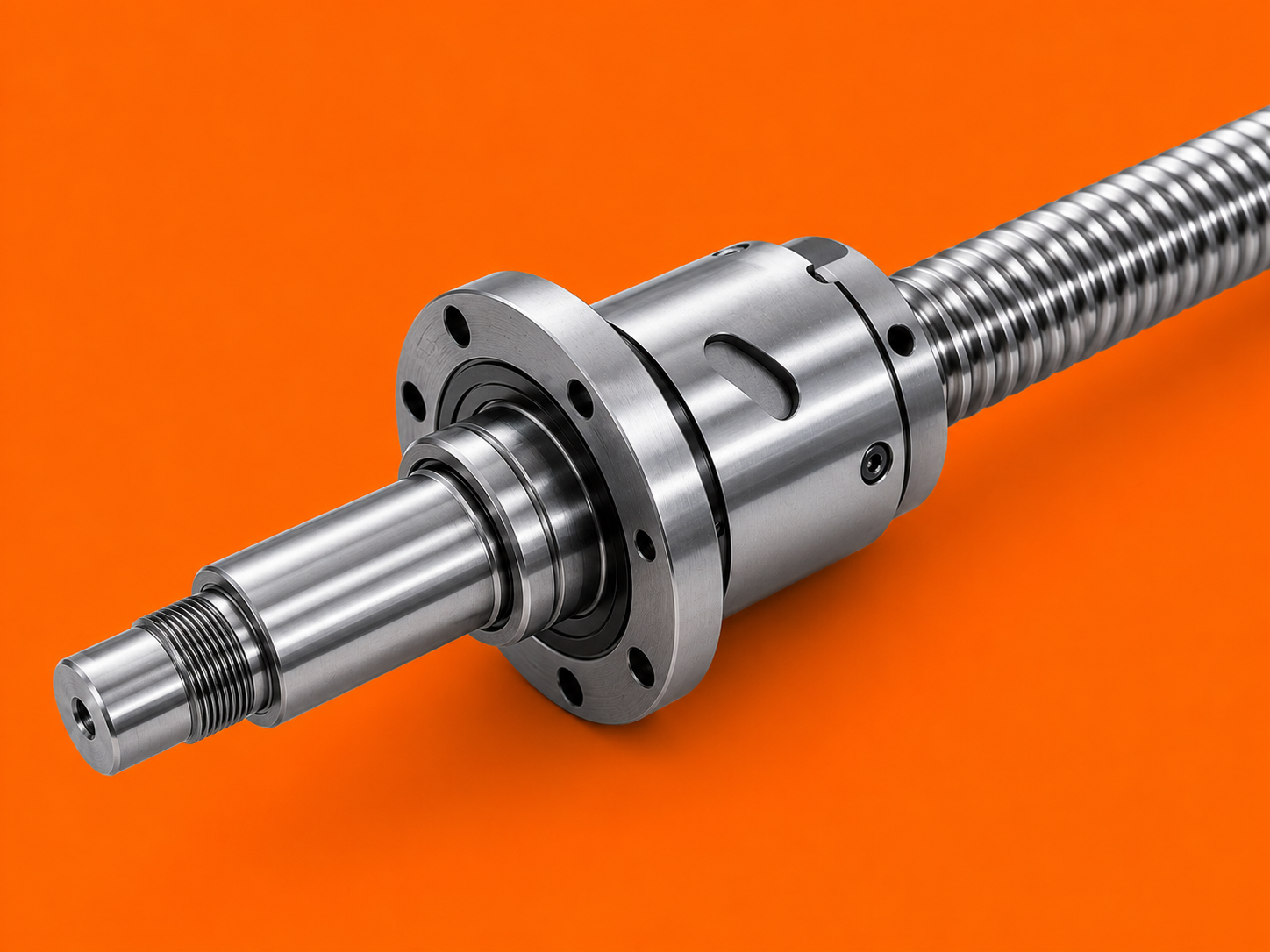 | Precision Ballscrews Balaji Engineering Works offers premium quality High Precision Ball Screws in Pune, designed for applications that demand exceptional accuracy,... View product → |
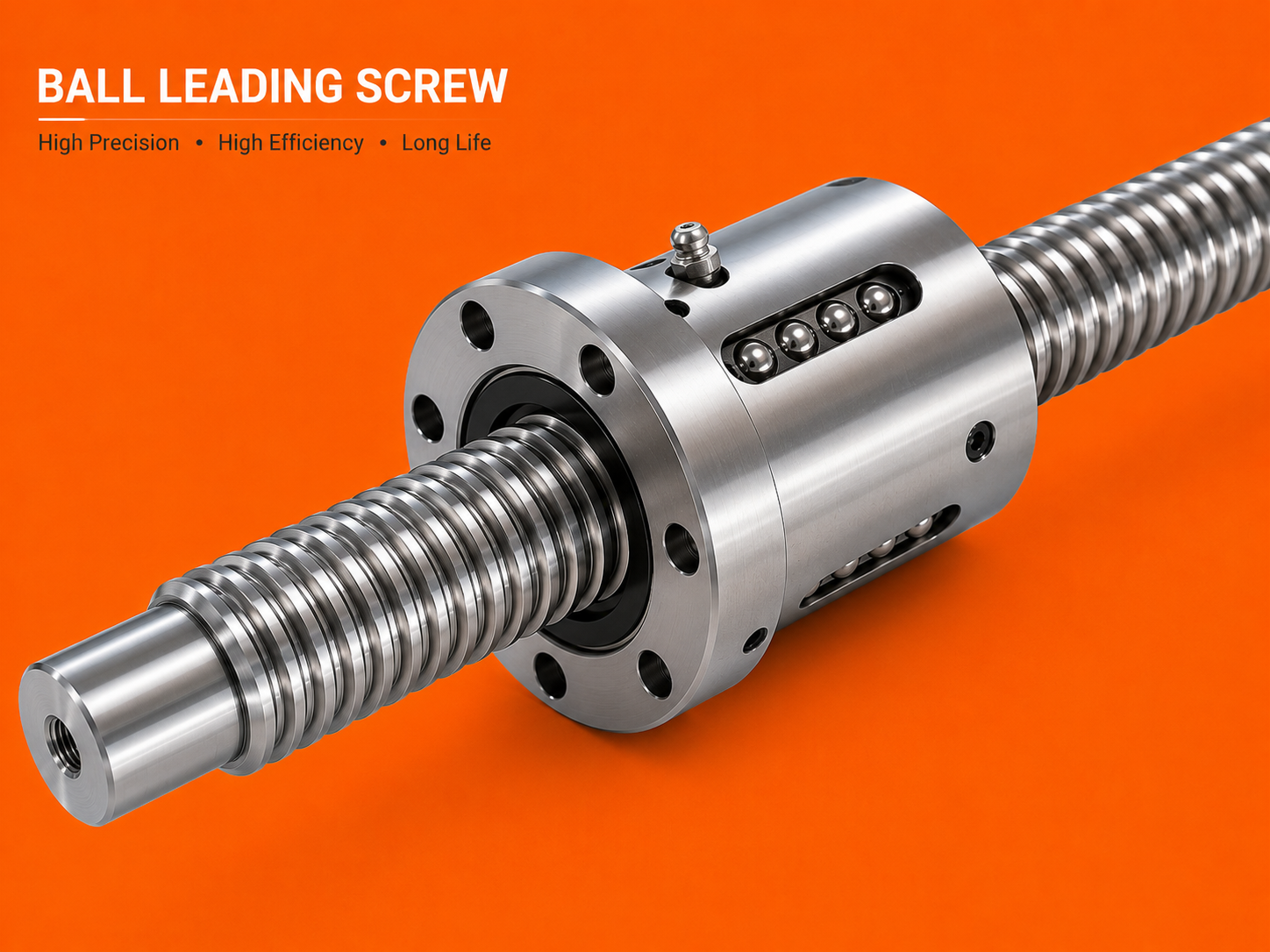 | Precision Ballscrews Balaji Engineering Works offers high-quality Ball Lead Screws in Pune, designed for precise and efficient conversion of rotary motion into linear... View product → |
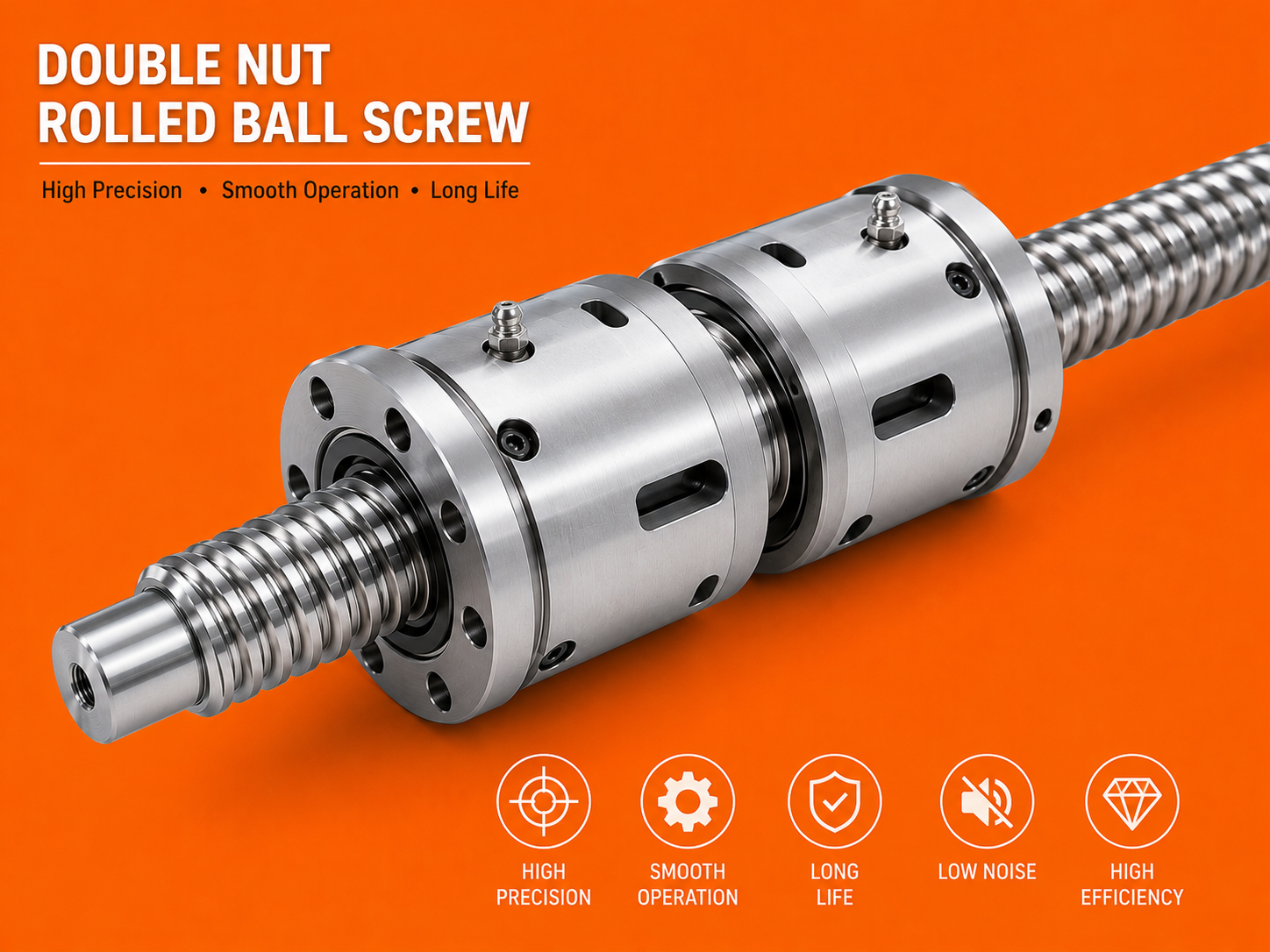 | Precision Ballscrews Balaji Engineering Works offers high-performance Double Nut Rolled Ball Screws in Pune, designed for applications requiring reduced backlash,... View product → |