

A ball screw can produce positioning errors before its geometry has visibly changed. By tracing friction, heat, contamination, and preload changes from the lubricant to the machine’s measured performance, you can distinguish a lubrication fault from backlash, alignment, bearing, or servo problems and choose a maintenance response that does not make the damage worse.
Key takeaways
- Check running torque, stick-slip, heat, noise, and repeatability before blaming pitch error.
- Match lubricant viscosity, base oil, consistency, and additive package to the screw and duty cycle.
- Clean the lubrication point before applying the specified quantity at the correct interval.
- Compare suppliers on preload, accuracy grade, inspection reports, seals, and maintenance support.
How the Wrong Lubricant Changes Accuracy Before the Screw Wears
A dry or under-lubricated ball screw loses accuracy through friction before its pitch geometry changes. Rising running torque causes stick-slip, so positioning repeatability and contouring accuracy vary even when pitch error remains unchanged. Degraded lubricant adds contamination and loses film strength, increasing heat, vibration, noise, raceway wear, and eventual ball damage.
Excess grease creates churning resistance and heat; the resulting thermal expansion shifts positioning accuracy and can force grease past the seals. Treat these as industrial ball screw maintenance issues, not automatic proof of screw wear.
- Record motor current or torque, nut temperature, screw temperature, positioning repeatability, and reversal error at the same speed and stroke.
- Check the lubricant for hardening, oil separation, discoloration, metal particles, or grease leakage. Confirm the exact base oil, thickener, viscosity or NLGI grade, and previous product before adding anything.
- Apply the approved quantity, then move the nut slowly through a meaningful portion of its stroke. A stationary nut leaves fresh lubricant near the injection point instead of distributing it across the loaded ball tracks.
- Repeat the measurements after controlled cycling. Lower torque fluctuation with unchanged reversal error points to lubrication or contamination; persistent reversal error points toward preload loss, wear, bearing looseness, or mechanical compliance.
A pitch-error change follows screw geometry and repeats by position. Lubrication-related error follows friction, temperature, speed, or direction and can improve after correct service. Track both patterns before replacing the screw.
The Machine Symptoms That Point to Lubrication Trouble
A sudden rise in motor current, rough travel, or inconsistent positioning points to friction before it proves a geometry fault. Watch for stick-slip during slow moves, changing contour error with feed rate, squealing or vibration, a hotter nut, grease leakage, or darkened grease.
These industrial ball screw maintenance issues often appear as poor repeatability rather than a permanent pitch change.
Record the same data before and after cleaning and relubrication:
- Motor current or drive torque during constant-speed travel
- Nut and screw temperature after a repeatable duty cycle
- Positioning repeatability at the same target points
- Reversal error when the axis changes direction
A torque fluctuation that falls after lubrication, while reversal error stays constant, implicates friction, contamination, or lubricant distribution. Cycle the nut through a meaningful part of its stroke after lubrication; grease left at the injection point will not correct loaded-track starvation.
| Symptom | Lubrication clue | How to separate it from a mechanical fault |
|---|---|---|
| Rising current and rough slow travel | Stick-slip or increased running torque | Check whether current smooths after relubrication |
| Variable contouring error with speed | Friction changes with load and velocity | Pitch error repeats at the same screw positions |
| Position differs after stopping and restarting | Torque variation or thermal growth | Measure repeatability at one target, not only absolute accuracy |
| Persistent reversal error | Lubrication is not the primary cause | Inspect preload, coupling compliance, bearing condition, and backlash |
| Gradually repeating position error by screw location | Raceway or pitch geometry issue | Map error over the stroke; grease will not remove its pattern |
If reversal error, axial runout, or the mapped pitch pattern remains unchanged, stop adding grease and inspect alignment, preload, support bearings, and coupling error.
Grease, Oil, and the Selection Details That Matter
Use grease for enclosed, moderate-speed ball screws where simple sealing and low maintenance matter; use oil when speed and heat generation demand continuous heat removal. The wrong choice changes friction before it changes geometry: excessive grease raises churning torque and temperature, while insufficient or degraded lubricant causes stick-slip, torque variation, and inconsistent positioning.
| Option | Strength | Main risk |
|---|---|---|
| Grease | Stays in the nut and supports simpler sealing | Excess quantity traps heat; contamination can remain in the raceway |
| Oil | Carries heat away and suits high-speed continuous operation | Requires metering, collection, and stronger contamination control |
| Air-oil | Delivers small measured doses with low churning | Needs a correctly calibrated system and clean, dry air |
Select the lubricant against the screw manufacturer’s specification, not by colour or a familiar brand name. Confirm these details before changing product:
- Base oil type and viscosity at the actual operating temperature
- Thickener type and NLGI grade for grease
- Load rating, operating-speed limit, and temperature range
- Compatibility with the existing base oil, thickener, seals, and wiper materials
- Approved quantity and application method for that nut design
Never mix greases without a compatibility check; hardening, oil separation, or additive conflict can alter running torque. Record the exact product and previous lubricant. If grease repeatedly escapes from one end, inspect the wipers, seals, fittings, lubrication port, and nut orientation instead of adding more.
Fill quantity is controlled—not judged by grease appearing at both ends.
A Safe Relubrication Procedure for Pune Workshop Conditions
Do not set a calendar interval simply because the machine operates in Pune. The phrase hiwin ball screw lubrication problems in pune describes an exposure problem, not a city-wide maintenance schedule. Dust, abrasive chips, coolant, humidity, speed, load, stroke, temperature, sealing, and duty cycle decide the interval.
1. Lock out the machine and remove chips from the cover, screw, and nut area. Wipe away old grease with a lint-free cloth; do not push debris through a damaged wiper or wash contamination into the nut.
2. Inspect both wipers, seals, grease ports, and covers. Replace a torn wiper and correct coolant leakage before adding lubricant, because fresh grease cannot remove abrasive particles already inside the nut.
3. Apply only the HIWIN-approved lubricant, quantity, and method for that series. Confirm compatibility before mixing greases; excess grease increases churning, heat, and thermal position error at high speed.
4. Run the axis at low speed through several short strokes, then across its usable travel. Stop if you hear grinding or see grease pushed past a wiper; redistribute lubricant before returning to production.
5. Check motor load, travel smoothness, noise, vibration, temperature, leakage, and grease colour. Recheck positioning after the screw reaches operating temperature. Persistent error requires checks of runout, bearings, preload, coupling, and alignment, not repeated greasing.
6. Record lubricant, quantity, date, temperature, and observations. Shorten the interval after coolant exposure, heavy swarf, high humidity, high duty cycle, or damaged covers; extend it only after trend data confirms clean, stable operation.
What to Specify When Comparing Ball-Screw Suppliers
Request a controlled purchase specification, not a catalogue description, that ties accuracy to lubrication and acceptance. Ask for the screw’s accuracy class, preload code, allowable speed, lubrication type and quantity, wiper configuration, and exact relubrication procedure. Require the supplier to state whether accuracy means positioning accuracy, repeatability, reversal error, contouring accuracy, or thermal drift.
- A dimensional drawing showing shaft diameter, lead, nut length, mounting features, lubrication ports, and allowable axial runout.
- The lubricant specification: manufacturer and product name, base oil, thickener, viscosity or NLGI grade, quantity per application, and compatibility warning.
- A signed inspection report recording lead or pitch error, preload, runout, critical dimensions, and test temperature.
- The acceptance method, including measuring instrument, travel length, test speed, load, warm-up cycle, and pass/fail limits.
- The storage, sealing, and relubrication instructions, including what to inspect if grease escapes from one nut end.
| Supplier detail | What to request | Why it matters |
|---|---|---|
| Accuracy claim | Positioning, repeatability, reversal error, or contouring result | Separates friction variation from pitch error and backlash |
| Preload and torque | Preload code, running-torque range, and test conditions | Exposes stick-slip, excessive preload, and heat risk |
| Lubrication acceptance | Approved product, charge quantity, and post-cycling torque limit | Prevents over-greasing and incompatible grease changes |
Whether you compare a ball screw manufacturer in Pune or a precision ballscrew manufacturer in Pune, reject “high precision” without these figures. Balaji Engineering Works can be asked to identify the same records for a replacement screw before shipment.
Related product
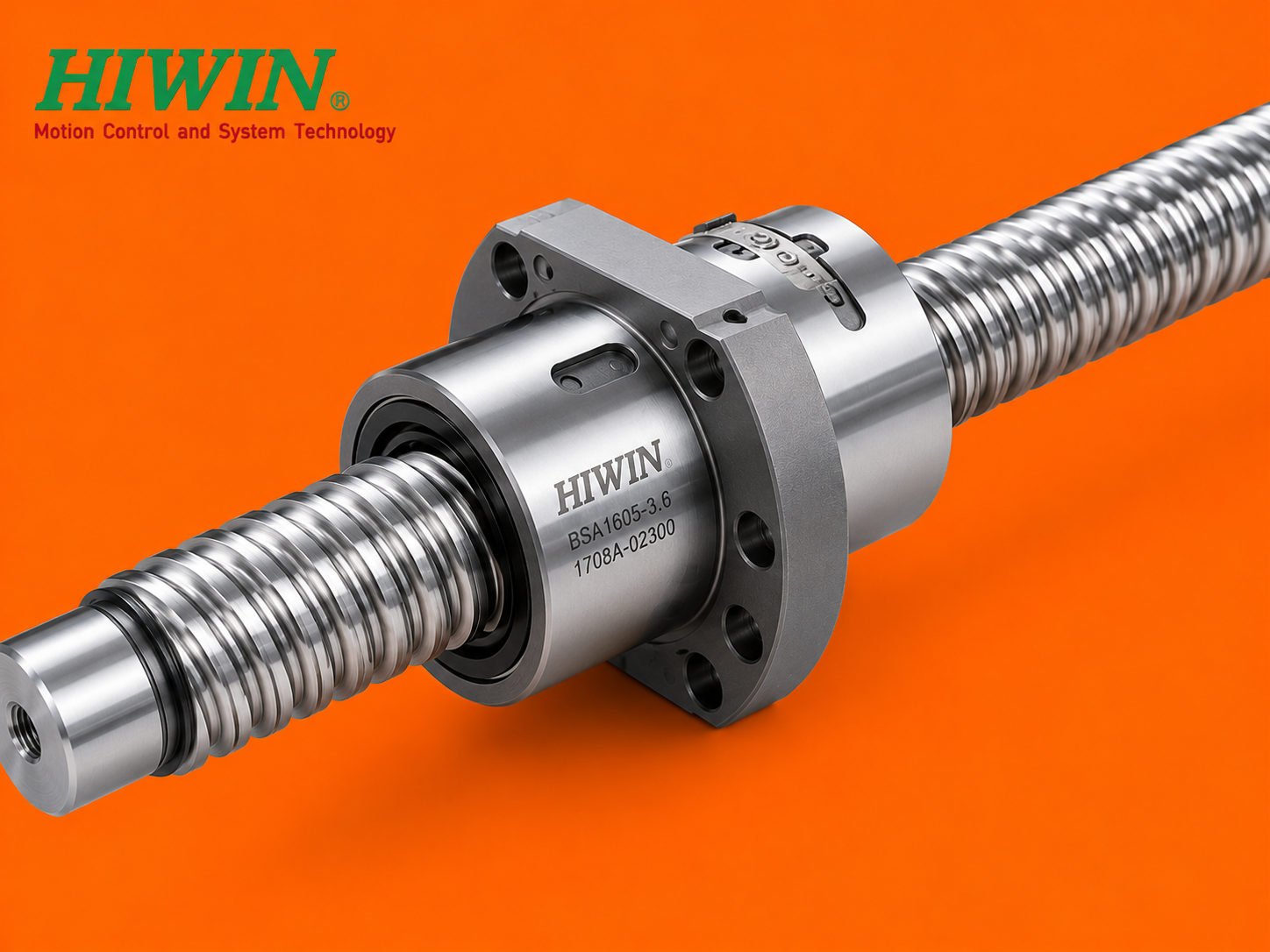 | Precision Ballscrews Balaji Engineering Works offers high-quality HIWIN Ball Screws in Pune, known for their exceptional precision, smooth operation, and long service... View product → |
Frequently asked questions
How can incorrect lubrication affect ball-screw accuracy before wear occurs?
Excess friction raises running torque and causes stick-slip, which changes positioning repeatability and contouring accuracy even when pitch geometry remains unchanged.
Which machine symptoms indicate a ball-screw lubrication problem?
Look for inconsistent repeatability, higher motor load, abnormal heat, vibration, noise, rough travel, and torque changes across the stroke.
Should you use grease or oil on a Hiwin ball screw?
Use the lubricant specified for the screw and application. Compare viscosity, NLGI consistency, base oil, additives, speed, load, temperature, and relubrication method before choosing.
What should you compare when selecting a ball-screw supplier in Pune?
Request the accuracy grade, preload, lead-error data, inspection records, material and heat-treatment details, seals, delivery scope, and maintenance guidance.