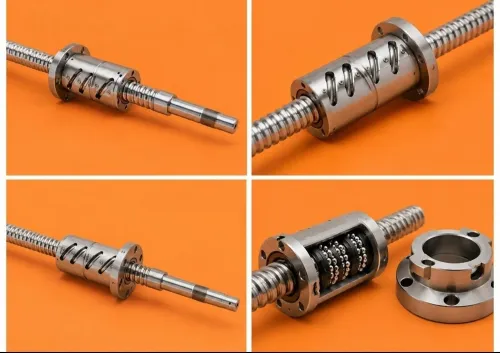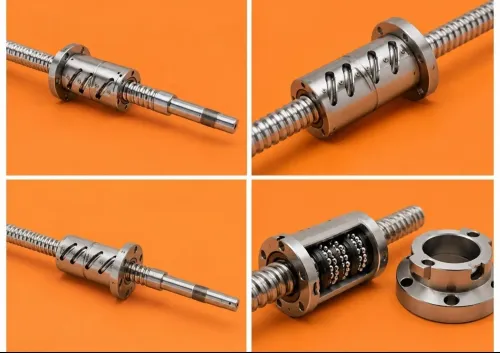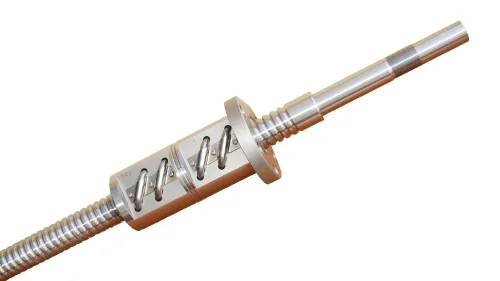

A ground ball screw is not defined by the word “precision” or by diameter and lead alone. You need to compare its accuracy class, measured performance, preload, operating limits, documentation and replacement compatibility before choosing a manufacturer or approving a quotation.
Key takeaways
- Grinding supports tighter lead accuracy but increases cost and delivery time.
- Request inspection reports, lead-accuracy data and traceable calibration records.
- Specify diameter, lead, nut arrangement, load, speed and operating limits.
- Measure runout, backlash, preload and lead accuracy before machine approval.
What does grinding tell you about a ball screw’s performance?
Grinding tells you that the screw geometry was formed by controlled material removal, not simply pressed into shape by rolling. That process generally supports tighter lead accuracy, lower lead variation and a finer surface finish, but it raises price and can extend delivery time.
| Process | Typical performance implication | Cost and delivery effect |
|---|---|---|
| Grinding | Tighter lead control, lower variation and finer finish | Higher price; longer procurement is possible |
| Rolling | Suitable lead accuracy for many transport and less demanding positioning duties | Lower price; often faster supply |
Do not treat these terms as interchangeable. Lead accuracy is the screw’s measured deviation from its intended travel; positioning accuracy is the machine’s achieved coordinate accuracy after errors such as pitch, thermal growth and alignment. Repeatability is the ability to return to the same position.
Backlash is lost motion when drive direction reverses, axial play is measurable looseness along the axis, and stiffness is resistance to deflection under load.
A rolled screw is a sound choice when its specified lead error and repeatability meet the application. Choose grinding when tighter geometric control, finer finish or demanding positioning justifies the premium. For a precision ground ball screw selection, request the declared ISO 3408 accuracy class, inspection length, measurement temperature and lead-deviation chart.
“Precision ground” alone is not a complete specification.
Which evidence proves that a manufacturer can supply the required accuracy?
A credible manufacturer starts with measured evidence, not “high precision.” Ask a ball screw manufacturer in Rajkot for precision ground ball screws to identify its grinding capability, ISO 3408 accuracy class, preload-control method, available nut styles, inspection equipment, calibration status, engineering support and replacement availability.
Compare suppliers against the same evidence:
| Supplier evidence | What it proves | Reject if missing |
|---|---|---|
| Dimensional drawing and nut style | Fit, mounting and interchangeability | Only diameter and lead are quoted |
| Lead-accuracy chart and ISO 3408 class | Measured lead error over a stated length | “Precision ground” is the entire claim |
| Inspection report and stated inspection standard | Defined acceptance method | Certificate lists dimensions only |
| Preload or torque result | Actual contact condition and drive resistance | “Zero backlash” has no measurement |
| Axial and radial runout results | Separate screw-axis errors | Runout is reported as one vague value |
| Surface-finish value, material and heat treatment | Functional surface and material history | No numerical or traceable records |
Require serial or batch traceability and the calibration status of the lead-measuring equipment. A ground ball screw supplier in Rajkot should also explain replacement availability and provide engineering support for matching the screw and nut.
Do not treat quoted nut rigidity as complete-axis rigidity. Fixed and floating bearings, bearing seats, nut housing, machine structure and joints add deflection under load. Ask Balaji Engineering Works for the same records you would require from any supplier, then compare the complete load path rather than choosing on location.
Related products
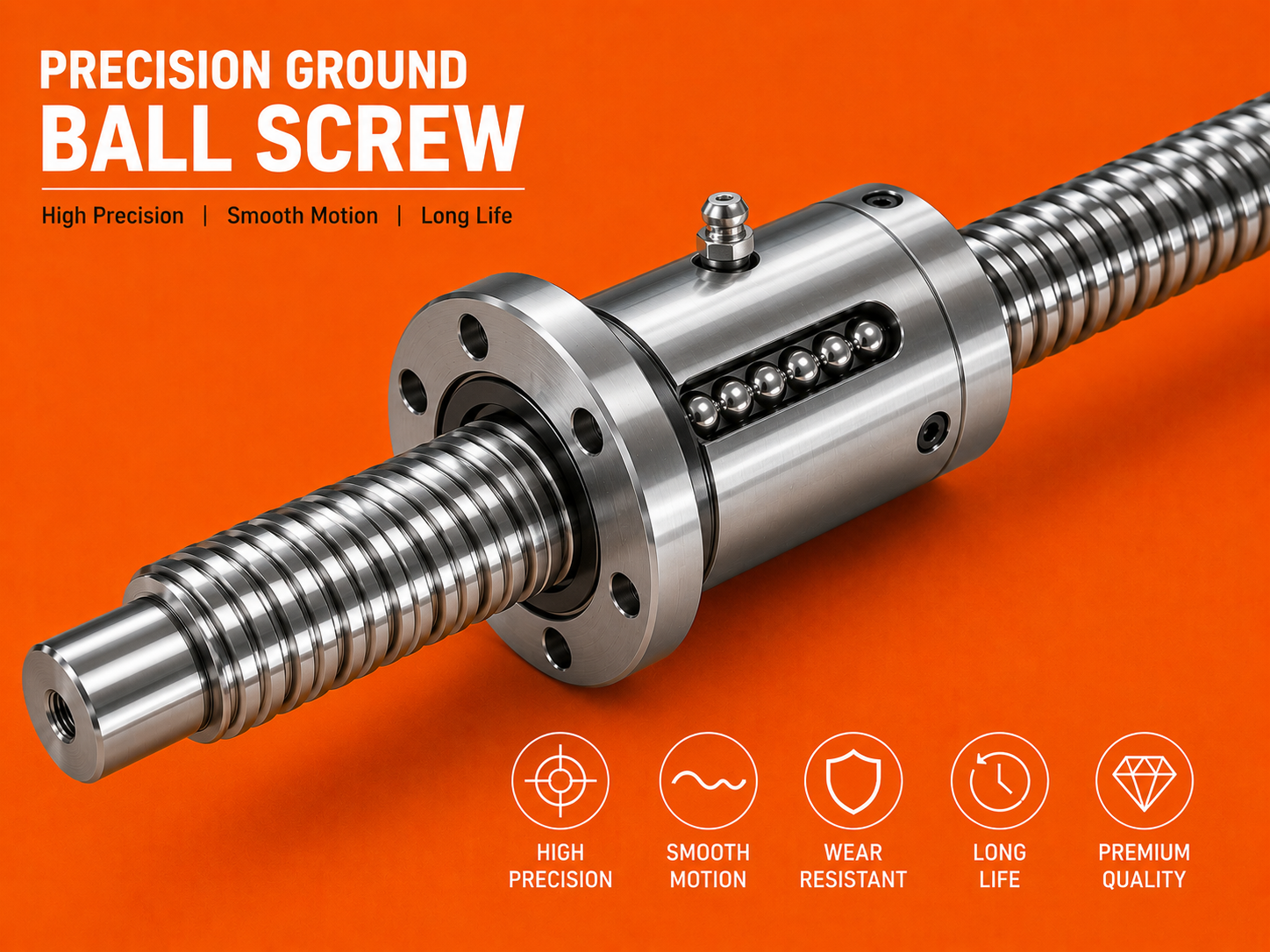 | Precision Ballscrews Balaji Engineering Works is a trusted manufacturer and supplier of Precision Ground Ball Screws in Pune, designed for applications that demand... View product → |
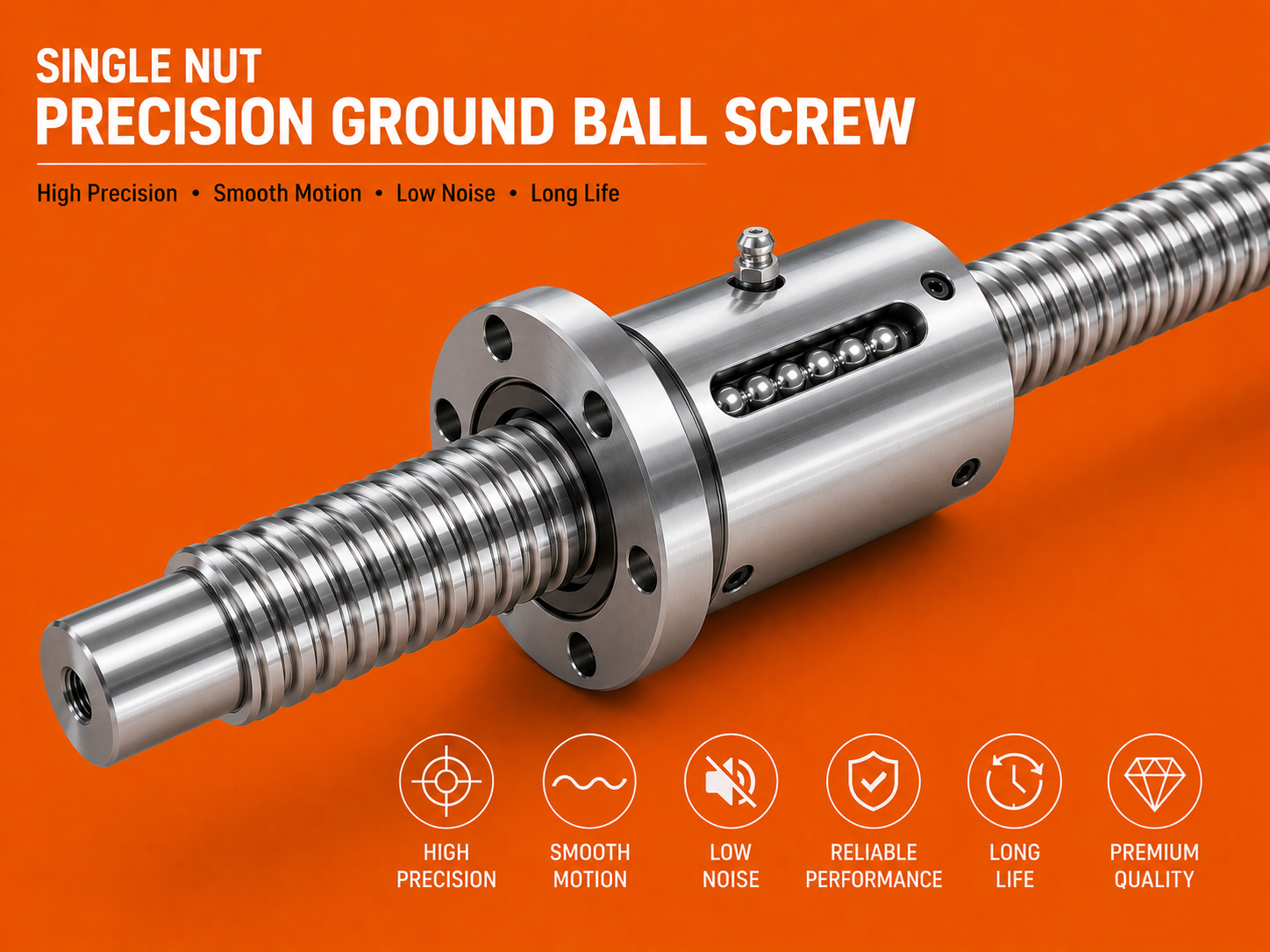 | Precision Ballscrews Single Nut Precision Ground Ball Screw Balaji Engineering Works offers high-precision Single Nut Precision Ground Ball Screws in Pune, engineered for applications requiring superior... View product → |
How should you specify diameter, lead and operating limits before requesting a quote?
Send a precision ground ball screw in Rajkot supplier a calculation-ready brief, not only “25 mm, 10 mm lead.” Include:
1. State nominal diameter, lead, usable travel, total shaft length, nut model, preload, mounting arrangement, end machining, ISO 3408 accuracy class, operating speed, axial load, duty cycle, lubrication, coolant and contamination conditions.
2. Divide motion into acceleration, constant-speed cutting, deceleration and return stages. For each stage, record axial force and revolutions; calculate equivalent load as Fm = (ΣFi³ni/Σni)¹ᐟ³, then check L10 ≈ (C/Fm)³ × 10⁶ revolutions using the supplier’s dynamic load rating C. Shock, contamination, poor lubrication and misalignment shorten actual life.
3. Ask for checks at the real bearing arrangement: buckling under compression, critical speed for the actual unsupported length and support condition, and stiffness under cutting force. A long screw may need a larger diameter, lower rpm or a rotating nut even when its load rating passes.
Include screw, bearings, seats, housing, structure and joints in the stiffness calculation.
4. Choose diameter and lead together. Larger diameter increases rigidity, thrust capacity and life; a finer lead increases thrust and positioning resolution but demands more rpm for the same linear speed. Torque follows approximately T = F × lead/(2πη). Put radial and moment loads on linear guideways, not the screw.
5. Include thermal growth: steel expands about 11.5–12 µm/m·K. Add expected temperature rise to pitch compensation and decide whether cooling is needed. Ask the supplier to confirm every limit in writing.
Which nut arrangement and performance specifications fit the machine?
Choose the nut arrangement from the axis load, stiffness target, speed and contamination level, not from “zero backlash” on a catalogue page.
| Arrangement | Backlash, axial play and rigidity | Friction, torque, heat and life | Size, adjustment and maintenance |
|---|---|---|---|
| Single nut | Lowest cost, but residual backlash and lower rigidity | Lowest friction and drive torque; highest available life when correctly lubricated | Small envelope; no preload adjustment |
| Preloaded double nut | Very low backlash and axial play; highest adjustable rigidity | Higher friction, torque and heat; excessive preload reduces available life | Larger envelope; requires preload setting and periodic verification |
| Oversized-ball arrangement | Low backlash with increased contact stiffness | Moderate-to-high torque and heat; life falls if contact stress or preload is excessive | Compact versus a double nut; normally factory-set |
| Spring-preloaded design | Compensates for wear and thermal movement; moderate rigidity | Spring force raises friction and heat; life depends on force and travel | Simple envelope, but spring condition and preload require maintenance |
Preload reduces backlash and increases rigidity, but it also increases friction, drive torque and heat. Require the supplier’s preload method and measured preload or preload torque; reject “zero backlash” as a complete specification.
Specify seal and wiper type for chips and coolant. Contact seals protect the ball circuit but add friction and limit speed, while lighter wipers reduce drag but demand cleaner surroundings and compatible lubrication. Confirm allowable speed, lubricant and contamination assumptions.
Interchangeability depends on nut-body dimensions, flange pattern, ball-return system, handedness, seals and lubrication ports. For a replacement ground ball screw, send the original assembly drawing and verify shaft-end geometry, bearing seats, thread direction, travel limits, and that the screw and nut were a matched pair.
How do you verify the supplied screw before installation and approval?
Approve the screw only after the supplied evidence, measured results and installation conditions match the purchase order. A polished certificate with dimensional checks alone does not prove positioning accuracy.
1. Match the inspection report to the supplied serial number or batch number. Check material and heat-treatment records where relevant, and record the lead-measuring equipment’s calibration status, calibration date and certificate number.
2. Measure lead error across the agreed working length at the specified measurement temperature. Compare axial play, axial runout, radial runout, surface finish and preload or drive torque with the quotation and declared ISO 3408 accuracy class.
3. Put the numerical tolerances, inspection length, temperature, measurement method and rejection process in the purchase order. Do not invent acceptance limits after delivery; reject or request corrective action against the agreed criteria.
4. For a replacement ground ball screw, verify nut mounting dimensions, flange pattern, shaft-end geometry, bearing seats, thread direction, travel limits, seals and lubrication ports before fitting. Confirm that the lubricant is compatible with the screw, nut and machine environment.
5. Establish whether the controller uses a pitch-compensation table and whether that table remains valid for the new geometry. Require fresh laser-interferometer or ballbar verification after installation when positioning accuracy depends on compensation or the screw geometry has changed.
This procedure makes precision ground ball screw selection an acceptance decision rather than a label check. It also prevents a replacement assembly from passing on nominal diameter and lead while failing the machine’s actual accuracy requirement.
Frequently asked questions
What does grinding tell you about a ball screw’s performance?
Grinding forms the screw through controlled material removal, supporting tighter lead accuracy, lower lead variation and finer surface finish than basic forming processes. It also raises cost and can extend delivery time.
Which evidence proves that a manufacturer can supply the required accuracy?
Ask for lead-accuracy measurements, inspection reports for comparable screws, calibration traceability and documented capability against your required accuracy grade.
How should you specify a ball screw before requesting a quote?
State the nominal diameter, lead, effective stroke, overall length, mounting details, accuracy grade, preload, load, speed, duty cycle, lubrication and operating temperature.
Which nut arrangement and performance specifications fit the machine?
Choose a single or double nut according to stiffness, backlash and space requirements, then define preload, axial load, critical speed, rigidity, repeatability and allowable runout.
How do you verify a supplied ground ball screw before installation?
Check identification and certificates, inspect the shaft and nut, measure runout and lead accuracy, confirm preload and backlash, and record results before approval.
Related products
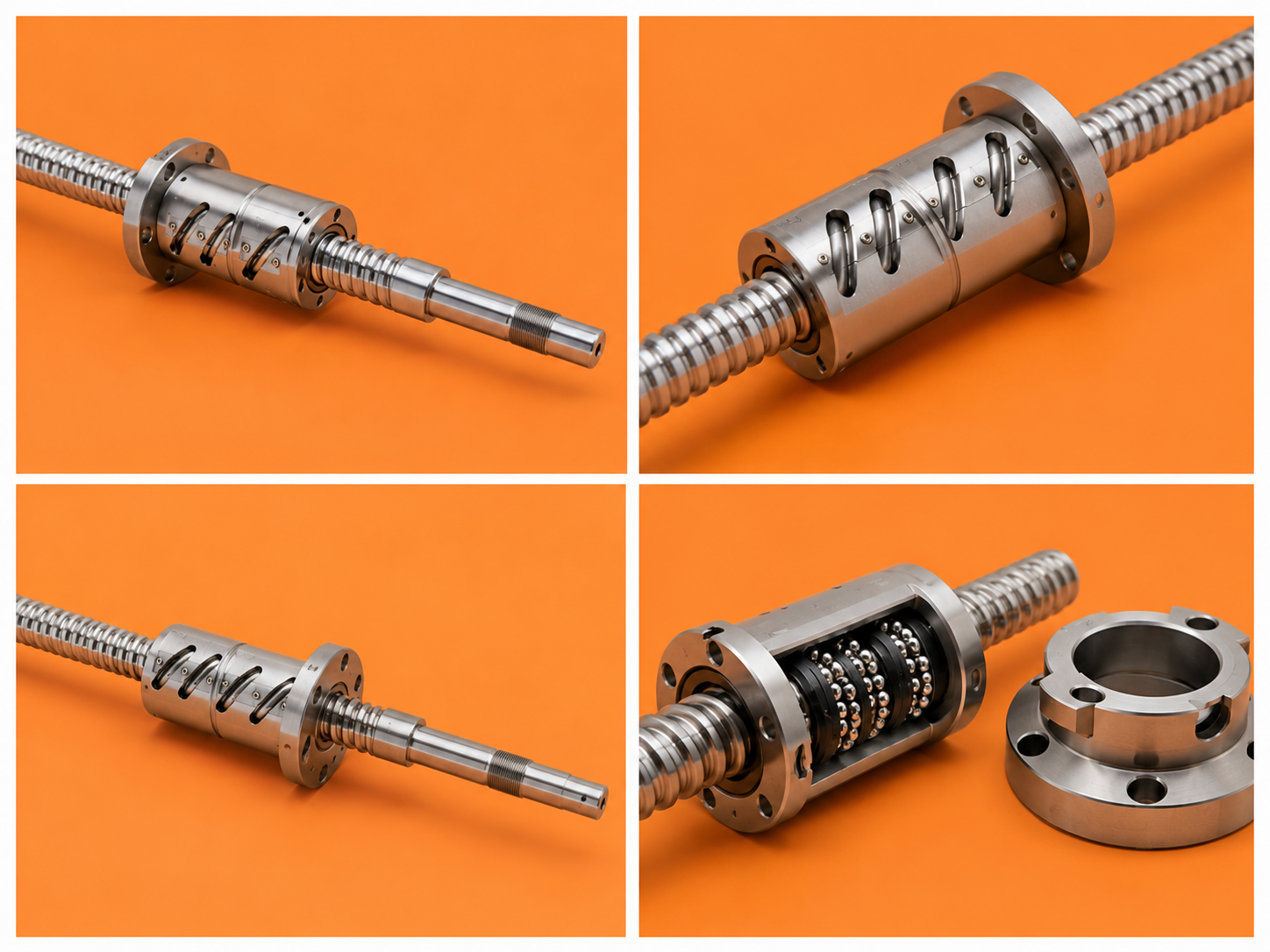 | PRECISION GROUND BALL SCREW We are Manufacturing of precision Ground ball screw with nut As per Customer View product → |
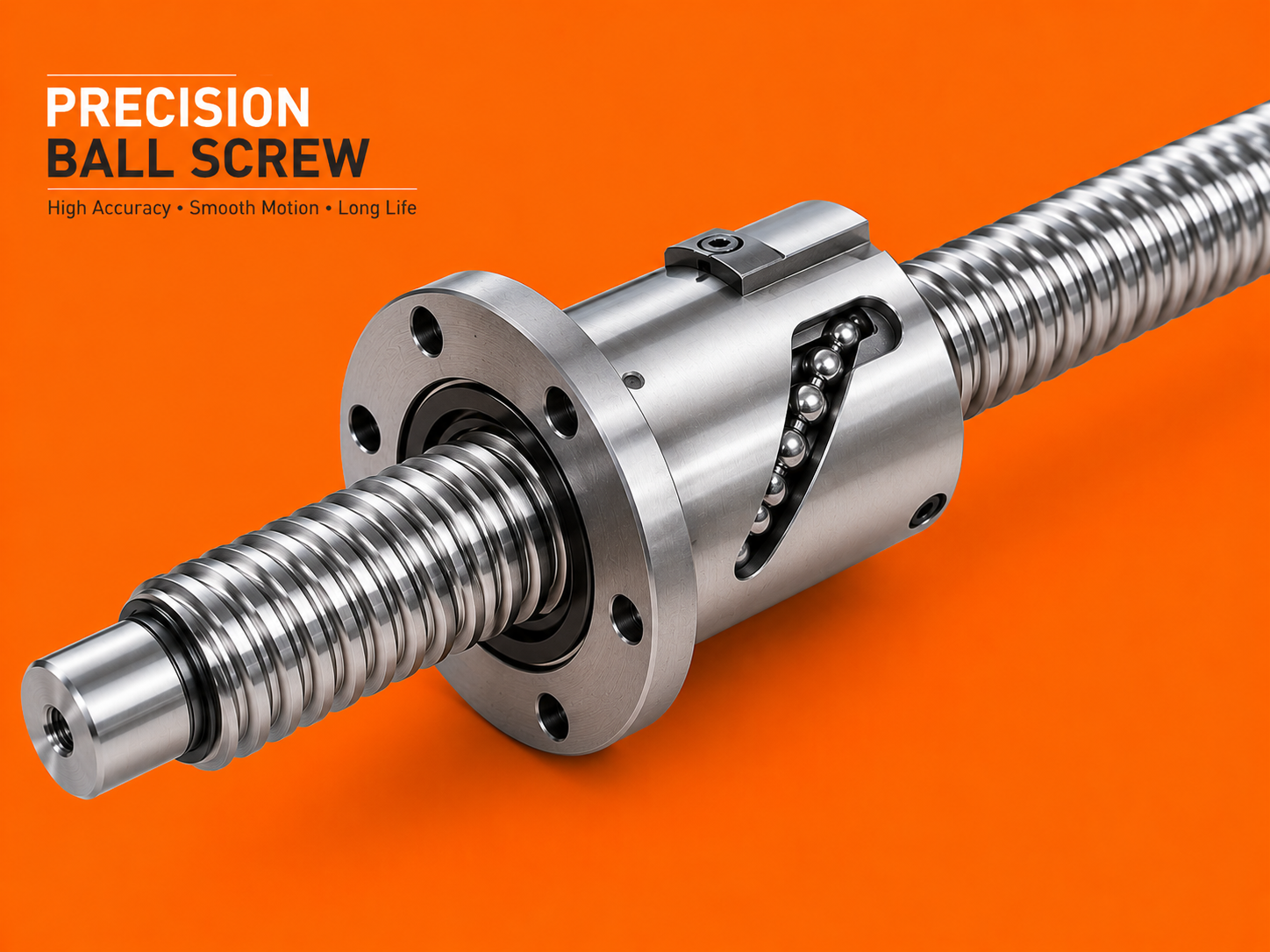 | Precision Ballscrews Balaji Engineering Works is a trusted manufacturer and supplier of Precision Ball Screws in Pune, designed for high-accuracy linear motion and... View product → |
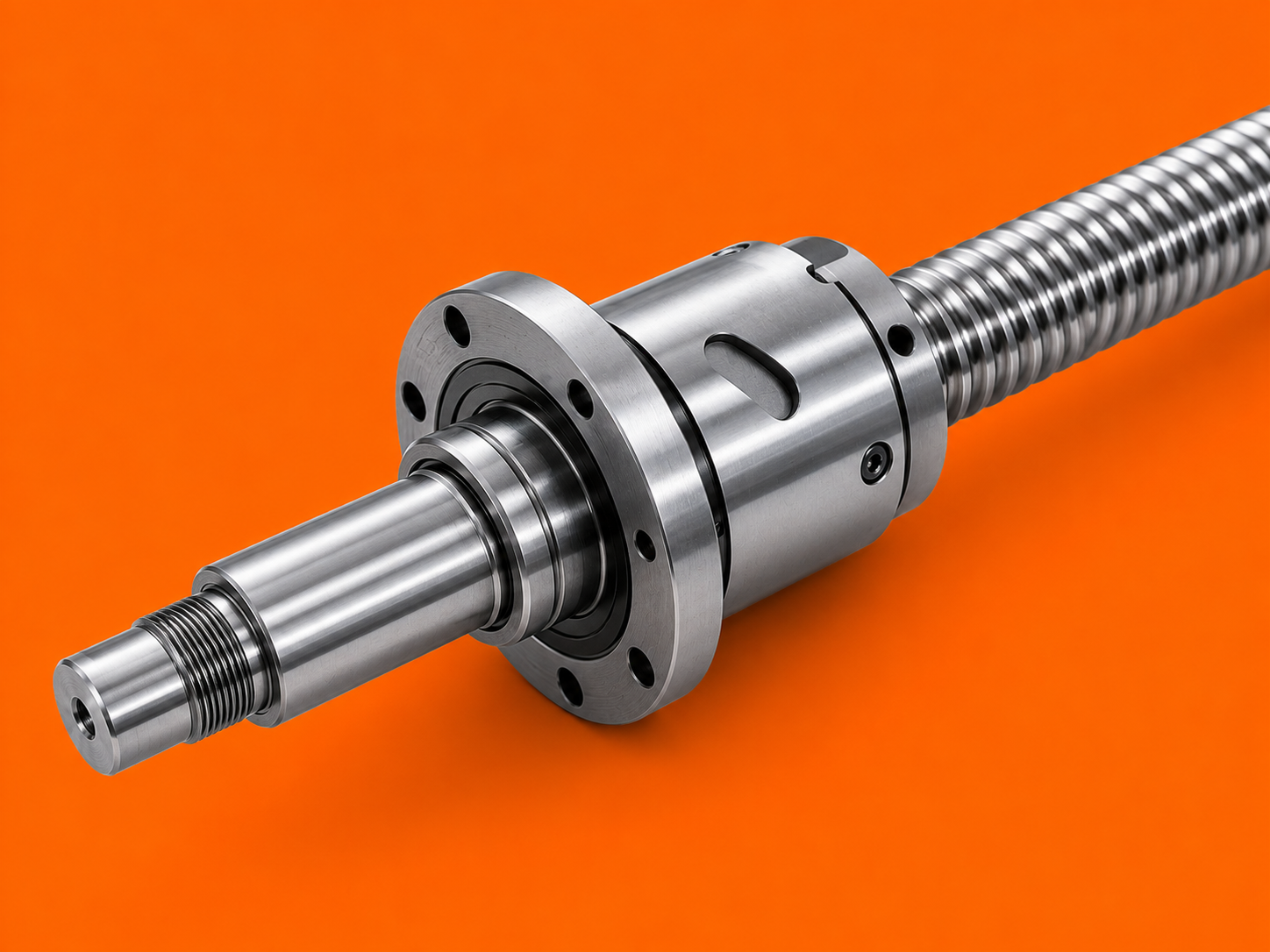 | Precision Ballscrews Balaji Engineering Works offers premium quality High Precision Ball Screws in Pune, designed for applications that demand exceptional accuracy,... View product → |